Introduction
Sandwich rice crackers, also known as filled puffed snacks or core-filled rice crackers, represent a sophisticated category within the expanded snack food industry. These products consist of a puffed cereal shell—typically based on rice, corn, or multigrain formulations—encasing a flavored filling that may be sweet (chocolate, cream, fruit jam) or savory (cheese, peanut butter, savory pastes) . The combination of a light, crispy exterior with a rich, creamy interior creates a distinctive sensory experience that has driven significant market growth worldwide.
This comprehensive guide examines the complete technological process of sandwich rice cracker production, from raw material selection through to final packaging. The Complete Technological Guide to Sandwich Rice Cracker Production The content is structured to provide both a theoretical understanding of the underlying food science and practical operational guidance for production personnel, quality control specialists, and food technologists involved in this manufacturing sector.

Chapter 1: Product Classification and Raw Material Science
1.1 Product Classification
Sandwich rice crackers can be classified according to several parameters:
By Shell Geometry:
- Rod-shaped products: Cylindrical or square-section tubes, typically cut to lengths of 73–77 mm
- Disc or coin shapes: Flat, round pieces with filling between two layers
- Spherical or pillow shapes: Encapsulated fillings within a puffed sphere
By Filling Type:
- Sweet fillings: Chocolate, cream, caramel, fruit jams, sweet bean pastes
- Savory fillings: Cheese, peanut butter, savory pastes, seasoned oil emulsions
By Processing Method:
- Co-extrusion method: Shell and filling are extruded simultaneously through a specialized die, producing a filled continuous tube that is subsequently cut
- Assembly method: Pre-formed puffed pieces are individually filled or sandwiched in a separate operation
1.2 Raw Material Science
1.2.1 Shell Materials
The shell or “embryo” body of sandwich rice crackers is primarily composed of starchy cereal flours that undergo gelatinization and expansion during extrusion.
Primary Cereal Flours:
- Rice Flour: The most common base material, rice provides a neutral flavor profile, light color, and excellent expansion characteristics. Both white rice and glutinous rice varieties are employed depending on the desired texture. Glutinous rice (waxy rice) offers higher amylopectin content, contributing to superior expansion and a distinctive mouthfeel .
- Corn Grits: Corn is often blended with rice to adjust texture and flavor. The addition of corn grits (typically 10–20% of the formulation) contributes golden coloration and a slightly sweeter flavor note .
- Wheat Flour and Wheat Bran: Wheat-based flours may be incorporated to modify textural properties. Wheat bran, when added at 5–7% levels, contributes dietary fiber and can be used to position products as having enhanced nutritional value .
- Soybean Flour: As demonstrated in patent literature, soybean flour can be incorporated at levels of 10–25% to boost protein content and create products with distinctive flavor profiles. However, soybean flour presents processing challenges due to its lower starch content and higher oil and protein levels, which can interfere with optimal expansion .
Formulation Aids and Functional Ingredients:
- Calcium Carbonate: Added at approximately 0.4% of the formulation, calcium carbonate serves as a source of dietary calcium and can influence expansion characteristics .
- Sugar (Sucrose): Contributes sweetness, influences Maillard browning during drying, and affects the glass transition temperature of the extruded matrix. Typical levels range from 5–8% of the shell formulation .
- Salt: Added at 0.5–1.0% for flavor enhancement and to modify the water activity of the final product .
- Water: The moisture content of the dough prior to extrusion is critical, typically maintained at 10–14% for optimal expansion .
1.2.2 Filling Materials
The filling is a critical differentiating factor for sandwich rice crackers, providing both flavor diversity and textural contrast.
Fats and Oils: Fats constitute the continuous phase of most fillings, providing mouthfeel, flavor release, and structure. Palm oil is frequently employed due to its stability and favorable melting profile; it is typically used at 40–50% of the filling formulation .
Sweeteners: Sugar and powdered sugar are the primary sweetening agents for sweet fillings, typically comprising 20–30% of the formulation .
Flavoring Powders: Cocoa powder, cheese powder, peanut powder, fruit powders, and other flavoring agents constitute 5–15% of the filling, depending on the desired intensity .
Emulsifiers and Stabilizers: Soy lecithin (at approximately 0.5% of filling weight) is commonly used to stabilize the emulsion of oil and aqueous components. Tea polyphenols (at 0.04%) may be added as natural antioxidants to prevent rancidity .
Milk Powder: Whole or skim milk powder contributes creamy flavor and modifies the texture of fillings. Typical usage levels are 5–10% of the filling formulation .
Chapter 2: Pre-processing Operations
2.1 Raw Material Receiving and Storage
Raw materials must be received and stored according to food safety principles (HACCP) and good manufacturing practices (GMP). Key considerations include:
- Temperature and Humidity Control: Cereal flours and other dry ingredients should be stored in dry, temperature-controlled environments to prevent moisture pickup, which can adversely affect milling and extrusion performance.
- Pest Management: Implement integrated pest management programs for all stored ingredients.
- Traceability: Maintain complete records of lot numbers, supplier information, and receipt dates.
2.2 Cleaning and De-stoning
Prior to milling, whole grains undergo cleaning to remove foreign matter:
- Magnetic Separation: Removes ferrous metal contaminants.
- Sieve Separation: Removes oversized or undersized particles.
- Destoning: Specialized destoners utilize differences in specific gravity to separate stones and other high-density materials from the grain stream .
2.3 Milling and Particle Size Reduction
The particle size of milled flours significantly influences extrusion behavior and final product quality.
Target Particle Size Ranges:
- Cereal Flours (Rice, Corn, Wheat): D90 of 150 μm to 840 μm (approximately 20-mesh to 100-mesh sieve size)
- Soybean Flour: Finer grinding is typically required, with D90 of 30 μm to 540 μm, to mitigate the negative effects of soybean flour’s lower starch content on expansion .
Milling Equipment: Hammer mills, pin mills, or roller mills may be employed depending on the particle size requirements and the nature of the material being ground.
2.4 Sieving and Classification
After milling, flours are sieved to ensure uniform particle size distribution. For many applications, a 20-mesh (840 μm) screen is used as the standard for cereal flours .
2.5 Filling Ingredient Preparation
For filling production, dry ingredients (sugar, milk powder, cocoa powder, etc.) are milled to a fine particle size—typically < 200 μm—to ensure a smooth, non-gritty mouthfeel. In some processes, aqueous non-aqueous ultra-fine grinding is employed to achieve particle sizes in the 30–50 μm range .
Chapter 3: Dough Preparation
3.1 Weighing and Batching
Accurate batching is fundamental to product consistency. Modern production lines utilize automated weighing systems that sequentially discharge each ingredient into a common hopper or directly into the mixer.
Recipe Example for Shell Dough (Based on Patent CN104068345B) :
| Ingredient | Weight (kg) | Percentage (%) |
|---|---|---|
| Rice Flour | 28.0 | 57.1 |
| Corn Grits | 10.0 | 20.4 |
| Soybean Flour | 6.0 | 12.2 |
| Wheat Bran | 5.0 | 10.2 |
| Sugar | 5.0 | 10.2 |
| Calcium Carbonate | 0.4 | 0.8 |
| Salt | 0.5 | 1.0 |
| Water | 2.0 | (added separately) |
3.2 Dry Mixing
The dry ingredients are first combined in a ribbon blender or paddle mixer to ensure homogeneous distribution of minor ingredients (calcium carbonate, salt) throughout the flour blend. Mixing time typically ranges from 5 to 15 minutes, depending on the batch size and mixer type.
3.3 Hydration and Dough Formation
Water is added to the dry blend under controlled conditions to achieve the target dough moisture (typically 10–14% by weight). The water addition rate, temperature, and mixing conditions significantly affect dough rheology and subsequent extrusion behavior.
Critical Parameters:
- Dough moisture: 10–14% for optimal expansion
- Water temperature: Ambient to 40°C, depending on formulation
- Mixing time: 10–20 minutes for thorough hydration
Chapter 4: Extrusion and Co-extrusion Technology
4.1 Principles of Extrusion in Sandwich Rice Cracker Production
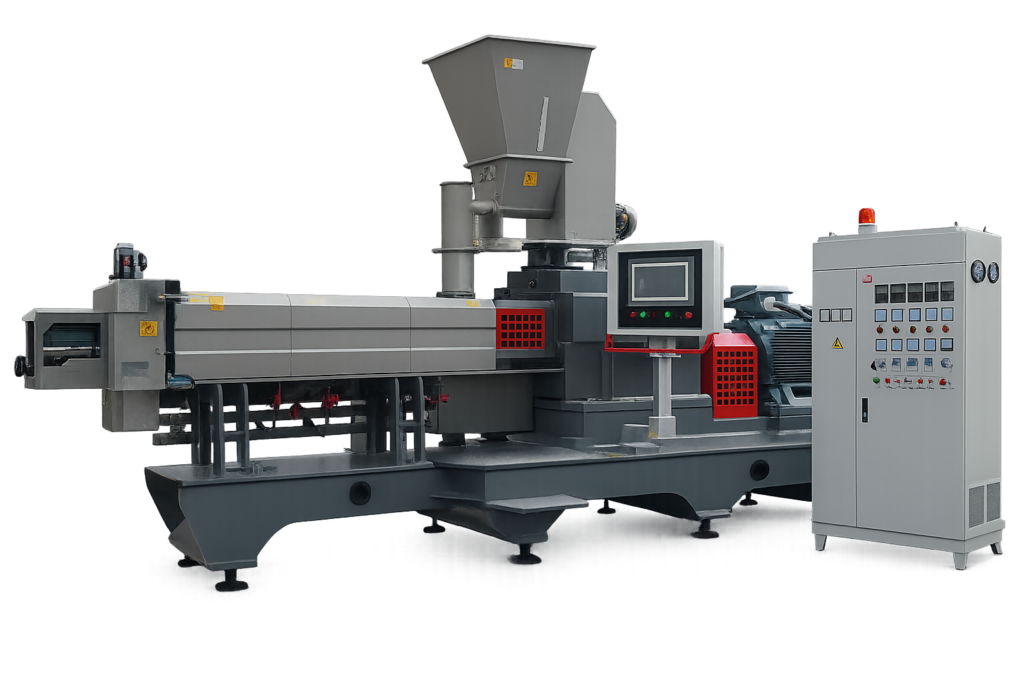
Extrusion is the critical transformation step in sandwich rice cracker production. The process combines cooking, shaping, and expansion of the starchy matrix under controlled conditions of temperature, pressure, and mechanical shear.
The twin-screw extruder is the equipment of choice for sandwich rice cracker production . It offers several advantages over single-screw designs:
- Superior mixing of dough components
- Self-wiping screw geometry that reduces material buildup and facilitates cleaning
- Greater control over residence time and shear intensity
- Better handling of materials with varying moisture contents
4.2 Extrusion Process Parameters
The extrusion process for sandwich rice crackers typically operates within the following parameter ranges, based on industrial practice and patent specifications :
| Parameter | Typical Range |
|---|---|
| Screw Speed | 14–25 Hz |
| Feed Rate | 14–25 Hz |
| Die Temperature | 120–160°C |
| Barrel Temperatures | 80–150°C (multi-zone heating) |
| Pressure at Die | 5–15 MPa |
| Residence Time | 20–60 seconds |
| Injection Filling Rate | 8–17 Hz |
| Cutter Speed | 15–25 Hz |
4.3 Co-extrusion: Simultaneous Shell and Filling Production
The defining characteristic of sandwich rice cracker production is the co-extrusion process, where the puffed shell and the filling are produced in a single, continuous operation .
Co-extrusion Die Design:
The co-extrusion die is a specialized component that combines two material streams:
- The Shell Stream: The cooked, gelatinized dough from the extruder barrel
- The Filling Stream: The prepared filling material, delivered by a positive displacement pump
The die is designed such that the shell material emerges as an annular (tubular) flow, while the filling material is injected into the center of this tube. A critical aspect of die design is achieving an even, concentric distribution of the filling within the shell .
The Filling Injection System:
The filling is delivered to the co-extrusion die by a specialized pumping system. Patent literature describes a sandwiching machine that includes:
- A heated, insulated hopper containing the filling material
- Internal stirring shafts to maintain homogeneity and prevent sedimentation
- Water bath heating to maintain filling temperature and flowability without causing starch gelatinization
- A screw pump for positive displacement delivery through the core injection pipe
4.4 Expansion Mechanisms
The expansion of the extruded shell occurs immediately upon exit from the die as a result of:
- Flash Evaporation of Water: The sudden pressure drop from 5–15 MPa to atmospheric pressure causes superheated water (steam) to flash vaporize within the extrudate, creating the characteristic porous structure.
- Viscoelastic Memory of the Polymer Matrix: The high-temperature, high-pressure processing aligns starch polymers. Upon decompression, these polymers attempt to return to their original, more random orientation, contributing to expansion.
- Nucleation and Cell Growth: The number and size of gas bubbles that form during expansion determine the final product density and texture.
The expansion ratio (extrudate diameter divided by die diameter) can range from 2:1 to 5:1, depending on formulation, moisture content, and process conditions.
4.5 Cutting and Shaping
Immediately following extrusion and expansion, the filled continuous tube must be cut to the desired length. This is typically accomplished with a rotating blade system that slices the extrudate as it emerges from the die .
Cutting Parameters:
- Cutter Speed: 15–25 Hz (synchronized with extrusion rate)
- Cutting Frequency: Determines product length (typically 73–77 mm for standard rod products)
Following cutting, the individual pieces are conveyed to a shaping machine. The shaping machine performs multiple functions:
- Traction: Pulling the extrudate to maintain consistent cross-section
- Conveying: Transporting cut pieces to subsequent processing stages
- Shaping: Applying light pressure to ensure uniform geometry
- Cooling: Allowing the product to begin cooling before drying
Chapter 5: Drying and Moisture Management
5.1 Importance of Drying
Drying serves multiple critical functions in sandwich rice cracker production:
- Texture Development: Reduction of moisture content to 2–3% creates the characteristic crisp texture
- Shelf Life Extension: Low moisture limits microbial growth and retards staling
- Flavor Development: Controlled drying conditions promote Maillard browning and flavor generation
- Oil Absorption: After drying, the porous structure is prepared for oil and seasoning application
5.2 Drying Process Parameters
The drying process typically involves the following stages :
Primary Drying:
- Temperature: 70–90°C
- Time: 12–30 minutes
- Target Moisture: 6–8%
Secondary Drying/Baking:
- Temperature: As required for flavor development
- Time: Dependent on product specifications
- Target Moisture: 2–3%
5.3 Drying Equipment
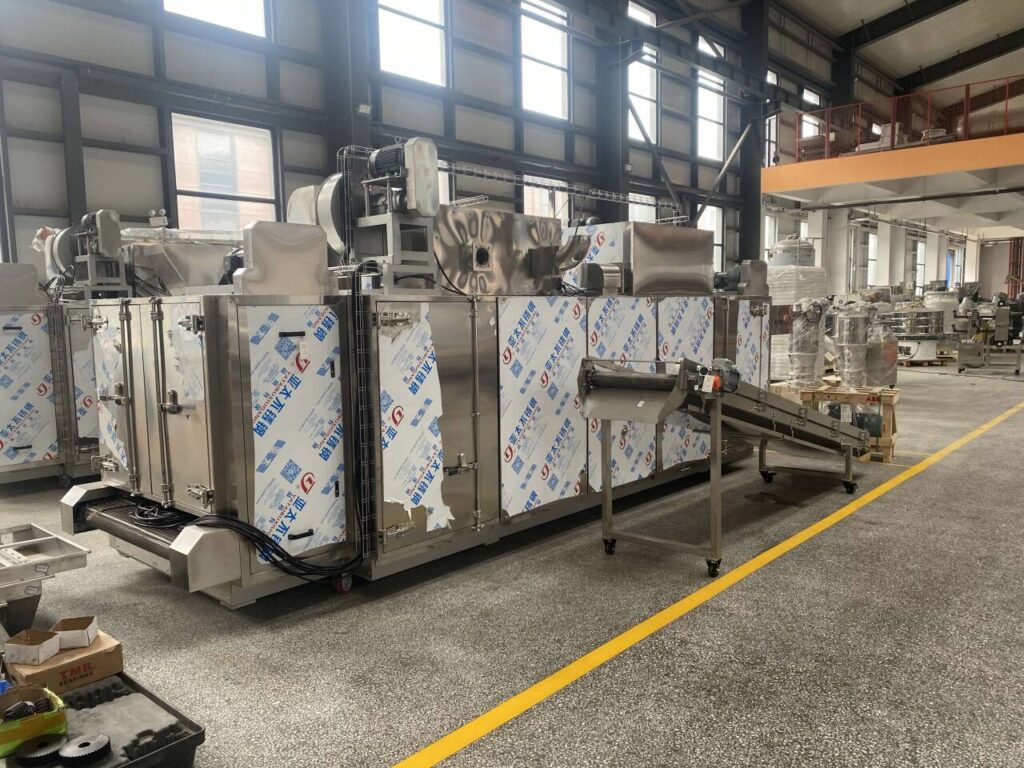
Conveyor Ovens: Multi-zone conveyor ovens with controlled temperature profiles are commonly employed. The product travels on a wire mesh belt through heated zones where hot air is circulated.
Fluidized Bed Dryers: For some applications, fluidized bed dryers offer more rapid and uniform drying by suspending the product in a stream of heated air.
5.4 Moisture Monitoring
In-line moisture meters (near-infrared or microwave-based) should be installed at the dryer exit to monitor moisture content and provide feedback control of drying parameters.
Chapter 6: Seasoning Application
6.1 Purpose and Principles
Seasoning serves three primary purposes:
- Flavor Enhancement: The application of external flavoring agents provides the final taste profile
- Visual Appeal: Seasonings contribute color and visual texture to the product surface
- Protective Function: Oil application creates a moisture barrier that helps maintain crispness
6.2 Oil Application
Edible oil is applied to the product surface prior to dry seasoning application. The oil serves as a binder for the powdered seasonings and creates a barrier against moisture pickup.
Application Method:
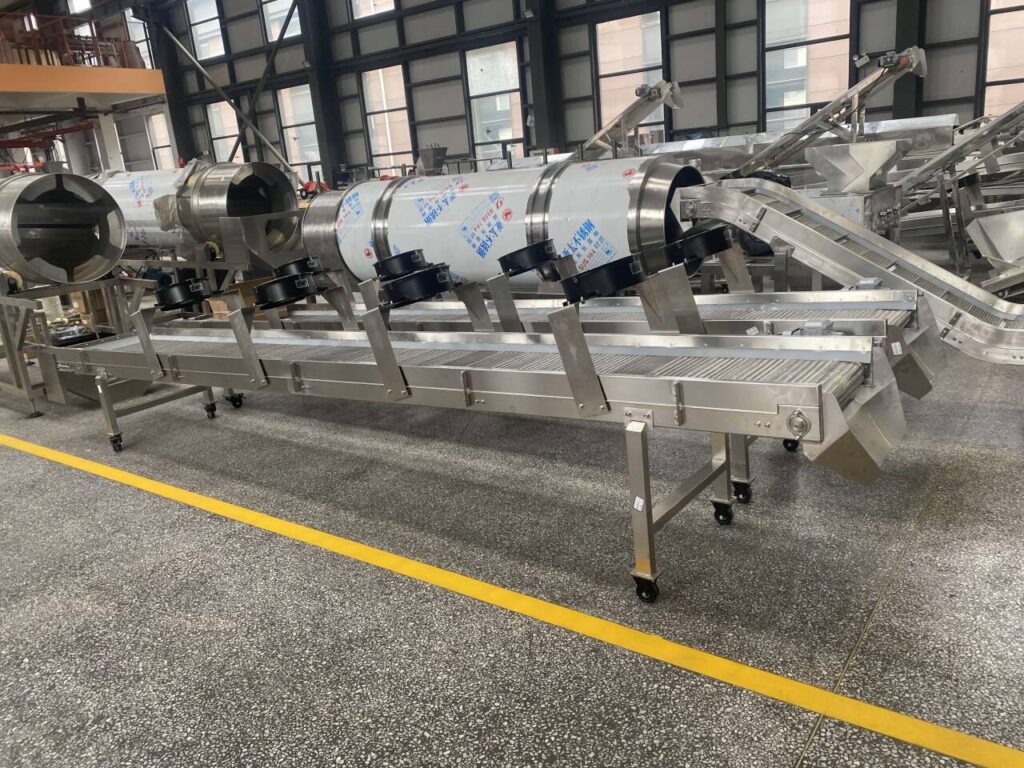
Oil is sprayed onto the product in a rotating drum. The tumbling action of the drum ensures even coating of the product surface. Typical oil application rates range from 5–15% of product weight .
Oil Selection:
Partially hydrogenated vegetable oils, palm oil, or high-oleic oils are typically employed for their stability and neutral flavor profiles.
6.3 Seasoning Powder Application
The seasoned powder is applied in a second step within the seasoning drum. The key process parameter is achieving uniform powder coverage without overdosing or creating non-uniform patches.
The seasoning drum design is critical to uniform application. For delicate products, octagonal seasoning machines with gentle tumbling action are often preferred over round drums .
Typical Application Rates:
- Oil: 5–15% of product weight
- Seasoning Powder: 3–10% of product weight
Chapter 7: Cooling and Tempering
7.1 Need for Cooling
After drying and seasoning, the product must be cooled to ambient temperature to facilitate packaging. Cooling serves several purposes:
- Prevents condensation within packaging
- Reduces the risk of oxidative rancidity
- Facilitates handling in packaging equipment
- Stabilizes the product structure
7.2 Cooling Methods
Forced Air Cooling: Ambient or chilled air is blown over the product on a vibrating conveyor or cooling belt. This is the most common method for sandwich rice cracker cooling.
Ambient Cooling: For smaller production volumes, cooling on open racks may be sufficient, though this is slower and presents greater hygiene risks.
Cooling Targets:
- Product Exit Temperature: Ambient + 5°C (typically 25–30°C)
- Cooling Time: 5–15 minutes, depending on product size and air velocity
7.3 Relative Humidity Control
During cooling, the relative humidity of the cooling air must be controlled to prevent moisture absorption. The target relative humidity is typically 40–60%.
Chapter 8: Packaging Technology
8.1 The Critical Role of Packaging
Packaging is the last opportunity to preserve the quality achieved during manufacturing. For crisp, low-moisture products like sandwich rice crackers, packaging serves several essential functions:
- Moisture Barrier: Preventing moisture pickup is critical to maintaining crisp texture
- Oxygen Barrier: Preventing oxygen ingress reduces oxidative rancidity of oils
- Light Protection: Light exposure can accelerate oxidation and color fading
- Mechanical Protection: Packaging protects the fragile product from breakage during distribution
8.2 Packaging Materials
Primary Packaging: Flexible pouches or bags with high barrier properties. Typical structures include:
- Foil-Based Laminates: Aluminum foil provides an absolute barrier to moisture and light. Example: PET/Al/PE (polyester/aluminum/polyethylene)
- Metallized Films: Metallized PET or OPP provide good barrier properties at a lower cost than foil
- High-Barrier Coated Films: PVDC- or PVOH-coated films offer good barrier properties
Secondary Packaging: Cartons or boxes for retail display or bulk shipping.
8.3 Nitrogen Flushing
A critical step in packaging is replacing the ambient air in the bag with nitrogen. The benefits are:
- Oxygen Removal: Reduces the oxygen concentration from 21% to <1%, significantly retarding lipid oxidation
- Texture Preservation: Prevents moisture pickup by creating a dry, inert atmosphere
- Shelf Life Extension: Reduces the risk of oxidation-induced rancidity
The nitrogen flushing process uses the packaging machine’s gas flushing system to inject nitrogen into the bag prior to sealing .
8.4 Packaging Equipment
Vertical Form-Fill-Seal (VFFS) Machines: These are the most common packaging machines for sandwich rice crackers. The machine forms the bag from a flat roll of film, fills it with product, and seals it in a single operation.
Weighing and Filling Systems: Multi-head weighers are typically employed for accurate product dosing to the packaging machine.
Sealing Systems: Heat sealing jaws create a hermetic seal. Sealing parameters (temperature, pressure, time) must be optimized for the film structure.
Chapter 9: Quality Control and Testing
9.1 In-Process Controls
A robust quality control program includes in-process checks at critical control points:
| Control Point | Parameters Monitored |
|---|---|
| Raw Material Receipt | Moisture, particle size, foreign matter, microbial counts |
| Dough Preparation | Mixing time, dough moisture, dough temperature |
| Extrusion | Extruder temperatures (zones), screw speed, feed rate, die pressure, product expansion ratio |
| Cutting | Product length, weight uniformity |
| Drying | Dryer temperatures, product moisture (in-line) |
| Seasoning | Oil application rate, seasoning coverage |
| Cooling | Product temperature, cooling humidity |
| Packaging | Seal integrity, fill weight, nitrogen flush effectiveness |
9.2 Finished Product Testing
Physical Testing:
- Moisture Content (< 3% target)
- Water Activity (< 0.4 Aw)
- Expansion Ratio
- Product Dimensions (length, diameter)
- Weight (individual and pack weights)
- Texture Analysis (crispness/fracturability)
Sensory Testing:
- Flavor: Correct and consistent taste profile
- Texture: Appropriate crispness and mouthfeel
- Appearance: Color, uniformity, and absence of defects
- Filling Quality: Correct quantity, distribution, and consistency
Microbiological Testing:
- Total Plate Count
- Coliforms and E. coli
- Yeasts and Molds
- Pathogens (Salmonella, Staphylococcus aureus, Bacillus cereus)
Chemical Testing:
- Peroxide Value (measure of oil oxidation)
- Acid Value
- Salt Content
- Sugar Content
- Allergen Testing (where applicable)
9.3 Sensory Evaluation Programs
Regular sensory evaluation by a trained panel is essential for ensuring product consistency. Key attributes to evaluate include:
- Appearance: Color, shape, surface characteristics
- Aroma: Characteristic aroma notes, absence of off-odors
- Texture: Crispness, crunch, mouthfeel
- Flavor: Correct flavor profile, intensity, balance
- Aftertaste: Clean finish or lingering notes
9.4 Shelf Life Testing
Accelerated shelf life testing and real-time shelf life monitoring should be conducted to validate the product’s expiration date. Key parameters to monitor during storage include:
- Moisture pick-up (texture degradation)
- Peroxide value (fat oxidation)
- Sensory quality
- Microbiological stability
Chapter 10: Plant Design and Operational Considerations
10.1 Production Line Layout
A typical sandwich rice cracker production line comprises the following equipment in sequence :
- Raw Material Preparation Area: Milling, sieving, and batching equipment
- Dough Preparation Area: Mixers with clean-in-place capability
- Extrusion Area: Twin-screw extruder, filling pump, co-extrusion die, cutter
- Shaping and Conveying Area: Shaping machine, elevators, conveyors
- Drying Area: Ovens or dryers (multi-zone)
- Seasoning Area: Oil sprayer, seasoning drum
- Cooling Area: Cooling conveyors
- Packaging Area: Weighers, form-fill-seal machines, cartoners
- Finished Goods Storage: Temperature-controlled warehouse
10.2 Hygiene and Sanitation
Given the potential for contamination in food processing, strict hygiene protocols must be implemented:
- CIP (Clean-in-Place) Systems: For extrusion equipment where disassembly is difficult
- Scheduled Cleaning: Daily, weekly, and monthly cleaning schedules
- Personnel Hygiene: Hair nets, gloves, gowns, and hand-washing stations
- Pest Control: Integrated pest management program
- Allergen Control: Dedicated lines or thorough cleaning between allergen-containing and allergen-free production runs
10.3 Environmental Considerations
- Waste Management: Oil and grease waste, solid waste, and wastewater must be properly managed
- Energy Efficiency: Heat recovery from oven exhaust can reduce energy costs
- Water Conservation: Recycling of cooling water where possible
10.4 Personnel Requirements
A typical production operation requires:
- Production Manager: Oversees all production operations
- Shift Supervisors: Manage production staff on each shift
- Machine Operators: Monitor and adjust equipment
- Quality Control Technicians: Conduct in-process and finished product testing
- Maintenance Personnel: Perform preventive and corrective maintenance
- Packaging Staff: Operate packaging equipment and handle finished goods
Chapter 11: Troubleshooting Common Process Issues
11.1 Extrusion-Related Problems
| Problem | Possible Causes | Solutions |
|---|---|---|
| Poor Expansion | Insufficient dough moisture; inappropriate temperature profile; worn die | Adjust moisture; check and adjust barrel temperatures; inspect/replace die |
| Irregular Product Dimensions | Inconsistent feed rate; screw speed fluctuation | Calibrate feed system; check drive train and control system |
| Uneven Filling Distribution | Die misalignment; filling pressure fluctuations | Realign die; check pump calibration and filling pressure |
| Shell Cracking | Excess drying temperature; rapid cooling | Reduce drying temperature; slow cooling rate |
| Discoloration | Overheating in extruder; Maillard reaction | Reduce barrel temperatures; check screw configuration |
11.2 Drying-Related Problems
| Problem | Possible Causes | Solutions |
|---|---|---|
| Inconsistent Moisture | Variable dryer temperature; uneven product distribution | Check and calibrate temperature controllers; ensure even bed depth |
| Inadequate Crispness | Insufficient drying; moisture pickup during cooling | Increase drying time or temperature; reduce cooling humidity |
| Over-browning | Excessive drying temperature | Reduce drying temperature; reduce residence time |
| Surface Checking | Too rapid drying | Adjust drying profile (gentler initial drying) |
11.3 Seasoning Problems
| Problem | Possible Causes | Solutions |
|---|---|---|
| Non-uniform Flavor | Inconsistent oil application; poor powder distribution | Check oil sprayer; adjust drum speed and powder feed |
| Over-seasoning | Excessive powder feed rate | Calibrate powder feeder |
| Insufficient Flavor | Low oil application; powder feed rate too low | Adjust oil spray rate; increase powder feeder setting |
11.4 Packaging Problems
| Problem | Possible Causes | Solutions |
|---|---|---|
| Seal Failure | Incorrect sealing temperature or pressure | Adjust sealing parameters; check seal bar condition |
| Oxygen Ingress | Inadequate nitrogen flush | Check gas flow rate; verify gas purity |
| Stale Product | Moisture ingress through package | Check film barrier properties; ensure hermetic seal |
| Broken Product | Too rapid handling; inadequate cushioning | Reduce line speed; adjust packaging handling |
Chapter 12: Emerging Trends and Innovations
12.1 Health and Wellness Positioning
Consumer demand for healthier snack options is driving innovation:
- Reduced Fat and Sugar Formulations: Reformulating to meet clean label requirements
- High Protein Products: Incorporating more soybean flour or adding protein isolates
- Whole Grain and Multigrain Products: Using brown rice, whole wheat, and mixed grains
- Gluten-Free Formulations: Rice-based products naturally meet gluten-free requirements
12.2 Flavor Innovation
- International Flavor Profiles: Asian-inspired flavors (matcha, red bean), Latin American flavors (chili-lime), Mediterranean flavors
- Natural Colors and Flavors: Replacing artificial colors and flavors with natural alternatives
- Regional Specialties: Products highlighting local ingredients
12.3 Sustainability
- Sustainable Sourcing: Sourcing rice from sustainably managed farms
- Reduced Packaging: Thinner films, more recyclable materials
- Energy Efficiency: Heat recovery systems, optimized drying profiles
12.4 Automation and Industry 4.0
- In-Line Monitoring: Real-time quality monitoring with NIR and other sensors
- Data Analytics: Using production data to optimize processes
- Predictive Maintenance: Using sensor data to predict equipment failures
Chapter 13: Regulatory Compliance
13.1 Global Regulations
Sandwich rice cracker manufacturers must comply with relevant regulations in their target markets:
United States:
- FDA Food Safety Modernization Act (FSMA)
- FDA Nutrition Labeling regulations
- Allergen labeling requirements
European Union:
- EC No 1169/2011 (Food Information to Consumers)
- EU Allergen regulations
- EC 178/2002 (General Food Law)
Other Markets:
- Local regulations for food additives, labeling, and food safety
13.2 Certification Programs
Many customers require or prefer suppliers with recognized certifications:
- BRCGS Food Safety: Global food safety standard
- IFS Food: International Featured Standard
- FSSC 22000: Food safety management system certification
- Kosher and Halal: Religious certification for specific markets
- Organic Certification: For certified organic products
13.3 Product Labeling Requirements
Key labeling elements for sandwich rice crackers include:
- Product name
- Ingredients list (descending order of predominance)
- Allergen declaration
- Net weight statement
- Nutrition facts panel
- Manufacturer/distributor information
- Country of origin
- Storage instructions
- Expiration date/date of manufacture
Chapter 14: Economic Considerations and Commercial Viability
14.1 Production Costs
The largest cost components for sandwich rice cracker production:
- Raw Materials: 60–70% of total production cost
- Cereal flours (rice, corn)
- Fats and oils (palm oil)
- Sugar and flavorings
- Packaging materials
- Labor: 15–20% of production cost
- Production staff
- Quality control personnel
- Maintenance technicians
- Utilities: 5–10% of production cost
- Electricity
- Gas (for drying ovens)
- Water
- Overhead: 5–10% of production cost
- Facility costs
- Administrative overhead
- Marketing and sales
14.2 Yield Considerations
Product yield is critical to profitability. Key losses occur at:
- Extrusion: Startup and shutdown waste, non-conforming product
- Drying: Breakage, over-drying or under-drying
- Seasoning: Incomplete coating, powder loss
- Packaging: Filler waste, rejected packages
Achieving yields of 85–95% (excluding packaging) is typical for well-managed operations.
14.3 Equipment Investment
Capital costs for a medium-scale production line (120–180 kg/hour capacity) typically include:
- Pre-processing: Milling, mixing
- Extrusion: Twin-screw extruder, filling pump, die systems
- Post-extrusion: Drying, seasoning, cooling
- Packaging: VFFS machine, multi-head weigher
Total equipment investment ranges from USD 200,000 to USD 500,000 depending on capacity, automation, and country of manufacture.
Conclusion
The production of sandwich rice crackers is a complex, multi-stage process that combines food science principles with precision engineering. Success requires careful control of raw material quality, meticulous process management, and rigorous quality assurance.
This guide has provided a comprehensive overview of the entire sandwich rice cracker production process, from the science of raw materials to the final packaging of finished product. While the fundamentals of extrusion and drying remain consistent, the industry continues to evolve with consumer demand for new flavors, healthier formulations, and more sustainable products.
For food technologists, production managers, and quality professionals working in this sector, mastery of the technological principles outlined in this guide is essential for producing consistent, high-quality products that meet consumer expectations and regulatory requirements.