Abstract
Breadcrumbs represent a ubiquitous food ingredient that serves as the critical interface between fried foods and consumers—providing the signature crunch, golden color, and textural contrast that defines everything from chicken tenders to onion rings. This comprehensive technical guide provides a complete, step-by-step manual for industrial-scale breadcrumb production, covering both traditional baking-based methods and modern extrusion technologies. The guide includes detailed specifications for raw materials, process parameters for each unit operation, quality control protocols with tolerance limits, troubleshooting matrices for common defects, and regulatory frameworks for food safety compliance. Intended for food technologists, production managers, and quality assurance personnel, this document bridges the gap between artisanal knowledge and industrial reproducibility.
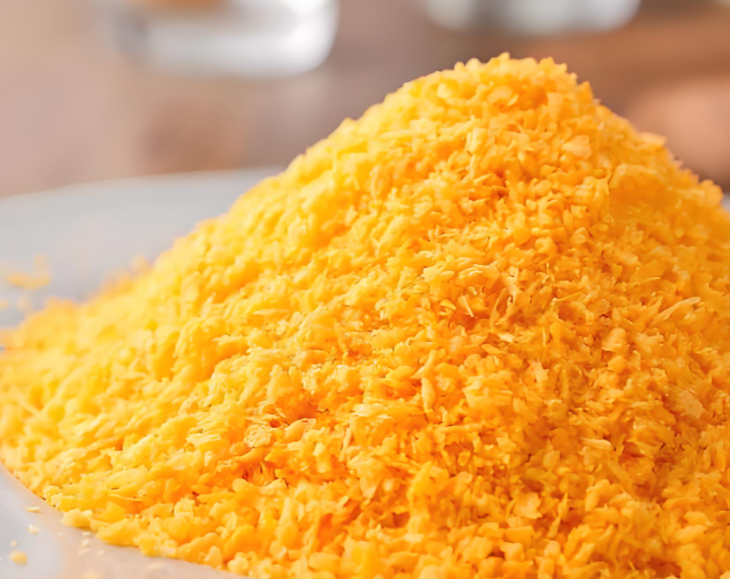
Table of Contents
- Introduction: The Strategic Importance of Breadcrumbs in the Food Industry
- Breadcrumb Classification and Product Specifications
- 2.1 Panko (Japanese-Style) Breadcrumbs
- 2.2 Regular/American-Style Breadcrumbs
- 2.3 Specialty and Custom Formulations
- Raw Materials: Composition and Ingredient Specifications
- 3.1 Flour Selection and Properties
- 3.2 Leavening Agents
- 3.3 Fats and Oils
- 3.4 Flavoring and Coloring Additives
- The Two Primary Manufacturing Routes
- 4.1 Traditional Oven-Baked Method
- 4.2 Modern Extrusion Method
- Traditional Breadcrumb Production: Step-by-Step
- 5.1 Dough Preparation and Mixing
- 5.2 Sheeting and Deformation Technology
- 5.3 Tunnel Oven Baking
- 5.4 Cooling and Conditioning
- 5.5 Milling/Grinding
- 5.6 Drying
- 5.7 Screening and Sizing
- Extrusion-Based Breadcrumb Production
- 6.1 Dry Blending
- 6.2 Extrusion Parameters and Screw Design
- 6.3 Cutting and Shaping
- 6.4 Drying Systems
- 6.5 Crumbling/Grinding
- Complete Production Line Configuration
- Quality Control and Analytical Methods
- 8.1 Physical Properties
- 8.2 Chemical Composition
- 8.3 Microbiological Safety
- 8.4 Sensory Evaluation
- Troubleshooting Common Defects
- Packaging and Storage Requirements
- Regulatory and Safety Standards
- Waste Management and Sustainability
- References
1. Introduction: The Strategic Importance of Breadcrumbs in the Food Industry
Breadcrumbs are defined as “a product obtained from dry bread milled into a proper grain size” . They serve multiple functions in food preparation: as an outer coating for fried foods (poultry, fish, seafood, meats, and vegetables), as a topping for casseroles, as a binder in meatloaves and stuffings, and as a thickener for stews and soups . The global breadcrumb market has experienced consistent growth driven by the expansion of quick-service restaurants (QSRs), frozen food categories, and consumer demand for crispy-textured coated products.
The critical functional properties that determine breadcrumb quality include:
- Particle size distribution (affects adhesion and texture)
- Moisture content (impacts shelf stability and crispiness)
- Color (influences final product appearance and consumer perception)
- Oil absorption capacity (determines fried product characteristics)
- Crunchiness/texture (sensory quality attribute)
Breadcrumbs can be produced through two fundamentally different technological routes: the traditional baking method (which mimics homemade breadcrumb production at industrial scale) and the extrusion method (a newer, more efficient process that produces breadcrumbs directly from flour without intermediate bread production).
2. Breadcrumb Classification and Product Specifications
2.1 Panko (Japanese-Style) Breadcrumbs
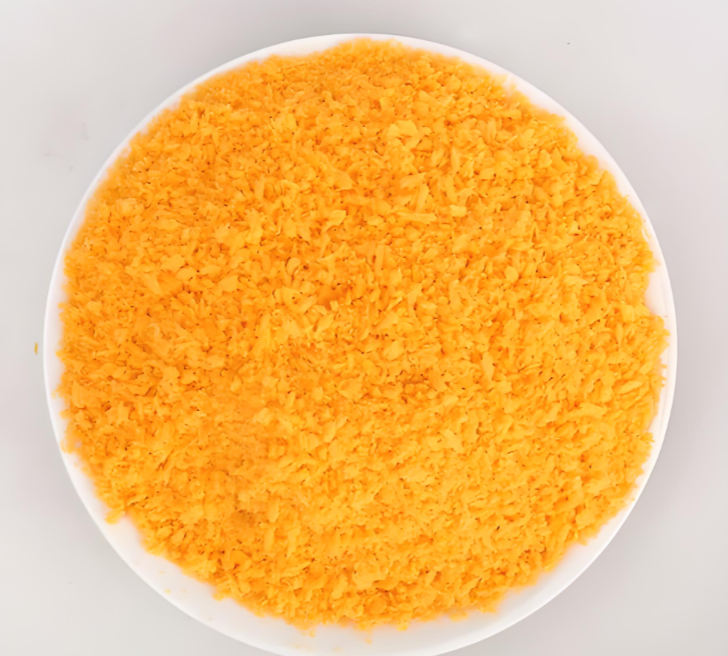
Panko breadcrumbs represent a distinct category characterized by their elongated, flaky, needle-like shape rather than the granular structure of regular breadcrumbs. Key differentiators include:
- Shape: Acicular (needle-like) or elongated flakes
- Texture: Lighter, airier, and crunchier than regular breadcrumbs
- Oil absorption: Lower oil retention (approx. 20-30% less than regular crumbs)
- Color: Bright white to cream, with uniform shade
- Processing: Typically produced via electrical baking (electric current passes through dough) or specialized extrusion methods
The unique structure of panko results from a specific production method where dough is baked using direct electrical resistance heating, which creates a bread with no crust. This crustless bread is then processed into the characteristic flaky crumbs.
2.2 Regular/American-Style Breadcrumbs
Regular breadcrumbs are more granular and spherical, produced from conventional baked bread (including crust). Specifications according to the Tanzania Standard (representative of international norms) include :
| Parameter | Requirement |
|---|---|
| Moisture content, max | 10% |
| pH of aqueous extract | 5.3 – 6.0 |
| Total ash (dry basis), max | 2.0% |
| Acid insoluble ash, max | 0.2% |
| Crude fiber (dry basis), max | 2.0% |
| Particle size | Not more than 2% remain on 3.15mm screen; not more than 1% pass through 0.18mm screen |
2.3 Specialty and Custom Formulations
Beyond the two main categories, breadcrumbs can be customized for specific applications:
- Seasoned breadcrumbs: With added herbs, spices, cheese, or garlic
- Colored breadcrumbs: Using paprika, turmeric, or caramel color
- Gluten-free breadcrumbs: Using rice flour, corn flour, or legume flours
- Organic breadcrumbs: Certified organic ingredients only
- Low-sodium formulations: Reduced salt content for health-conscious markets
3. Raw Materials: Composition and Ingredient Specifications
3.1 Flour Selection and Properties
Wheat flour is the primary structural component of breadcrumbs. For standard production, the following specifications apply:
Essential flour parameters:
- Protein content: 11-13% (medium to strong flour) for proper gluten development
- Ash content: 0.45-0.60% (white flour preferred for lighter color)
- Falling number: 250-350 seconds (adequate enzyme activity)
- Moisture: 13-14% (as received)
Higher protein flours produce breadcrumbs with better structure and less fines generation during milling. For panko production, soft wheat flour (lower protein, 9-11%) is often preferred to achieve the characteristic delicate flake structure.
3.2 Leavening Agents
Yeast is the traditional leavening agent for breadcrumb production. Specifications include :
- Bakers yeast: Compressed or active dry yeast
- Usage rate: 2-4% of flour weight (depending on desired dough development time and bread density)
For extrusion-based breadcrumb production, chemical leavening agents (sodium bicarbonate combined with an acidulant such as sodium acid pyrophosphate) may replace yeast entirely, eliminating fermentation time.
3.3 Fats and Oils
Edible oils and fats serve multiple functions: dough handling improvement, crumb texture modification, and shelf life extension. Common options include :
- Palm oil or palm shortening (economical, stable)
- Soybean oil (neutral flavor)
- Partially hydrogenated vegetable oils (phased out in many markets due to trans fat concerns)
Usage rates: 2-5% of flour weight. Higher fat content produces more tender crumbs but reduces crispiness in the final fried product.
3.4 Flavoring and Coloring Additives
Optional ingredients permitted in breadcrumb production include :
- Milk or milk products (for flavor, browning, and nutritional enhancement)
- Gluten (vital wheat gluten, to increase protein content for specific applications)
- Sugar (sucrose, glucose, or dextrose; 1-5% for browning and flavor)
- Salt (sodium chloride; 1-2% for flavor and gluten strengthening)
Color additives must comply with Codex Alimentarius General Standard for Food Additives (CODEX STAN 192) .
4. The Two Primary Manufacturing Routes
The breadcrumb industry employs two fundamentally different production methodologies. Understanding their differences is essential for selecting appropriate equipment and process parameters.
Comparison of Manufacturing Routes
| Feature | Traditional Oven-Baked Method | Extrusion Method |
|---|---|---|
| Process steps | Dough → Ferment → Bake → Cool → Mill → Dry | Mix → Extrude → Cut → Dry → Crumble |
| Fermentation required | Yes (1-3 hours) | No |
| Bread intermediate | Yes | No |
| Crust formation | Yes (outer crust) | No (crustless) |
| Production time | 4-8 hours | 20-30 minutes |
| Energy efficiency | Lower | Higher |
| Waste generation | Higher (crust removal) | Minimal (recyclable fines) |
| Primary product type | Regular/American | Panko (specialized equipment) |
5. Traditional Breadcrumb Production: Step-by-Step
5.1 Dough Preparation and Mixing
Equipment: Spiral mixer or horizontal planetary mixer, 100-500 kg batch capacity.
Formulation (representative, per 100 kg flour):
| Ingredient | Weight (kg) |
|---|---|
| Wheat flour (12% protein) | 100 |
| Water | 55-65 |
| Yeast (compressed) | 3-4 |
| Salt | 1.8-2.0 |
| Sugar | 2-4 |
| Shortening/oil | 2-3 |
| Dough conditioner (optional) | 0.1-0.5 |
Mixing procedure:
- Hydrate yeast in part of the water at 25-30°C (for active dry yeast)
- Combine dry ingredients (flour, salt, sugar) in mixer bowl
- Add water, hydrated yeast, and melted shortening
- Mix on low speed (60 rpm) for 3-5 minutes to incorporate
- Mix on medium speed (120 rpm) for 8-12 minutes until gluten is properly developed
- Final dough temperature target: 28-32°C
Dough quality checks:
- Gluten development: Windowpane test (dough stretches to thin, translucent film without tearing)
- Dough consistency: Smooth, non-sticky, elastic
5.2 Sheeting and Deformation Technology
A critical patent in breadcrumb manufacturing describes the process of “preparing and sheeting a dough, disposing the sheeted dough on a conveyor, and deforming the sheeted dough back and forth to form the dough into an undulating configuration” prior to baking .
Process steps:
- Sheeting: Dough is passed through a series of reduction rollers to achieve uniform thickness (10-20 mm)
- Deformation: The sheeted dough undergoes a mechanical deformation process where it is compressed and expanded in an undulating pattern. This creates internal stress and varied density zones within the dough.
- Purpose: The undulating configuration produces bread with irregular crumb structure—essential for creating breadcrumbs with varied particle shapes and the characteristic “rough” texture that promotes coating adhesion.
5.3 Tunnel Oven Baking
Equipment: Gas-fired or electric tunnel oven, 20-60 meters length, equipped with mesh conveyor belt.
Baking parameters:
- Temperature zones:
- Zone 1 (loading): 180-200°C
- Zone 2 (middle): 200-220°C
- Zone 3 (discharge): 170-190°C
- Baking time: 20-40 minutes (depending on bread size and oven configuration)
- Conveyor speed: Adjusted to achieve desired crust color and crumb moisture
Target baked bread specifications:
- Center temperature upon exit: >96°C (ensures complete starch gelatinization)
- Crumb moisture: 30-35%
- Crust color: Golden brown (L* value 55-65, depending on product specification)
Critical considerations:
- Uniform heat distribution across belt width (maximum variation ±5°C)
- Steam injection in initial zone to promote oven spring and crust formation
- Proper ventilation to remove excess moisture
5.4 Cooling and Conditioning
Purpose: Stabilize the baked bread structure and equalize moisture distribution before milling.
Cooling parameters:
- Cooling method: Ambient air on open mesh belts or forced air cooling tunnels
- Cooling duration: 2-4 hours (natural cooling) or 20-40 minutes (forced air)
- Target temperature: <35°C at crumb center
Conditioning: Aged bread (24-48 hours at 20-25°C, 50-60% RH) produces better breadcrumb quality due to:
- Starch retrogradation (increases firmness)
- Moisture equalization throughout the crumb
- Reduced gumminess during milling
5.5 Milling/Grinding
Equipment: Hammer mill, pin mill, or roller mill.
The milling process is the most critical step for determining final particle size distribution. The grinding chamber configuration, screen size, and rotor speed directly control output particle dimensions.
Screens: 2-8 mm screens produce coarse crumbs; <2 mm screens produce fine crumbs.
Hammer mill parameters for breadcrumbs:
- Rotor speed: 1500-3000 rpm
- Screen size: 2.5-6.0 mm (depending on desired crumb size)
- Feed rate: Controlled to maintain motor load at 70-85% of rated capacity
Process principle: The milled product is air-conveyed to a classifier or sifter where particles are separated by size.
5.6 Drying
Freshly milled breadcrumbs typically contain 20-30% moisture (from the baked bread). Drying reduces this to 10% or less for shelf stability .
Drying equipment options:
- Fluid bed dryer: Most common for breadcrumbs
- Rotary drum dryer: Suitable for larger throughputs
- Belt dryer: Gentle drying, lower fines generation
Fluid bed drying parameters:
- Inlet air temperature: 80-120°C
- Outlet air temperature: 40-50°C
- Bed depth: 50-100 mm
- Residence time: 10-30 minutes
- Air velocity: 1.0-1.5 m/s (sufficient to fluidize breadcrumbs without elutriation)
Target specifications after drying:
- Moisture content: 8-10% (maximum 10% per standard)
- Water activity (Aw): <0.60
5.7 Screening and Sizing
Screening classification uses vibratory sieves to separate:
- Overs: Particles >3.15 mm (re-milled or sold as coarse crumbs)
- Product: Particles within specification
- Fines: Particles <0.18 mm (removed to prevent dustiness; can be sold as “bread flour”)
Screening equipment: Three-deck vibratory sifter with screens of 3.15 mm (top), 0.5 mm (middle), and 0.18 mm (bottom).
6. Extrusion-Based Breadcrumb Production
Modern extrusion technology has revolutionized breadcrumb production by eliminating the fermentation and baking steps, reducing production time from hours to minutes.
6.1 Dry Blending
All dry ingredients are combined before entering the extruder to ensure uniform distribution.
Formulation for extrusion breadcrumbs:
| Ingredient | Percentage |
|---|---|
| Wheat flour | 60-80% |
| Starch (corn, tapioca, or potato) | 10-20% |
| Sugar | 2-5% |
| Salt | 1-2% |
| Chemical leavening agents | 1-3% |
| Emulsifiers (monoglycerides) | 0.5-1% |
No yeast is used—chemical leavening provides the porosity needed for the breadcrumb structure.
6.2 Extrusion Parameters and Screw Design
Equipment: Co-rotating twin-screw extruder (L/D ratio 20:1 to 30:1; screw diameter 65-95 mm for production lines of 200-800 kg/h) .
Temperature profile across barrel zones:
| Zone | Temperature | Function |
|---|---|---|
| Zone 1 (feed) | 25-40°C | Conveying, hydrating |
| Zone 2 (mixing) | 60-80°C | Dough formation |
| Zone 3 (cooking) | 90-110°C | Starch gelatinization |
| Zone 4 (cooling) | 70-90°C | Viscosity control |
| Zone 5 (die) | 70-85°C | Shaping |
Screw speed range: 250-400 rpm, producing SME (Specific Mechanical Energy) of 120-180 kWh/ton.
Water addition: 15-25% of total formula weight, injected directly into the extruder barrel.
Die plate design (for panko-type products): Multi-orifice die with specially shaped openings to create the characteristic needle-like structure upon expansion.
6.3 Cutting and Shaping
As the extrudate exits the die, it expands due to the pressure drop and moisture flash-off. A rotating knife cuts the extrudate into pellets of 15-30 mm length. The expansion process is critical for generating the porous structure that will become breadcrumb particles after final size reduction.
6.4 Drying Systems
Two-stage drying protocol for extruded breadcrumbs:
Stage 1: Pre-drying (Fluid bed)
- Inlet air: 110-130°C
- Outlet air: 60-70°C
- Residence time: 3-8 minutes
- Moisture reduction: 25% → 12-15%
Stage 2: Final drying (Belt or second fluid bed)
- Air temperature: 60-80°C
- Residence time: 10-20 minutes
- Final moisture: 6-10%
Extruded breadcrumbs typically dry faster than traditional breadcrumbs due to their more porous structure.
6.5 Crumbling/Grinding
Unlike traditional breadcrumbs (where milling follows baking), extruded breadcrumbs are dried first, then reduced in size using a specialized crumbling machine.
Crumbling process parameters:
- Equipment: Crumbling machine with adjustable rotor
- Rotor speed: 500-1500 rpm
- Screen size: 3-12 mm (depending on desired crumb size)
A key advantage of extrusion processing is that waste materials (fines generated during production) can be recycled back into the dry blend, eliminating waste and reducing raw material costs .
7. Complete Production Line Configuration
A fully automated breadcrumb production line integrates multiple unit operations:
Line components (typical configuration) :
- Mixing system: Ribbon blender or high-shear mixer
- Screw feeder/Conveyor: Transfers mixed material to extruder
- Twin-screw extruder: The core processing unit
- Rotary cutter: Cuts extrudate into pellets
- Hoist/Conveyor system: Transfers pellets to dryer
- Drying system: Fluid bed or belt dryer
- Crumbling machine: Reduces dried pellets to final crumb size
- Screening system: Classifies particles by size
- Packaging system: Automated bagging or bulk packing
Specifications for a medium-capacity line (Model TSE70/TSE85) :
- Installed power: 94-130 kW
- Power consumption: 61-90 kW
- Production capacity: 200-400 kg/h
- Line dimensions (L×W×H): 20-25 × 1.4-1.5 × 2.2 m
- Energy source options: Electrical, gas, steam, or diesel
Production time from raw material to finished product: 20 minutes (extrusion method) .
8. Quality Control and Analytical Methods
8.1 Physical Properties
Particle size distribution:
- Method: Sieve analysis using standard ASTM sieves
- Acceptance: Not more than 2% retained on 3.15 mm screen; not more than 1% passing 0.18 mm screen
Moisture content:
- Method: Halogen moisture analyzer or AOAC vacuum oven method (Method 925.10)
- Tolerance: Target ±0.5%
- Maximum permitted: 10%
Water activity (Aw):
- Method: Chilled mirror dew point or capacitance sensor
- Target: <0.60 (inhibits mold growth)
Color:
- Method: Colorimeter (L, a, b* values) or visual comparison to standard
- Panko target: High L* value (>75) for bright white appearance
8.2 Chemical Composition
pH of aqueous extract:
- Method: 10 g breadcrumb in 100 mL distilled water, measure after 30 minutes
- Acceptance range: 5.3 – 6.0
Total ash (dry basis):
- Method: AOAC 923.03, incineration at 550°C for 4 hours
- Maximum: 2.0%
Crude fiber (dry basis):
- Method: AOAC 978.10
- Maximum: 2.0%
8.3 Microbiological Safety
Breadcrumbs must be free from pathogenic microorganisms and comply with established limits :
| Microorganism | Maximum Limit |
|---|---|
| Yeast and mold | 10² CFU/g |
| Salmonella spp. | Absent in 25 g |
| Escherichia coli | Absent per gram |
Sampling and testing methods:
- Salmonella: Horizontal method per ISO 6579-1
- E. coli: Colony count technique at 44°C per ISO 16649-1
- Yeast and mold: Horizontal method per ISO 21527-2
Hygiene compliance: Production must adhere to Good Hygienic Practices as specified in national bakery codes of hygiene .
8.4 Sensory Evaluation
Daily sensory checks:
- Appearance: Uniform color, absence of dark patches or streaks
- Texture: Springy, small pores uniformly distributed, thin cell walls
- Odor: No off-flavor or rancid odor
- Flowability: Dry and free-flowing
- Freedom from foreign matter: No insects, eggs, or extraneous substances
9. Troubleshooting Common Defects
| Defect | Probable Cause | Corrective Action |
|---|---|---|
| Excessive fines generation | Over-milling; brittle bread | Reduce mill speed; increase bread moisture before milling |
| Product too dark | Oven temperature too high; excessive sugar | Reduce temperature; reduce sugar in formulation |
| Product too pale | Insufficient baking time/temperature | Increase baking temperature or time |
| Off-flavor/rancidity | Rancid oil; improper storage | Check oil freshness; verify storage conditions; add antioxidant |
| Mold growth | Excess moisture (>10%) or Aw >0.65 | Reduce drying target; verify packaging moisture barrier |
| Crumbly/brittle texture | Low protein flour; over-drying | Increase flour protein; reduce drying severity |
| Chewy/tough crumbs | Under-baking; high protein | Verify internal temperature after baking; reduce flour protein |
| Non-uniform particle size | Worn screens; improper classifier setting | Replace screens; adjust classifier airflow |
| Panko not forming proper needles | Incorrect die design; wrong formulation | Verify die orifice shape; adjust starch/flour ratio |
10. Packaging and Storage Requirements
10.1 Packaging Materials
Breadcrumbs must be packaged in food-grade packaging materials that safeguard hygienic, nutritional, and organoleptic qualities .
Recommended packaging types:
- Consumer packs: Multi-layer film (OPP/PE) or paper bags with inner liner; 200-500 g
- Foodservice packs: 2-5 kg stand-up pouches with resealable zippers
- Industrial bulk: 10-25 kg multi-wall paper bags with polyethylene liner; polywoven bags
Packaging specifications:
- Moisture barrier: WVTR < 5 g/m²/24h at 38°C, 90% RH
- Oxygen barrier: OTR < 100 cm³/m²/24h at 23°C, 50% RH (for extended shelf life)
10.2 Storage Conditions
- Temperature: <25°C (cool, dry storage)
- Relative humidity: <65%
- Pallet configuration: Off-floor on pallets, away from walls
- Shelf life: 12 months from production date (under proper storage)
- First-in-first-out (FIFO) inventory rotation mandatory
10.3 Labeling Requirements
Per the Tanzania Standard and EAS 38, each container must bear :
- Product name (“Bread Crumbs”)
- Manufacturer’s name, physical and postal address
- Batch or code number
- Date of manufacture and expiry date
- Net weight
- Country of origin
- Complete list of ingredients
- Storage conditions and instructions
11. Regulatory and Safety Standards
11.1 Applicable Standards
Compliance with the following standards is recommended for international trade:
- Codex Alimentarius: CODEX STAN 192 (food additives), CODEX STAN 193 (contaminants)
- ISO: Food safety management (ISO 22000), microbiological methods
- National standards: Tanzania Standard for breadcrumbs (draft), national bakery codes
11.2 Contaminant Limits
Breadcrumbs must conform to:
- Maximum residue limits for pesticide residues established by Codex Alimentarius
- Maximum levels for contaminants per CODEX STAN 193
11.3 HACCP Critical Control Points (CCPs)
| CCP | Hazard | Critical Limit | Monitoring |
|---|---|---|---|
| CCP1: Oven baking | Pathogen survival | Center temp >96°C | Continuous temp recording, verification every batch |
| CCP2: Drying | Mold growth | Moisture <10% | Sampling every 30 minutes |
| CCP3: Metal detection | Metal fragments | No ferrous >1.0 mm | Calibrated detector at packaging line |
12. Waste Management and Sustainability
12.1 Waste Streams and Management
| Waste Stream | Source | Management Option |
|---|---|---|
| Bread crusts | Traditional breadcrumb production | Re-process into separate product; animal feed |
| Oversized particles | Screening | Re-milling; coarse crumb product |
| Fines (<0.18 mm) | Screening | Sold as bread flour; animal feed |
| Extrusion fines | Extrusion method | Directly recycled into dry blend |
The extrusion method’s ability to recycle waste materials back into production provides significant economic and environmental advantages over traditional methods .