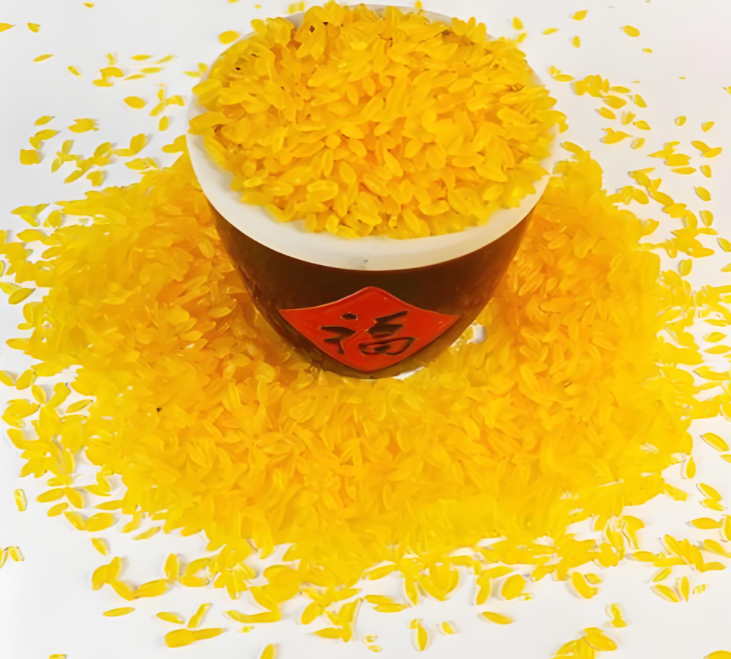
Le riz enrichi s'est imposé comme une solution efficace et évolutive pour lutter contre la carence en micronutriments — souvent qualifiée de “ faim cachée ” — qui touche des milliards de personnes dans le monde, en particulier dans les régions où le riz constitue l'aliment de base. Contrairement au simple riz étuvé ou blanchi, le riz enrichi consiste à incorporer directement dans les grains de riz des vitamines et minéraux essentiels tels que le fer, l’acide folique et la vitamine B12. Machine de fabrication de riz enrichi La méthode la plus robuste et la plus largement adoptée pour la production commerciale est technologie d'extrusion, qui transforme un mélange de farine de riz et de prémélange nutritif en grains de riz enrichis (FRK) ressemblant étroitement à des grains de riz naturels. La création d’un produit à la fois efficace sur le plan nutritionnel, attrayant visuellement et cuisant comme du riz classique nécessite la maîtrise d’un processus de production complexe et interconnecté. Voici les dix principaux éléments à prendre en compte.
1. La qualité des matières premières : le fondement du noyau
Le processus commence par le riz cassé, principal sous-produit du broyage du riz. La qualité de cette farine détermine directement l’intégrité structurelle du grain extrudé final. La farine de riz doit être finement pulvérisée (à l'aide d'un micropulvérisateur) afin d'obtenir une pâte lisse et d'éviter toute texture granuleuse dans le produit fini. Sa composition — teneur en humidité, en protéines et en amidon — influe sur son comportement pendant l'extrusion et sur ses caractéristiques de cuisson finales. Une qualité inégale de la farine entraîne des résultats d'extrusion imprévisibles et une mauvaise uniformité des grains. .
2. Formulation du prémélange et homogénéité du mélange
Le prémélange vitamino-minéral (VMP) est l“” ingrédient actif » qui confère au riz enrichi sa raison d’être. Ce prémélange contient généralement du pyrophosphate ferrique micronisé ou du fer-EDTA sodique pour le fer, ainsi que de l'acide folique, de la vitamine B12 et, éventuellement, du zinc et de la vitamine A. Machine de fabrication de riz enrichi Le point essentiel à prendre en compte ici est répartition uniforme. Le VMP doit être mélangé à la farine de riz pulvérisée jusqu’à obtenir une homogénéité quasi parfaite, à l’aide de mélangeurs tels que des mélangeurs à ruban ou à pales. Le coefficient de variation (une mesure de l’efficacité du mélange) doit être réduit au minimum afin de garantir que chaque FRK contienne la dose de nutriments prévue ; un mélange insuffisant entraîne une surenrichition de certains grains et une absence de nutriments dans d’autres. .
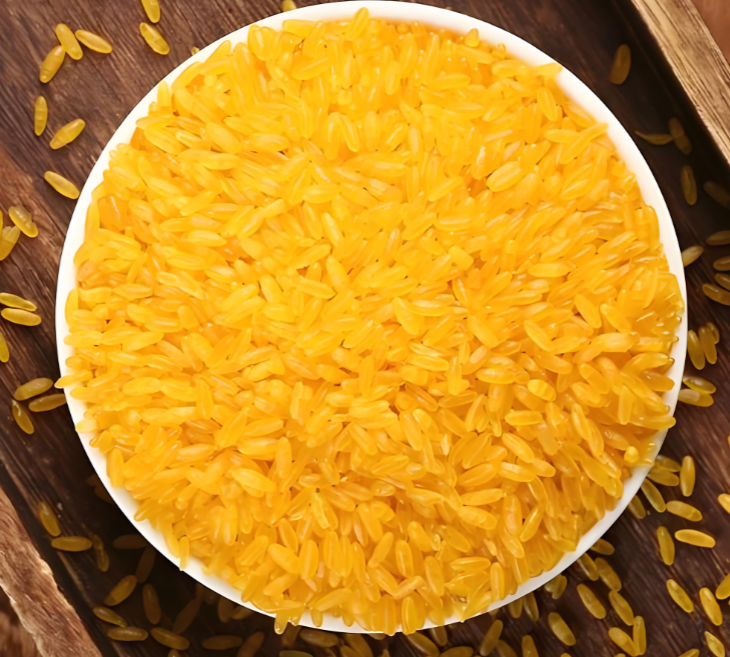
3. Teneur en humidité des matières premières pour l'extrusion
L'eau n'est pas simplement un ingrédient ; c'est un auxiliaire de transformation qui détermine la rhéologie de la pâte à l'intérieur de l'extrudeuse. La teneur en humidité de la matière première — généralement maintenue entre 26–34% (base humide) —est l’un des paramètres les plus déterminants. Elle agit comme un plastifiant, influençant la viscosité de la pâte et l’énergie mécanique nécessaire à l’extrusion. Des taux d’humidité plus élevés réduisent le cisaillement et la dégradation de l’amidon, mais peuvent entraîner des grains plus denses et moins expansés ; une humidité plus faible peut provoquer une usure excessive de l’extrudeuse et une mauvaise formation des grains. Un ajustement précis de la teneur en humidité avant l’extrusion est essentiel pour garantir une fluidité optimale et un rendement constant. .
4. Le procédé d'extrusion : gélatinisation de l'amidon et cisaillement contrôlé
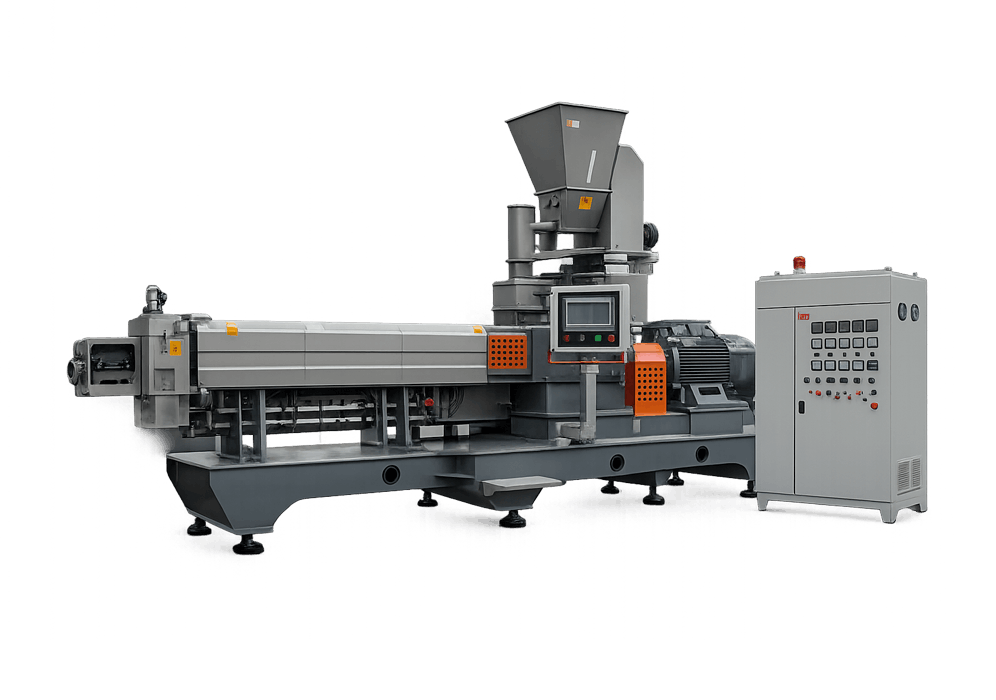
L'extrusion est au cœur du processus de production de FRK. Une extrudeuse à double vis cuit et façonne le mélange de farine de riz et de VMP sous une température contrôlée et sous l'effet d'un cisaillement mécanique. Le principe directeur consiste à obtenir un degré élevé de gélatinisation de l'amidon sans provoquer une dégradation excessive de l’amidon (dépolymérisation). La gélatinisation — c’est-à-dire le gonflement et la cuisson de l’amidon — confère au grain sa structure et son pouvoir liant. Cependant, un cisaillement mécanique trop important exercé par les vis de l’extrudeuse peut endommager les molécules d’amidon, ce qui donne un grain collant et pâteux qui se désagrège pendant la cuisson. La vitesse de la vis de l’extrudeuse, la température du cylindre (généralement comprise entre 70 et 110 °C au niveau de la filière) et la pression à la tête de filière (qui peut atteindre environ 40 bars) doivent être réglées avec précision pour atteindre cet équilibre. .
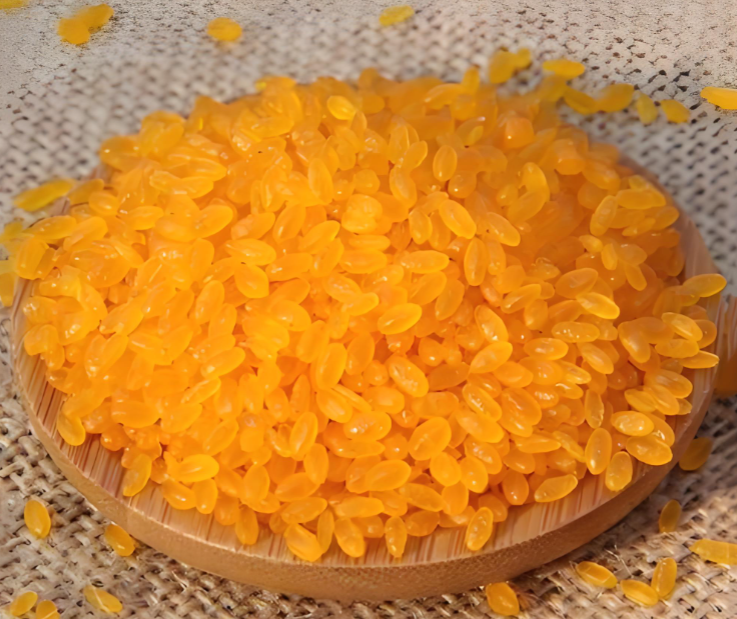
5. Conception des matrices et mise en forme du noyau
La forme finale du FRK est déterminée par les inserts de filière situés à l'extrémité du cylindre de l'extrudeuse. Ces inserts sont spécialement conçus pour extruder la pâte cuite sous forme de brins ressemblant à des grains de riz. La conception de ces matrices — notamment la taille, la forme et le nombre d’orifices — influe non seulement sur l’aspect du produit fini, mais aussi sur l’accumulation de pression dans l’extrudeuse et l’apport spécifique en énergie mécanique. Une matrice mal conçue produit des grains d’aspect peu naturel ou aux dimensions irrégulières, ce qui affecte leur rapport de mélange et l’uniformité de leur cuisson.
6. Séchage et stabilisation des grains
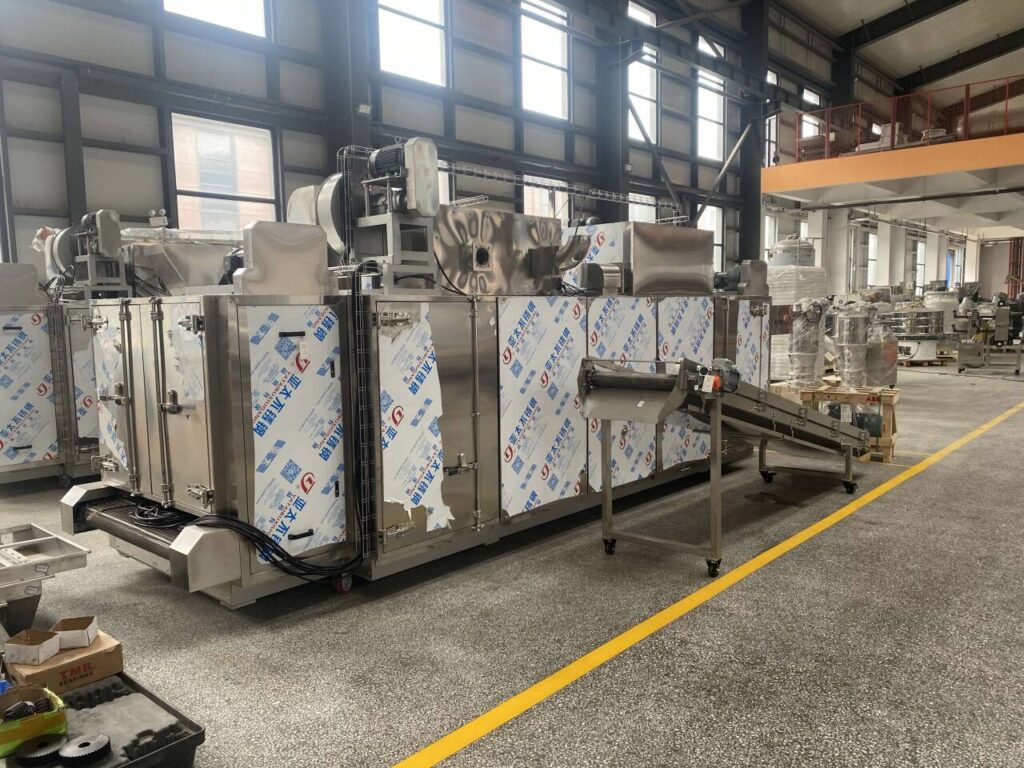
Les FRK fraîchement extrudés présentent une teneur en humidité élevée (~30%) et sont souples et malléables. Ils doivent être séchés dans un séchoir multicouche afin de ramener leur teneur en humidité à un niveau stable, généralement autour de 12–14% . Cette étape est essentielle pour obtenir un produit de longue conservation et une texture qui imite celle du riz naturel. Le profil de séchage (température et débit d’air) doit être soigneusement contrôlé. Si le séchage est trop rapide, les grains peuvent se fendre ou former une coque externe dure qui retient l’humidité à l’intérieur, ce qui entraîne leur altération. Un séchage adéquat détermine la structure physique et la texture finales du grain.
7. Polissage et aspect esthétique
Après séchage, les FRK subissent souvent une étape de polissage afin d’améliorer leur aspect visuel. Ce processus permet de lisser les irrégularités de surface dues à l’extrusion et peut consister à appliquer un mince revêtement comestible. L’objectif est de donner aux grains enrichis un aspect aussi proche que possible de celui du riz naturel blanchi. La qualité esthétique est importante pour l’acceptation par les consommateurs, car un produit dont l’aspect diffère sensiblement de celui du riz ordinaire peut susciter une certaine réticence, en particulier dans les systèmes de distribution publique.
8. Rapport de mélange précis (FRK par rapport au riz naturel)
Les FRK ne sont pas destinés à être consommés tels quels ; il s'agit d'un concentré. L'étape finale cruciale avant le conditionnement consiste à mélanger les FRK avec du riz blanchi classique selon un rapport précis, généralement 1:100 (une part de FRK pour 100 parts de riz) . Cela garantit que le mélange final de riz enrichi apporte la quantité cible de micronutriments par portion. Un équipement de mélange précis et des contrôles rigoureux d'homogénéité sont nécessaires pour s'assurer que les FRK sont répartis de manière homogène dans l'ensemble du riz ; sinon, les consommateurs risqueraient de recevoir des apports nutritionnels variables d'une portion à l'autre. .
9. Assurance qualité et conformité réglementaire
La production ne s’arrête pas à la chaîne d’emballage. Le riz enrichi est soumis à des normes nationales strictes (telles que celles du BIS et de la FSSAI en Inde) qui régissent tous les aspects, de la composition du prémélange à la qualité du produit fini. Chaque lot de FRK doit être soumis à des tests obligatoires dans des laboratoires accrédités afin de vérifier que sa teneur en micronutriments correspond bien aux allégations figurant sur l’étiquette. Des techniques de pointe telles que la spectroscopie d’absorption atomique (AAS) et la chromatographie liquide haute performance (CLHP) sont utilisées à cette fin, mais des outils numériques émergents comme l’imagerie hyperspectrale et l’apprentissage automatique ouvrent la voie à des contrôles qualité plus rapides et non destructifs. L’ensemble de l’installation doit respecter les protocoles GMP/GHP et HACCP afin de garantir la sécurité.
10. Conditionnement, stockage et stabilité des nutriments
Le dernier défi consiste à protéger le riz enrichi contre la dégradation. Le fer et les vitamines telles que l’acide folique et la vitamine B12 sont sensibles à l’oxygène, à la lumière et à l’humidité. L’emballage doit constituer une barrière efficace pour empêcher la perte de nutriments tout au long de la durée de conservation du produit. De plus, les conditions de stockage — température et humidité — doivent être contrôlées afin de garantir la sécurité alimentaire du riz et de préserver l’efficacité des micronutriments. Un conditionnement et un stockage adéquats constituent les derniers maillons de la chaîne qui garantissent qu’un produit à base de riz enrichi tienne ses promesses nutritionnelles, de l’usine jusqu’à l’assiette du consommateur.
Conclusion
La production d’un riz enrichi de qualité relève d’une démarche sophistiquée alliant ingénierie et sciences alimentaires. Il ne s’agit pas simplement d’ajouter des nutriments au riz, mais de créer une nouvelle matrice alimentaire stable capable de fournir ces nutriments de manière fiable. De la qualité initiale de la farine de riz cassé au contrôle précis des paramètres d’extrusion, en passant par le mélange homogène des micronutriments et l’étape finale cruciale consistant à associer les grains enrichis au riz naturel, chacun de ces dix aspects est essentiel. Lorsqu’elles sont mises en œuvre avec précision, elles aboutissent à un aliment qui a l’aspect, la cuisson et le goût du riz ordinaire, mais qui a le pouvoir d’avoir un impact considérable sur la santé publique et de lutter contre les carences en micronutriments à l’échelle mondiale. .