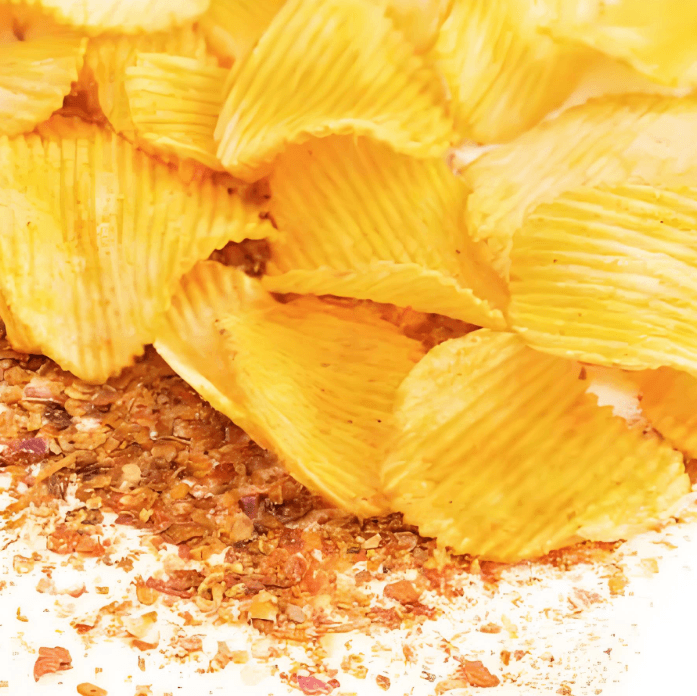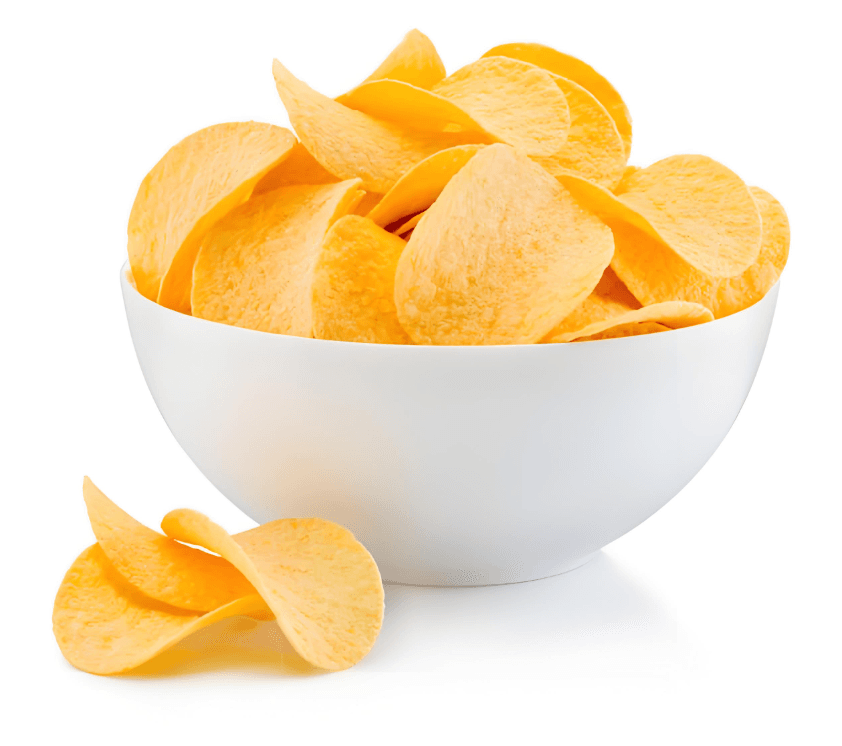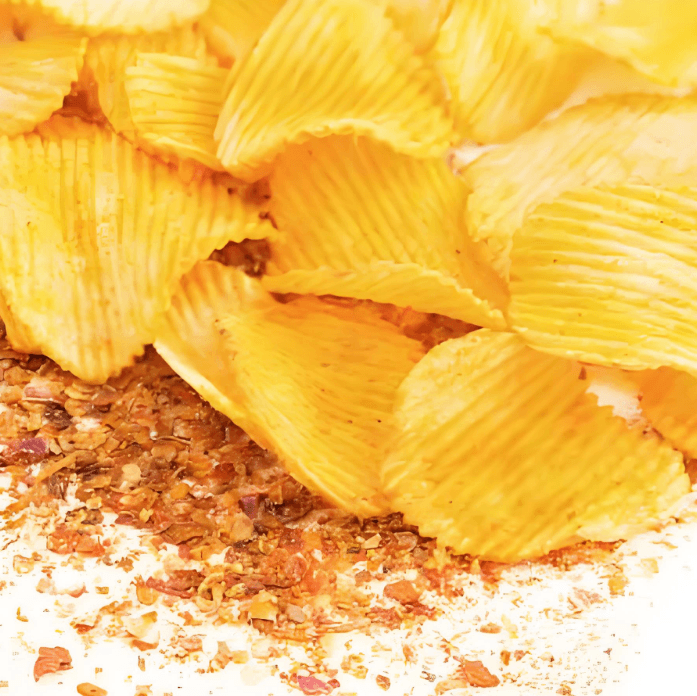
The uncomfortable truth first: The uniform, saddle-shaped chip you pull from a can is almost certainly not a slice of potato. It is a engineered food product made from dehydrated potato flakes, starch, and water, pressed into a sheet, cut into shape, and fried for mere seconds . The global archetype of this category—Pringles—is manufactured at a scale of 705 million pounds annually across three main factories, and every single piece is designed, not grown .
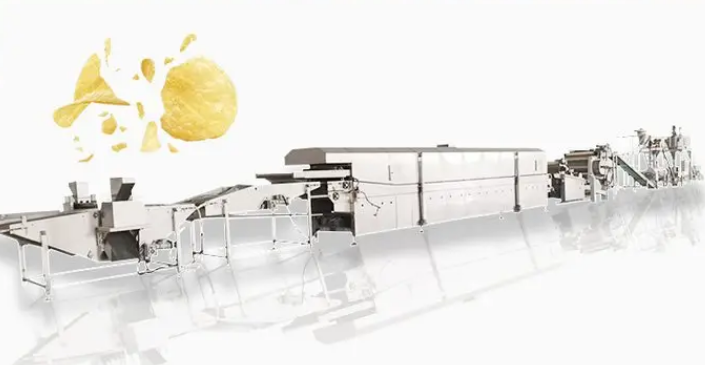
This is not a scandal. It is simply a different industrial logic. But it is a logic worth understanding, because it determines everything from the chip’s texture to its shelf life to the fact that you can stack them perfectly in a tube.
1. The Raw Material Reality: Flour, Not Potatoes
The foundational difference between a conventional potato chip and a compound chip lies in the starting material. Conventional chips begin with whole potatoes that are washed, peeled, and sliced. Compound chips begin with potato flakes, a dehydrated intermediate produced by cooking, mashing, and drum-drying potatoes at a dedicated facility .
These flakes are then combined with other dry ingredients—typically corn flour and wheat flour—along with water to form a dough . The exact formulation varies by manufacturer and patent, but the principle is consistent: the potato is reconstituted as an ingredient, not a whole food. Some industrial patents describe formulations using potato flakes, potato granules, and additional starches in precise ratios to control texture and processing behavior .
This approach has a practical consequence: the natural variability of the potato is largely eliminated. A whole potato varies in size, moisture content, and sugar level depending on the season and the field it grew in. A batch of potato flakes is a standardized industrial input. As one report on Pringles manufacturing noted, “every potato batch you get is going to be different,” which is precisely why the company has invested in AI-driven systems to compensate for raw material variance in real time .
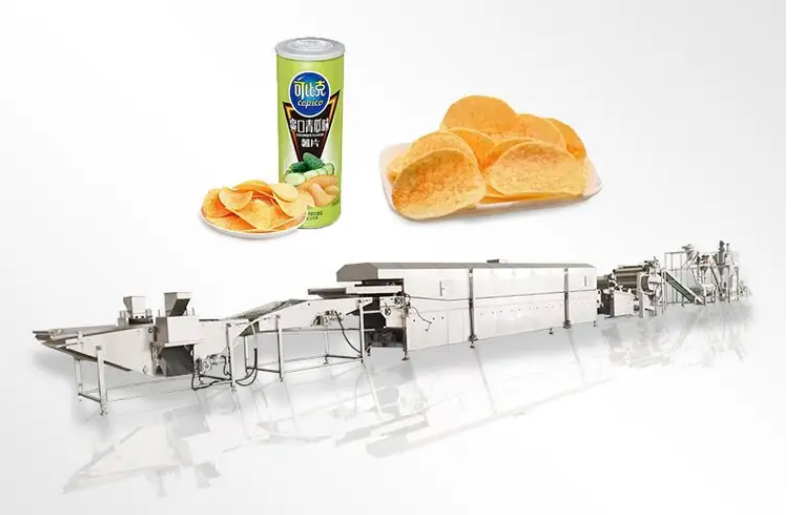
2. The Production Sequence: Eight Steps from Powder to Can
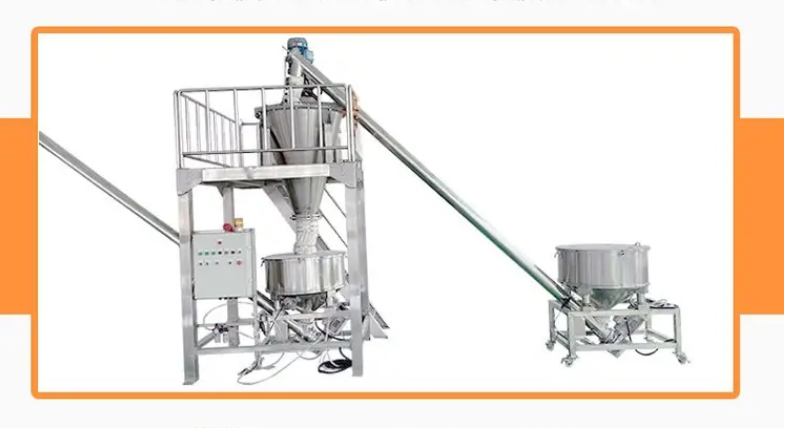
Step 1: Mixing
The dry ingredients—potato flakes, corn flour, wheat flour—are blended with water to form a cohesive dough. The target is a uniform, workable mass with consistent moisture distribution. In modern facilities, this stage is increasingly monitored by sensors that feed data into predictive models, because small variations in flour particle size or dough humidity can cascade into texture defects downstream .
Step 2: Sheeting
The dough is passed through a series of rollers that compress it into a continuous thin sheet. The thickness must be precisely controlled—too thick, and the chip won’t crisp properly during frying; too thin, and it will fracture in handling. Industrial sheeting systems use multiple roller stages with progressively decreasing gaps to achieve uniform thickness without tearing the dough .
Step 3: Cutting
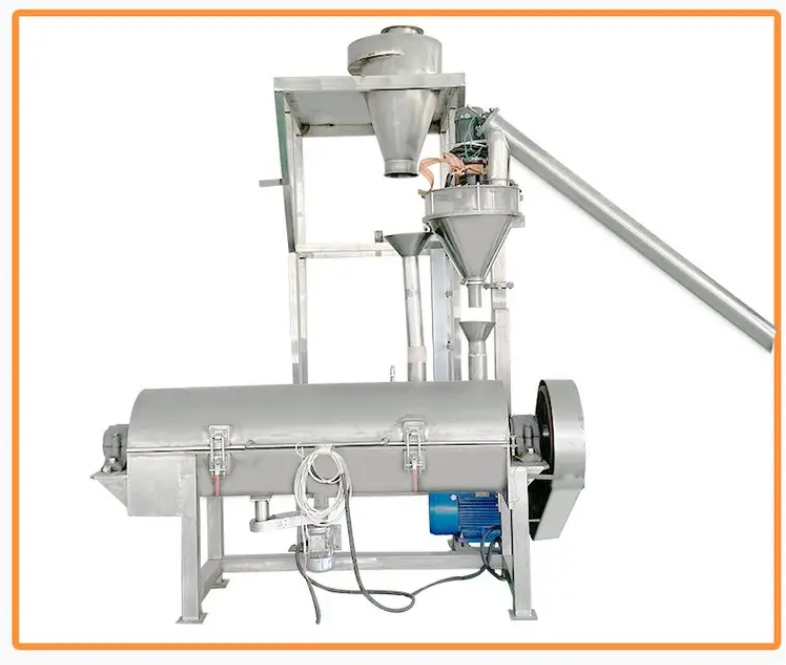
A rotary cutter stamps the sheet into individual shapes. For the iconic stackable chip, this is the saddle shape—a hyperbolic paraboloid that allows the chips to nest together in a can without breaking . The scrap dough—the lattice-like web remaining between the cut shapes—is separated and recycled back into the mixing stage, a standard practice that reduces waste .
Step 4: Molding (for Stackable Formats)
For chips intended for can packaging, the cut pieces are conveyed through a mold that imparts the distinctive curvature. This is not merely aesthetic. The saddle shape creates a structural rigidity that allows the chip to survive the stacking process and the consumer’s grip, while also enabling the tight, protective packaging that gives the product its extended shelf life .
Step 5: Frying
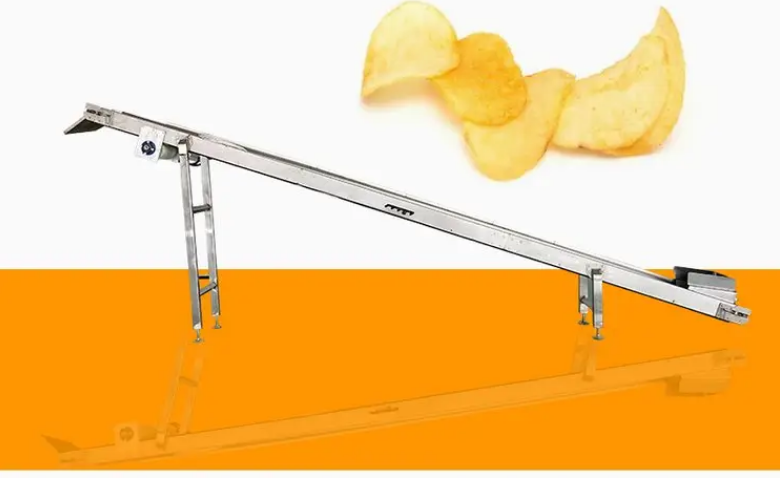
The shaped pieces enter a continuous fryer. The frying time is remarkably short—one widely cited account describes an 11-second fry for Pringles-style chips . The oil temperature is high enough to flash off surface moisture and set the structure, but brief enough to avoid excessive oil absorption. The choice of frying oil matters for flavor and shelf stability; sunflower and corn oil are common .
Step 6: De-oiling
Emerging from the fryer, the chips pass through a de-oiling stage where excess surface oil is removed—typically by blowing air or vibration. This step controls the final fat content and prevents the chips from feeling greasy. It also prepares the surface for seasoning adhesion.
Step 7: Seasoning
The chips travel under a curtain of powdered seasoning, or through a rotating drum, while a light spray of oil may be applied to help the powder adhere . Because the chip surface is relatively smooth and uniform—unlike the irregular, cellular surface of a sliced potato chip—seasoning adhesion is generally more consistent. The flavor is, in a literal sense, applied to the outside; it does not permeate the structure.
Step 8: Packaging
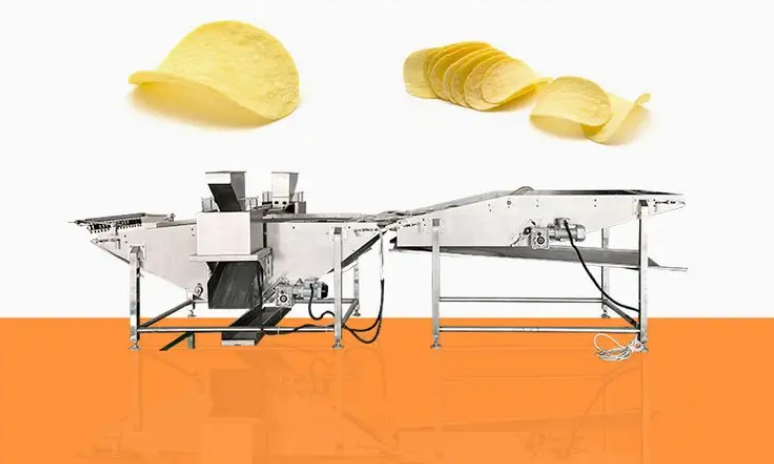
The seasoned chips are cooled and conveyed to packaging lines. For can formats, the chips are stacked in aligned columns and sealed under controlled atmosphere to maintain freshness . The can itself is an engineering component of the product: it protects the fragile chips from breakage and provides a barrier against moisture and oxygen that a flexible bag cannot match as effectively.
3. The Digital Layer: Manufacturing Consistency as a Competitive Moat
The industrial production of compound chips has entered a phase where the physical process is increasingly governed by a digital one. Kellanova’s Pringles operation has invested in a “digital twin” of the dough as it moves through the production line, using sensors and live machine data to capture minute variances in raw materials. An AI model then suggests adjustments to machine settings to compensate for those variances before they manifest as defects .
The reported results from a single line in Poland are instructive: a 10% improvement in quality, a 13% reduction in waste, and a return on investment exceeding 40% . The system is being expanded to Belgium, with plans for the U.S. by 2027. This is not a novelty project; it is a recognition that in a product where every chip is supposed to be identical, the biggest enemy is the natural variability of agricultural inputs.
4. What the Compound Chip Is, and What It Isn’t
The compound chip is not a deception. It is a different product category with its own logic. It offers uniformity, stackability, extended shelf life (reportedly up to 15 months for some formats ), and a shape that can be engineered for specific packaging and eating experiences.
What it sacrifices is the cellular structure of the potato. A sliced chip retains the potato’s vascular tissue and cell walls, which fracture irregularly when bitten, producing a shattering, crispy sensation. A compound chip is a reconstructed matrix: the starch and protein have been denatured, dried, and rehydrated, and the final structure is denser and more homogeneous. The bite is cleaner, harder, less “natural.” Whether that is better or worse is a matter of preference. But it is definitively different.
The next time you open a can and slide out a perfectly formed, identically curved chip, you are not holding a slice of anything. You are holding the output of a process that begins with flour, passes through rollers and fryers and AI models, and ends with a product designed to be exactly the same, every time, everywhere.