Résumé
Starting a breakfast cereal manufacturing facility is a significant industrial undertaking that demands thorough preparation across multiple domains. Unlike small-scale food businesses, a cereal plant requires substantial capital investment, complex processing equipment, rigorous quality control systems, and strategic market positioning. This article provides a systematic guide to the essential preparatory steps for establishing a breakfast cereal factory, covering market research and business planning, raw material sourcing, facility and equipment selection, process technology, quality and regulatory compliance, financial planning, and operational organization. Drawing on industry data, technical specifications, and regulatory frameworks, the discussion emphasizes that success hinges not on a single factor but on the integrated readiness of all these elements.
1. Market Research and Business Planning: The Strategic Foundation
1.1 Understanding the Product Landscape
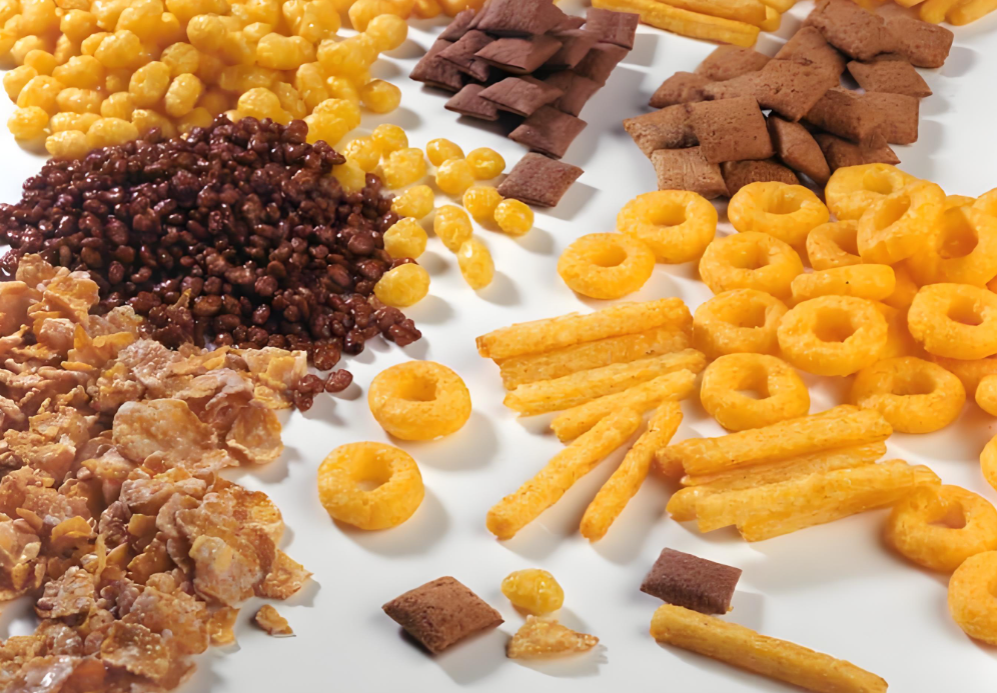
Before committing capital, the prospective cereal manufacturer must understand the diversity of the product category. Breakfast cereals can be broadly classified into two main types: traditional cereals requiring further cooking (such as oats, farina, and rice) and ready-to-eat (RTE) cereals that can be consumed directly from the package or with the addition of milk or yogurt .
The RTE category is further segmented by product form rather than grain type. According to the Malawi Standard for breakfast cereals, these include :
- Flaked cereals: Made by pressing cooked whole grain kernels or grits through rollers
- Extruded flaked cereals: Where the flaking grit is formed by extruding mixed ingredients through a die
- Gun-puffed whole grains: Cooked grains exploded from a pressurized chamber
- Extruded gun-puffed cereals: Using meal or flour as starting material rather than whole grains
- Oven-puffed cereals: Made almost exclusively from rice or corn, which puff with high heat
- Shredded whole grains: Produced by pelletizing agglomerates of cooked, tempered cereal particles
- Granola and muesli: Loose mixtures of rolled grains with fruits, nuts, and seeds
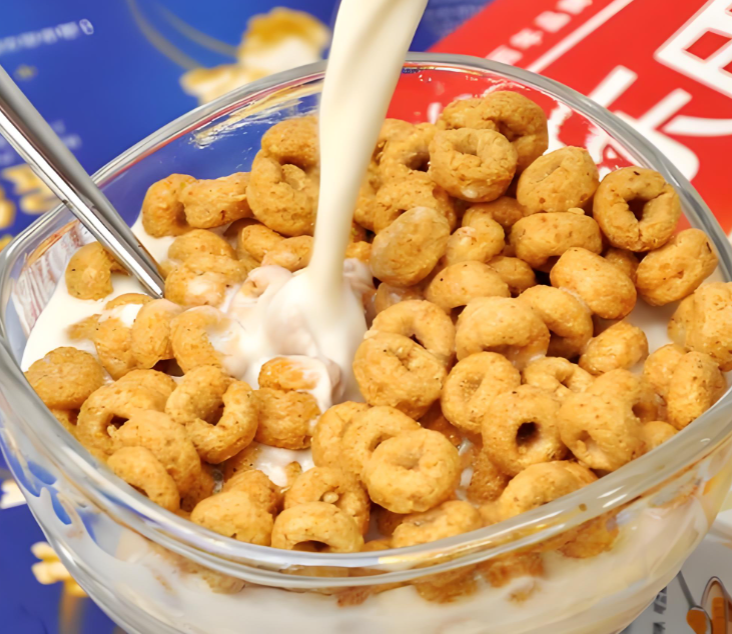
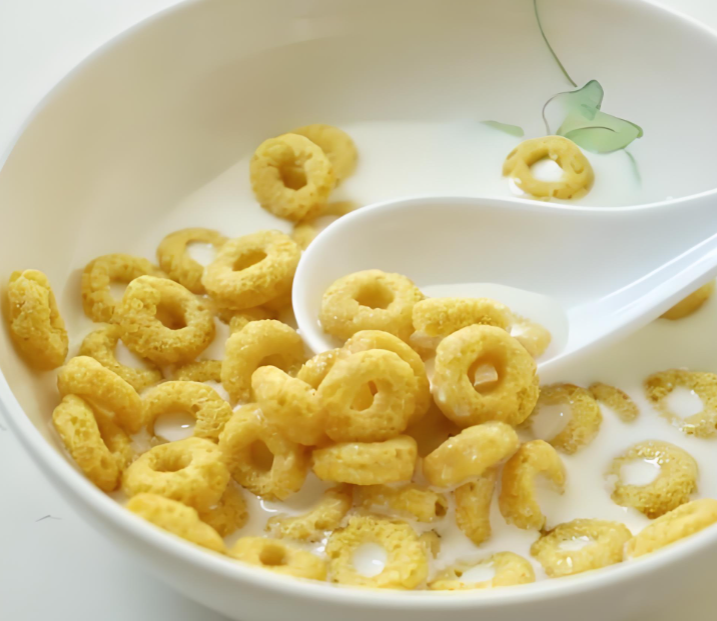
The diversity means a new entrant must define their specific product niche. Corn flakes represent the most common entry point, but ring-shaped cereals, puffed rice, or granola products each require different processing lines and expertise.
1.2 The Business Plan as a Roadmap
A comprehensive business plan is indispensable. As commercial consultants emphasize, a well-structured business plan provides “actionable insights to build a robust foundation for your venture” and serves as “an essential guideline for both new and established enterprises” . The plan must address:
Vision and Value Proposition: What problem does the product solve? How does it differentiate from competitors? The value proposition might be nutritional (high fiber, protein enrichment, fortification), sensory (superior taste and texture), or convenience.
Market Analysis: This includes market size, dynamics, segmentation, trends, and regulatory factors. Understanding whether the domestic market is self-sufficient, analyzing import/export patterns, and assessing the degree of competition using frameworks like Porter’s five forces are critical .
Consumer Insights: A representative consumer behavior survey can pinpoint the sentiments and thought processes behind consumption decisions. Understanding needs, preferences, brand loyalty patterns, and price sensitivity is essential for product positioning.
Competitive Analysis: Identifying major players, their market shares, and unique selling propositions (USPs) helps in positioning. The key question is: how does the new product distinguish itself from existing offerings?
1.3 Site Selection and Production Capacity
Site selection involves balancing proximity to raw material sources, access to transportation infrastructure, labor availability, and utility costs. The project feasibility study from the Middle East provides a benchmark: a 300-350 kg/hour corn flakes line required approximately 1,500 square meters for production, storage, and packaging areas . The plant’s annual capacity should align with the market opportunity identified in the business analysis.
For comparison, PepsiCo’s recent Quaker oats plant investment in China covers 100,000 square meters with a capacity of 160,000 tons annually , illustrating the scale that major players command.
2. Raw Material Sourcing and Ingredient Preparation
2.1 Essential and Optional Ingredients
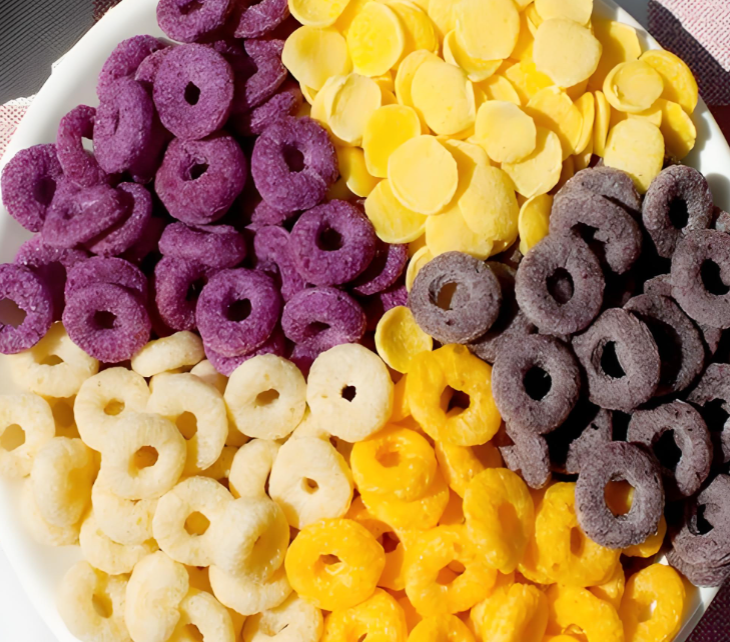
Breakfast cereals are fundamentally grain-based. The essential ingredient is cereal grains and derived products—corn, wheat, rice, oats, or barley—complying with relevant quality standards . The choice of grain determines the processing technology and product characteristics.
Optional ingredients, also specified in standards, include :
- Sweetening ingredients: sucrose, invert sugar, dextrose, glucose syrup
- Edible oils and fats
- Edible salt
- Dried fruits, nuts, and oilseeds
- Micronutrients for fortification
The actual raw material bill for a corn flakes line provides a practical illustration. A typical formulation for unflavored corn flakes includes :
| Ingrédient | Composition (%) |
|---|---|
| Corn (maize) meal | 87% |
| Sucre | 5% |
| Milk powder | 5% |
| Sel | 1% |
| Barley malt extract | 1% |
| Vitamins | <1% |
| Minerals | <1% |
The cost of these raw materials drives the product’s production economics. In the cited example, the corn-based formulation costs approximately 0.279 RO (Omani Rial) per kilogram of product, while a cocoa-based formulation costs 0.851 RO/kg due to the higher cost of cocoa powder and other ingredients .
2.2 Supply Chain Establishment
Securing reliable, quality-consistent suppliers is paramount. For contract farming arrangements, where agricultural products are supplied directly by producers, food business operators must ensure that suppliers follow Good Agricultural Practices on fertilization (maintaining balanced sulfur and correct nitrogen application to prevent elevated asparagine levels) and Good Phytosanitary Practices to prevent fungal infection .
The scale of raw material handling is substantial. Kellogg’s Wrexham factory, which produces 120 million boxes annually, receives ingredients such as rice that account for 47% of a finished flake, stored in 30-meter-tall silos . While smaller operations will use less, the principle of adequate storage capacity with temperature and moisture control remains essential.
3. Facility and Equipment Selection
3.1 Facility Requirements
The physical plant must accommodate the complete production workflow. Based on project feasibility data, a medium-scale cereal plant requires :
- Production area: Approximately 1,000 square meters
- Raw material storage: 150 square meters
- Finished product storage: 300 square meters
- Packaging area: 50 square meters
- Administrative building: 150 square meters
- Utilities and ancillary structures: 50 square meters
This totals approximately 1,700 square meters of built-up area, excluding land for access roads, parking, and compound boundaries . The total estimated cost for building and civil works in the cited project was 301,000 RO, with production area costing 165 RO per square meter .
3.2 The Production Line Configuration
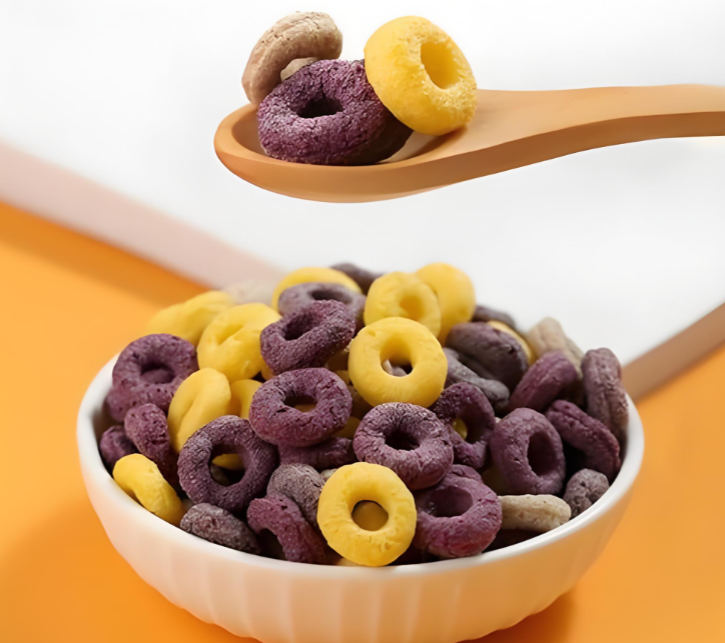
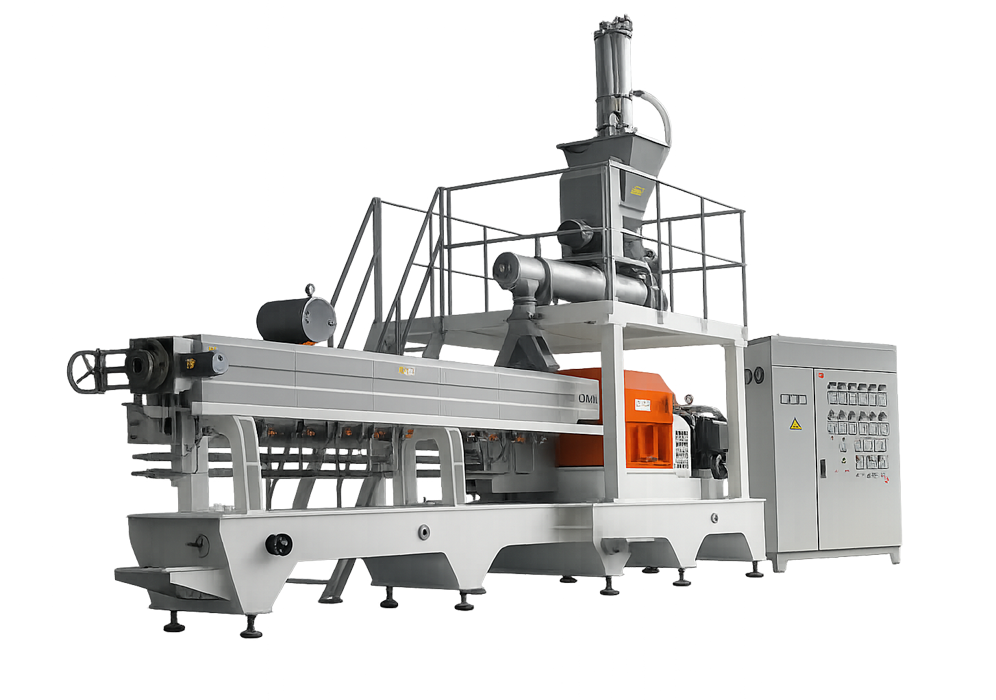
A breakfast cereal line comprises multiple unit operations in sequence. The Clextral breakfast cereal production line, for example, can process a wide variety of raw material blends into puffed balls, rings, rice crisps, crisp flakes, and petals, with throughput ranging from 25 to 3,200 kg/h depending on system scale .
The complete process flow for a corn flakes line typically includes :
- Powder mixing machine: Blends dry ingredients with water to form the extrusion feed
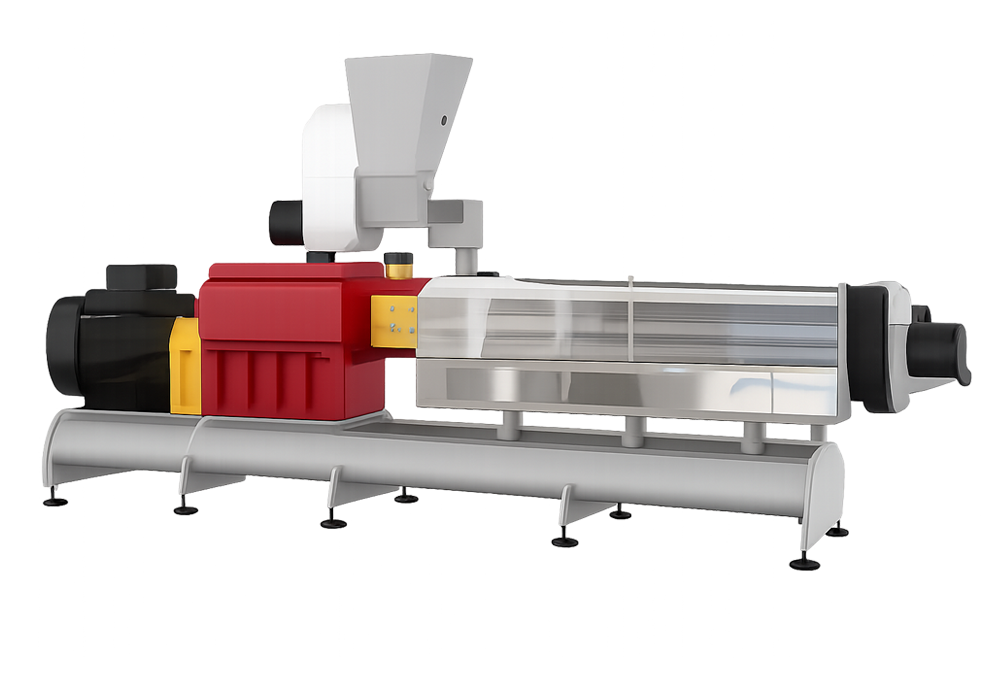
- Twin-screw extruder: Cooks, gelatinizes, and shapes the material under high temperature and pressure
- Air conveying system: Transports extruded semi-finished products
- Flaking press: Rolls the extruded pellets into flakes
- Drying oven (multi-layer): Reduces moisture and sets texture
- High-temperature drum oven: Further dries and puffs the flakes
- Spraying/flavoring line: Applies sugar syrup, oil, or seasonings
- Cooling conveyor: Reduces product temperature for packaging
- Packaging machinery: Weighs, fills, and seals into bags and boxes
3.3 Equipment Costs and Specifications
The cost of the core extrusion and processing line varies considerably with capacity. A 300-350 kg/hour corn flakes processing line, including the extruder, flaking machine, dryers, ovens, and conveyors, was estimated at 72,765 RO (plus shipping, erection, and ancillary equipment) in a recent project .
The twin-screw extruder is the heart of the line. The Dayi SLG series illustrates typical specifications :
| Model | Capacité | Installed Power | Power Consumption |
|---|---|---|---|
| SLG65-CJ | 100-160 kg/h | 86 kW | 56 kW |
| SLG70-A | 200-250 kg/h | 119 kW | 82 kW |
| SLG85-A | 350-450 kg/h | 164 kW | 123 kW |
These extruders can process corn flour, rice flour, soybean flour, oats, and other grains, with the flexibility to produce puffed snacks, breakfast cereals, nutritional rice, bread crumbs, and other products .
Additional downstream equipment includes:
- Bag packing machines
- Nitrogen flushing systems for modified atmosphere packaging
- Carton box packing machines
- Laboratory equipment for quality testing
3.4 Technology Choice Considerations
When selecting equipment, the manufacturer must consider:
Extrusion vs. Non-Extrusion Processes: Some cereals (e.g., traditional corn flakes) use cooking followed by flaking and toasting rather than extrusion. Non-extruded processes include steam cooking of whole grains, rolling, shredding, and oven-puffing . The choice depends on the target product.
Modularity and Flexibility: Clextral’s systems are “fully modular and can be customized to meet specific production goals—from screw profiles and die design to metallurgy and extruder configuration,” while keeping costs controlled . This flexibility allows the plant to adapt to new products without complete retooling.
Cleaning and Maintenance: Equipment designed “for easy cleaning and maintenance with quick, hassle-free access to screw profile” reduces downtime and ensures food safety.
Pilot Plant Capabilities: Manufacturers with R&D pilot plants can help in “developing new products and optimizing processes” , validating formulations before full-scale production.
4. Production Process: Understanding the Technology
4.1 The Manufacturing Sequence
The BBC’s documentary on Kellogg’s Wrexham factory provides a vivid illustration of the production process for a flaked cereal :
Ingredient Reception and Storage: Rice (47% of the finished flake), wheat, kibbled barley, and barley flour are delivered. For rice, a sample is tested before the entire lorry is unloaded into 30-meter-tall silos.
Cuisine : The dry ingredients are conveyed to enormous cookers where additional ingredients are added and the mix is blasted with steam. The cooking step hydrates and gelatinizes the starch.
Cooling and Tempering: The cooked mix is cooled and conditioned to achieve the correct moisture and temperature for flaking.
Pelletizing: The mix is passed through a pellet mill, which forms it into small pellets—each pellet will become one flake. The scale is staggering: ten pellet mills can produce the equivalent of 4,000 bowls of cereal per minute.
Flaking: The pellets are passed through flaking mills with counter-rotating rollers, pressing them into the familiar flake shape.
Toasting: The flakes pass through a large toaster operating at over 200°C, which evaporates excess moisture and toasts the flakes to develop color and flavor.
Coating: The flakes are coated with a syrup containing sugar, salt, water, and vitamins—this is the stage where the characteristic flavor is imparted.
Conditionnement : The cereal is weighed (440 grams in the example), sealed into bags, and dropped into boxes. Automated guided vehicles collect pallets of finished product for dispatch.
4.2 Critical Process Control Points
Achieving consistent quality requires rigorous control of process parameters:
Teneur en humidité : After final heat treatment, the minimum moisture content for direct expanded extruded products is 0.8%, and for toasted products is 1% . Moisture content is critical because it affects crispness and shelf life. The Malawi standard specifies maximum moisture content: 7.5% for most cereals, 12% for muesli and oats, and 14% for cereal bars .
Temperature Control: Higher heating temperatures and longer heating times generate higher acrylamide levels. Operators must identify an “effective combination of temperature and heating times to minimise acrylamide formation without compromising taste, texture, colour, safety and shelf-life” .
Rework Management: “Reworking product back through the process has the potential to generate higher acrylamide levels through repeated exposure to the heat-treatment steps,” requiring assessment of rework impact and its reduction or elimination .
Seasoning Rate: Commercial seasoning lines typically apply 20-30% coating by weight .
5. Quality, Safety, and Regulatory Compliance
5.1 Product Quality Specifications
The quality of breakfast cereals is defined by both compositional and sensory attributes. General requirements specify that the product shall be :
- Tender, crispy, and reasonably uniform in size
- Of characteristic flavor and color
- Free from sogginess and dampness
- Free from rancid, musty, sour, and other undesirable tastes
- Free from insects and foreign matter
The compositional requirements include :
| Characteristic | Exigence | Test Method |
|---|---|---|
| Moisture (muesli and oats) | ≤12% | MS 610-1 |
| Moisture (others) | ≤7.5% | MS 610-1 |
| Moisture (cereal bars) | ≤14% | MS 610-1 |
| Fat acidity | ≤4.0 mg NaOH/100g | MS 1786 |
| Acid insoluble ash | ≤0.2% | MS 149 |
5.2 Microbiological and Contaminant Safety
Breakfast cereals must meet rigorous microbiological standards :
| Paramètre | Limits |
|---|---|
| Yeast and moulds | <50 cfu/g |
| Staphylococcus aureus | Absent per 25g |
| Escherichia coli | Absent per g |
| Salmonella | Absent per 25g |
Contaminants are tightly controlled :
| Contaminant | Limite maximale |
|---|---|
| Total aflatoxins | 10 μg/kg |
| Aflatoxin B1 | 5 μg/kg |
| Arsenic | 0.1 ppm |
| Lead | 0.2 ppm |
| Cadmium | 0.1 ppm |
5.3 Acrylamide Mitigation
Acrylamide—a process contaminant formed during high-temperature processing—is a significant regulatory concern for breakfast cereals. The EU regulation 2017/2158 establishes specific mitigation measures :
Agronomy: For contract farming, suppliers must follow Good Agricultural Practices on fertilization and Good Phytosanitary Practices to prevent fungal infection.
Élaboration de la recette :
- Consider using maize and rice (which tend to produce less acrylamide than wheat, rye, oats, and barley) in new product development
- Control addition rates of reducing sugars and ingredients containing reducing sugars
- Assess the acrylamide contribution from heat-treated ingredients (roasted nuts, dried fruits) and use alternatives if levels exceed 150 μg/kg
- Use asparaginase where processing conditions allow (sufficient time, temperature, moisture for enzyme activity)
Processing:
- Identify critical heat-treatment steps generating acrylamide
- Establish effective combinations of temperature and heating times to minimize formation
- Control heating temperatures, times, and feed-rates to achieve minimum moisture content targets
- Have procedures in place (temperature controls and monitoring) to prevent burnt products
5.4 Hygiene and Good Manufacturing Practice
Breakfast cereals must be prepared and handled in accordance with hygiene standards such as MS 21 or EAS 39 . The BBC documentary illustrates the practical implementation: Paddy McGuinness encountered automated taps for hand washing, hand drying, and required stomping through a chemical bath before entering the production area —demonstrating that hygiene is not just a policy but an engineered system.
5.5 Packaging and Labeling
Packaging Requirements: Breakfast cereals shall be packaged in food-grade materials “which will safeguard the safety, nutritional, technological and organoleptic qualities of the products” . The packaging material must not impart any toxic substance or undesirable odor or flavor to the product .
Labeling Requirements: Specific labeling requirements include :
- Product name reflecting true nature (“breakfast cereals”)
- The cereal used declared before the product name
- Name, address, and physical location of producer/packer/importer
- Brand/trade name and country of origin
- Lot/batch/code number
- Net weight in metric units
- Date de fabrication et date de péremption
- Storage conditions and instructions for use
- GMO declaration, if applicable
- Nutrition information may be provided in accordance with applicable standards
6. Financial Planning and Project Viability
6.1 Project Cost Estimation
A comprehensive project feasibility study provides a detailed breakdown of startup costs . For a 300-350 kg/hour breakfast cereal project, the total estimated investment was approximately 736,000 RO (currency unit used in the study, likely Omani Rial, approximating USD 1.9 million at the time) .
The cost breakdown:
| Article | Amount (RO) | Remarks |
|---|---|---|
| Land for plant site | 17,000 | Lease land |
| Building and civil works | 301,000 | 1,700 sq m built-up area |
| Plant and machinery (imported) | 72,765 | Core processing line |
| Local machinery | 8,000 | |
| Erection and installation | 16,294 | Electrification, erection, travel |
| Vehicles and internal transport | 66,000 | |
| Furniture and office equipment | 29,000 | |
| Pre-operative expenses | 76,000 | Product launch, recruitment, insurance, legal fees |
| Contingency and escalation | 12,000 | Provision for cost overruns |
| Working capital | 136,000 | Raw materials, labor, utilities, receivables |
| Total | 736,000 |
The financing structure was proposed as: 40% equity (294,000 RO), term loan from commercial bank (360,000 RO), and working capital loan (82,000 RO) .
6.2 Working Capital Requirements
Working capital requirements—the cash needed to operate the business before revenue is generated—are significant. The cited project estimated working capital at 136,000 RO in the first year, with detailed breakdown :
- Accounts receivable (3 months of cost of sales): 82,000 RO
- Raw materials (3 months inventory): 11,000 RO
- Consumables and packaging (2 months): 10,000 RO
- Factory wages (1 month): 6,000 RO
- Administrative expenses (1 month): 7,000 RO
- Sales expenses (1 month): 4,000 RO
- Finished goods (10 days of cost): 9,000 RO
6.3 Financial Viability Indicators
The financial analysis in the feasibility study reported a 20.5% internal rate of return (IRR) on total investment and a 27.9% IRR on equity investment, leading to the conclusion that “the project is technically feasible and financially viable” . The financial model incorporated sensitivity analysis—volume and sales realization were key variables affecting project returns .
For any cereal plant project, the key questions that financial projections must answer include :
- What is the expected revenue, profit margin, and return on investment?
- What is the cost breakdown of the operation?
- What is the anticipated level of cash inflows and outflows?
- What is the amount of investment needed and how will it be utilized?
- How long does it take for the investment to pay back its initial cost?
7. Organizational Structure and Staffing
7.1 Key Personnel Requirements
The staffing of a cereal plant must cover production operations, quality control, maintenance, administration, and sales. The cited project estimated the following personnel for a medium-scale plant :
| Position | Omani | Expatriate | Monthly Salary (RO) |
|---|---|---|---|
| Plant Manager | 1 | 1,200 | |
| Production/Quality Supervisor | 1 | 900 | |
| Senior Technicians | 2 | 500 | |
| Skilled Labour | 1 | 1 | 400/230 |
| Unskilled Labour | 1 | 3 | 325/175 |
This suggests a staffing level of approximately 8-10 direct production and supervisory staff, with additional administrative, sales, and support roles.
The organizational structure should clearly define :
- Key leaders and executives in the management team
- Number and type of employees by department
- Qualifications and experience required
- Recruitment and onboarding strategy
- Company culture and reporting relationships
7.2 Training and Development
For a cereal plant, operator training is not optional. Equipment suppliers typically offer “free installation and debugging, training people” , recognizing that skilled operation is essential to achieving product quality and throughput. As Kellogg’s Wrexham MP noted, “our skilled workforce is one of Wrexham’s greatest assets” , underscoring the importance of human capital in cereal manufacturing.
Training should cover:
- Equipment operation and maintenance
- Quality control and testing procedures
- Hygiene and food safety protocols
- Process control and troubleshooting
- Regulatory compliance awareness
8. Operational Readiness and Startup
8.1 Pre-Operative Activities
The pre-operative period—the interval between project approval and production startup—requires careful management. Pre-operative expenses in the cited project included :
- Market research and feasibility studies
- Product development and recipe formulation
- Supplier audits and qualification
- Staff recruitment and training
- Product launch and advertising
- Legal and regulatory approvals
- Insurance arrangements
- Travel and communication costs
8.2 Product Development and Testing
Before production startup, the product must be developed and validated. Equipment manufacturers with R&D pilot plants can assist in “developing new products and optimizing your processes,” validating them “through pilot-scale trials before moving to full industrial production” . This pilot testing is critical for:
- Confirming that the desired product characteristics (taste, texture, appearance) can be achieved with the selected raw materials and process parameters
- Identifying and addressing processing challenges before full-scale production
- Optimizing recipe formulations for cost and quality
- Establishing standard operating procedures
8.3 Regulatory Clearances
Before commencing commercial production, the facility must obtain necessary regulatory approvals. These may include:
- Food manufacturing license
- Facility registration with food safety authorities
- Product standard compliance certification
- Environmental permits
- Building and fire safety approvals
The regulatory landscape varies by jurisdiction, but the principles—demonstrating that the facility, processes, and products meet applicable standards—are universal.
Conclusion
Starting a breakfast cereal processing plant is a multi-faceted undertaking that requires preparation across seven interconnected domains: market strategy and business planning, raw material sourcing, facility and equipment selection, process understanding, quality and regulatory systems, financial planning, and organizational readiness.
The available evidence from industry benchmarks suggests that a medium-scale cereal plant (300-350 kg/hour capacity) requires approximately USD 2 million in total investment, with building and equipment accounting for roughly half. The financial model must account for significant working capital requirements—three months of raw material inventory and accounts receivable are typical. The internal rate of return, based on a project feasibility study, can be attractive at approximately 20%.
However, financial viability depends on accurate market positioning, consistent product quality, and operational efficiency. Quality cannot be an afterthought; it must be designed into the process from the start, with rigorous controls on raw materials, processing parameters, and finished product testing. The industry’s regulatory obligations—especially concerning acrylamide mitigation and microbiological safety—demand proactive management.
In the end, success in breakfast cereal manufacturing is built on preparation. The entrepreneur who thoroughly researches the market, secures reliable supply chains, selects appropriate technology, implements robust quality systems, and builds a skilled team will be well-positioned to thrive in this competitive but rewarding industry.