Processing Technology of Puffed Food
Part 1: Introduction, Principles, Raw Materials, and General Process Flow
1. مقدمة
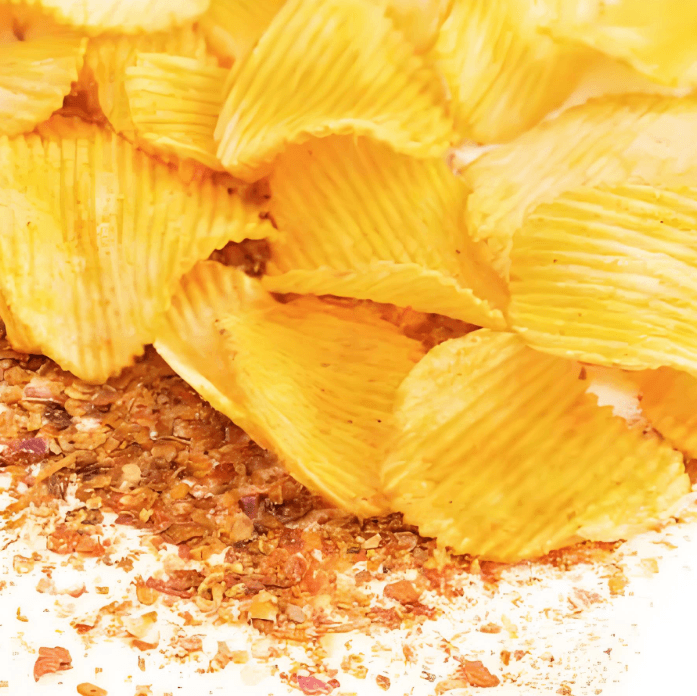
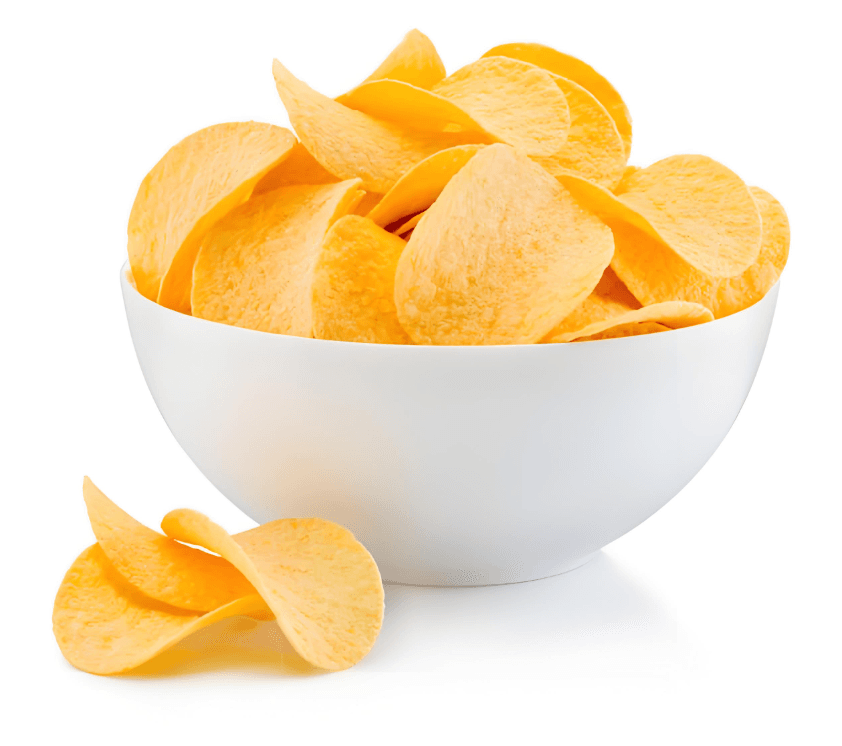
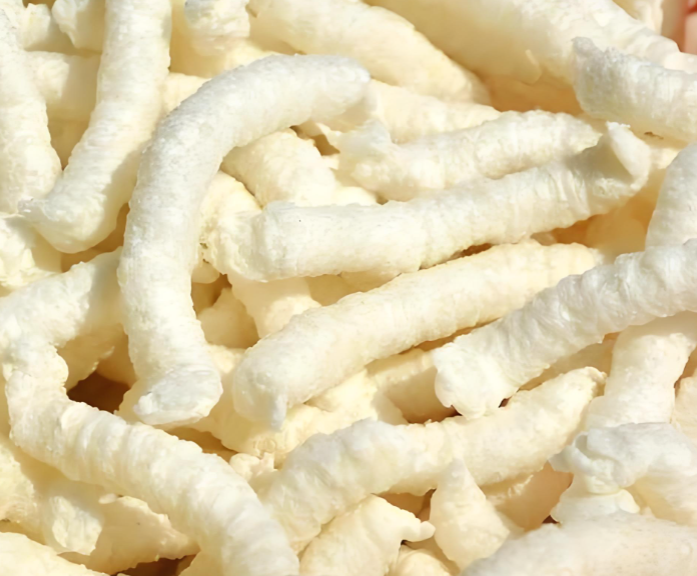
Puffed food is a broad category of food products that are characterized by a porous, expanded, light, and crispy structure. These products are widely consumed around the world because of their pleasant texture, attractive appearance, convenient eating form, and strong adaptability to different flavors. Common puffed foods include breakfast cereals, corn curls, rice crackers, potato snacks, wheat-based snacks, expanded pellets, popcorn, and various extruded snack foods. In modern food industries, puffed food processing has developed into an important branch of cereal, starch, and snack food processing.
The term “puffing” refers to a physical and chemical transformation in which food materials expand rapidly under certain conditions of heat, pressure, moisture, and mechanical force. During puffing, water inside the material is converted into steam, starch granules gelatinize, proteins denature, and the internal structure of the material becomes porous. When pressure is suddenly released or when moisture evaporates rapidly, the material expands and forms a light cellular structure. This structure gives puffed foods their typical crispness and low bulk density.
The development of puffed food processing is closely related to the development of extrusion technology. Extrusion cooking is one of the most important methods used in modern puffed food production. It combines mixing, kneading, heating, shearing, cooking, shaping, and expanding in a single continuous process. Compared with traditional processing methods, extrusion puffing has many advantages, such as high production efficiency, low labor requirement, flexible product design, good hygienic conditions, and the ability to process a wide range of raw materials.
Puffed food processing is not merely a mechanical expansion process. It involves complicated interactions among raw material composition, moisture content, temperature, pressure, residence time, screw speed, die design, drying conditions, seasoning methods, and packaging systems. Different combinations of these factors can produce products with different shapes, textures, densities, colors, flavors, and nutritional characteristics. Therefore, a scientific understanding of puffed food processing technology is essential for product development, quality control, and industrial production.
This article discusses the processing technology of puffed food in detail. It introduces the basic principles of puffing, the major raw materials used in puffed food production, the general process flow, key equipment, technological parameters, quality control methods, common problems, and future development trends. The purpose is to provide a systematic overview of puffed food manufacturing from both theoretical and practical perspectives.
2. Basic Principles of Puffing
Puffing is mainly based on the rapid expansion of water vapor inside food materials. Most cereal-based and starch-based raw materials contain a certain amount of moisture. puffed snack food making machine When these materials are heated under pressure, the internal water absorbs heat and turns into high-temperature steam. If the material is suddenly exposed to normal atmospheric pressure, the steam expands quickly. This expansion pushes the softened food matrix outward and creates numerous small air cells. After cooling and drying, the expanded structure becomes fixed, forming a crispy puffed product.
The puffing process is closely associated with several important changes in food components.
First, starch gelatinization plays a central role. Starch is the main component of many puffed food raw materials, such as corn, rice, wheat, potato, and cassava. During heating in the presence of moisture, starch granules absorb water, swell, lose their crystalline structure, and become gelatinized. Gelatinized starch has plastic and adhesive properties, which help form a continuous matrix. This matrix can trap steam bubbles and support expansion during puffing.
Second, protein denaturation also affects puffing behavior. Proteins unfold and lose their native structure under heat and mechanical shear. Denatured proteins may interact with starch and other components, influencing the viscosity, elasticity, and structural strength of the material. In some high-protein puffed foods, protein can improve nutritional value but may reduce expansion if present in excessive amounts.
Third, moisture migration and evaporation are essential. Moisture acts as a plasticizer during extrusion and cooking. It reduces the viscosity of the material and allows it to flow through the equipment. However, moisture also determines the degree of expansion. If the moisture content is too low, the material may burn, fail to cook properly, or become too hard. If the moisture content is too high, the pressure difference during expansion may be insufficient, resulting in poor puffing and a dense texture.
Fourth, mechanical shear contributes to structural transformation. In extrusion processing, rotating screws generate strong shear forces. These forces break down starch granules, mix ingredients uniformly, and increase the temperature of the material through friction. Shear also affects molecular degradation. Moderate shear can improve expansion, while excessive shear may damage the molecular structure too much and weaken the product.
Fifth, pressure release is the direct cause of expansion in many puffing processes. In an extruder, the material is cooked under high temperature and pressure. When it exits the die, the pressure drops suddenly from high internal pressure to atmospheric pressure. The superheated water flashes into steam, causing instant expansion. The shape of the final product is determined by the die opening, cutting system, and expansion behavior.
The puffing effect can be described by several quality indicators. Expansion ratio is one of the most important indicators. It refers to the degree to which the product expands compared with the die size or raw material size. Bulk density is another important indicator. A well-puffed product usually has a low bulk density. Texture is also critical. Consumers generally prefer puffed snacks with a crispy, light, and uniform structure. Other indicators include color, flavor, moisture content, oil content, water activity, and shelf stability.
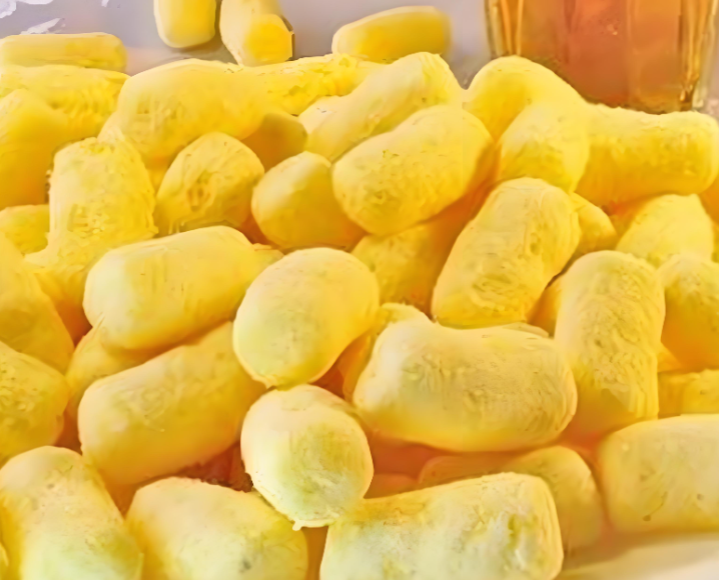
3. Classification of Puffed Food Processing Methods
Puffed foods can be produced by different methods. The major puffing methods include extrusion puffing, hot-air puffing, frying puffing, microwave puffing, pressure puffing, and gun puffing. Each method has its own characteristics and suitable product types.
3.1 Extrusion Puffing
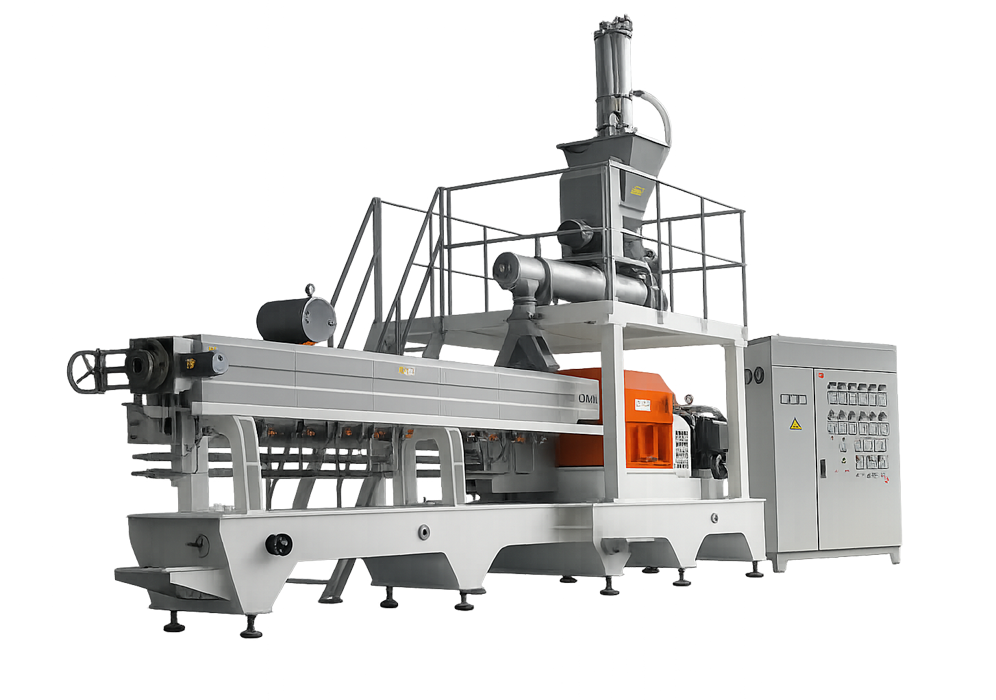
Extrusion puffing is the most widely used industrial method. In this process, raw materials are mixed with water and other ingredients, fed into an extruder, cooked under high temperature and pressure, and forced through a die. When the material exits the die, it expands instantly. Extrusion puffing can be divided into single-screw extrusion and twin-screw extrusion.
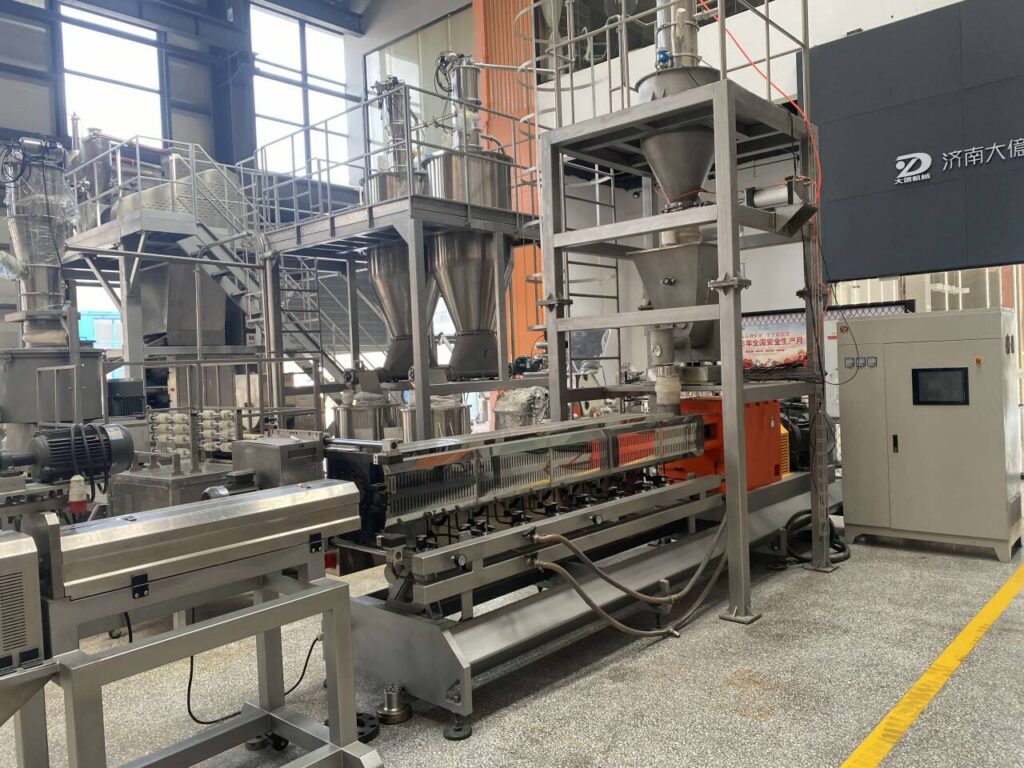
Single-screw extruders are relatively simple and economical. They are suitable for producing many traditional cereal snacks. However, they may have limitations in mixing ability and process flexibility. Twin-screw extruders have better mixing, conveying, and self-cleaning performance. They can process materials with different moisture contents, fat contents, and particle sizes. They are widely used in high-quality snack production, breakfast cereal production, baby food production, and textured protein production.
Extrusion puffing has many advantages. It is continuous, efficient, and easy to automate. It can produce products in various shapes, such as balls, rings, tubes, curls, stars, shells, and flakes. It also allows manufacturers to add vitamins, minerals, proteins, fibers, flavors, colors, and functional ingredients. Because extrusion involves high temperature for a short time, it can reduce microbial contamination while preserving some nutrients better than long-time cooking.
3.2 Hot-Air Puffing
Hot-air puffing uses high-temperature air to heat materials and evaporate moisture rapidly. It is often used for certain grains, fruit and vegetable chips, and semi-finished pellets. The product is exposed to hot air, and the water inside expands and creates a porous structure. This method can produce low-oil puffed foods because it does not require frying.
Hot-air puffing is considered healthier than deep-frying because it reduces fat content. However, it may require precise control of temperature and time. If the temperature is too low, expansion may be insufficient. If the temperature is too high, the surface may burn before the inside expands properly.
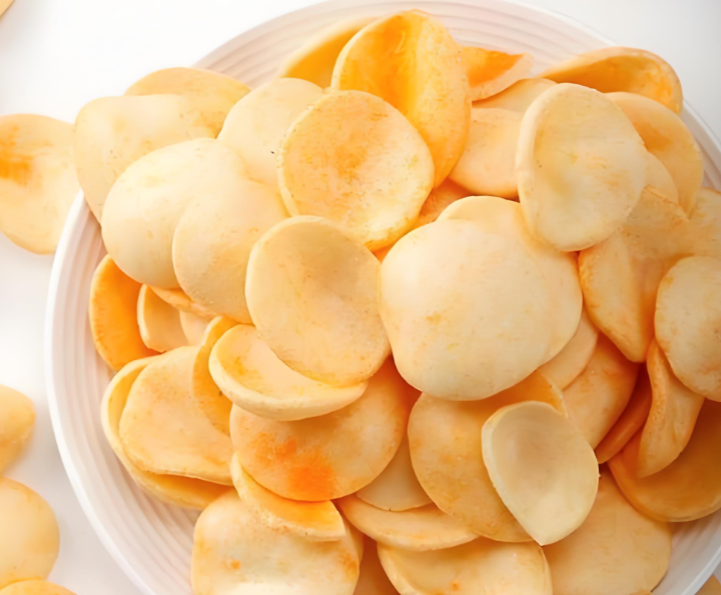
3.3 Frying Puffing
Frying puffing is commonly used for snack pellets, shrimp crackers, potato-based snacks, and some traditional foods. Semi-finished products with appropriate moisture content are placed in hot oil. The water in the product quickly vaporizes, causing the product to expand. At the same time, oil enters the porous structure, giving the product a rich flavor and crispy texture.
Fried puffed foods are popular because of their strong flavor, golden color, and excellent crispness. However, they usually have a high fat content, which may not meet the growing consumer demand for healthier snacks. In addition, frying oil quality must be carefully controlled to prevent oxidation, off-flavors, and harmful compounds.
3.4 Microwave Puffing
Microwave puffing uses electromagnetic energy to heat water molecules inside food materials. Because microwaves can penetrate the material and generate heat internally, moisture can vaporize quickly, leading to expansion. Microwave puffing is used for popcorn, rice cakes, and some low-fat snack products.
The main advantage of microwave puffing is rapid and volumetric heating. It can reduce processing time and oil usage. However, uneven heating may occur if the product shape, moisture distribution, or microwave field is not well controlled. This may lead to uneven expansion, burning, or hard spots.
3.5 Pressure Puffing
Pressure puffing involves heating food materials in a sealed chamber under high pressure, followed by sudden pressure release. The rapid pressure drop causes moisture inside the material to flash into steam and expand. This method can be used for grains, beans, and cereal products.
Pressure puffing can produce a strong expansion effect and distinctive texture. However, compared with continuous extrusion, some pressure puffing systems are less efficient and more suitable for batch production.
3.6 Gun Puffing
Gun puffing is a traditional method often used for puffed rice, puffed wheat, and puffed corn. Grains are placed in a sealed rotating pressure vessel and heated. When the pressure reaches a certain level, the vessel is opened suddenly, and the grains expand explosively. This method produces products with a unique flavor and texture.
Although gun puffing is simple and has a long history, it may have disadvantages such as noise, safety concerns, unstable product quality, and lower automation. In modern industrial production, it is often replaced or improved by more controlled pressure puffing or extrusion systems.
4. Raw Materials Used in Puffed Food Production
Raw materials are the foundation of puffed food quality. The selection and formulation of raw materials determine the processing performance, expansion ratio, texture, flavor, color, and nutritional value of the final product. Common raw materials include cereals, tubers, starches, proteins, sugars, fats, fibers, seasonings, and functional ingredients.
4.1 Corn
Corn is one of the most widely used raw materials for puffed snacks. It contains a high proportion of starch, moderate protein, and a characteristic flavor. Corn grits, corn flour, and corn meal are commonly used in extrusion puffing. Corn-based puffed snacks have good expansion, attractive yellow color, and pleasant roasted flavor.
The particle size of corn material is important. If the particles are too coarse, they may not cook uniformly. If they are too fine, they may affect feeding stability and product texture. Moisture content, starch type, and protein content also influence expansion. Dent corn and flint corn may behave differently during extrusion because of differences in starch and protein structure.
4.2 Rice
Rice is another important raw material for puffed food. Rice flour has a bland flavor, white color, and good digestibility. It is suitable for producing rice crackers, baby snacks, breakfast cereals, and gluten-free products. Rice starch can expand well under suitable conditions, but rice-based products may sometimes be harder than corn-based products if the formulation is not optimized.
Different rice varieties have different amylose and amylopectin contents. High-amylose rice may produce a firmer texture, while waxy rice with high amylopectin content may produce a softer and more adhesive texture. The choice depends on the desired product characteristics.
4.3 Wheat
Wheat flour is used in some puffed foods, especially products that require a specific structure or flavor. Wheat contains gluten-forming proteins, which can influence dough elasticity and expansion behavior. Gluten may help form a network structure, but excessive gluten strength may restrict expansion in some extruded snacks.
Wheat bran and whole wheat flour can also be used to produce high-fiber puffed foods. However, fiber can reduce expansion and make the product harder. Therefore, processing parameters and formulations must be adjusted carefully.
4.4 Potato and Other Tubers
Potato flour, potato starch, sweet potato flour, and cassava starch are commonly used in puffed snacks. These materials often provide good expansion and a light texture. Potato-based snacks are popular because of their mild flavor and excellent crispness.
Cassava starch has high expansion potential and is widely used in shrimp crackers and snack pellets. It produces a transparent, elastic dough before puffing and a crispy structure after expansion. However, pure starch products may lack flavor and nutritional balance, so they are often combined with cereal flours, proteins, and seasonings.
4.5 Starches
Native and modified starches are important ingredients in puffed food formulations. Starch contributes to expansion, texture, binding, and structural stability. Different starch sources have different gelatinization temperatures, swelling powers, and pasting properties.
Modified starches may be used to improve processing stability, expansion, crispness, and shelf life. For example, pregelatinized starch can improve water absorption and dough formation. Cross-linked starch may improve resistance to shear and heat. However, the use of modified starch must comply with food regulations in the target market.
4.6 Proteins
Proteins can be added to improve nutritional value. Common protein ingredients include soybean protein, pea protein, wheat protein, milk protein, and egg powder. With the increasing demand for high-protein snacks, protein enrichment has become an important trend in puffed food development.
However, protein addition often reduces expansion because proteins do not expand like starch. High protein levels may increase melt viscosity, strengthen the matrix, or interfere with bubble growth. To produce high-protein puffed snacks with acceptable texture, manufacturers must carefully control moisture, temperature, screw configuration, and formulation balance.
4.7 Dietary Fiber
Dietary fiber is added to improve the health value of puffed foods. Sources include wheat bran, oat fiber, corn fiber, fruit fiber, vegetable powder, resistant starch, and soluble fibers. Fiber can increase satiety, improve digestive health, and support product claims such as “high fiber” or “whole grain.”
However, fiber generally reduces expansion and crispness. Insoluble fiber particles may disrupt the starch matrix and create weak points. They may also absorb water and change the rheological properties of the material. Therefore, fiber particle size, hydration capacity, and addition level must be considered.
4.8 Sugars and Sweeteners
Sugars are used in sweet puffed products, breakfast cereals, and flavored snacks. They contribute sweetness, color, flavor, and texture. During heating, reducing sugars may participate in Maillard reactions with amino acids, producing brown color and roasted flavor.
However, excessive sugar can reduce expansion and cause stickiness or burning during extrusion. Sugar lowers the glass transition temperature of the product and may make it less crispy under humid conditions. In low-sugar products, alternative sweeteners may be used, but their stability during high-temperature processing must be evaluated.
4.9 Fats and Oils
Fats improve flavor, mouthfeel, and energy value. They may be added before extrusion or applied after puffing through oil spraying. In extruded puffed snacks, too much fat in the raw mixture can reduce expansion because fat lubricates the material, lowers shear, and weakens the starch matrix. Therefore, many products are extruded with low internal fat and then coated with oil and seasoning after drying.
The quality of oil is critical. Oxidized oil can produce rancid flavors and reduce shelf life. Common oils include sunflower oil, palm oil, soybean oil, corn oil, and canola oil. In premium products, olive oil or other specialty oils may be used.
4.10 Seasonings and Flavorings
Seasonings give puffed foods their final sensory identity. Popular flavors include cheese, barbecue, sour cream and onion, tomato, chili, seaweed, shrimp, chicken, pizza, chocolate, honey, and caramel. Seasoning powders usually contain salt, sugar, spices, yeast extract, hydrolyzed vegetable protein, flavor enhancers, acids, colors, and anti-caking agents.
Seasoning can be applied by tumbling, spraying, dusting, or coating. Oil is often used as an adhesive to help seasoning powder stick to the product surface. Uniform seasoning distribution is important for consistent taste and appearance.
5. General Process Flow of Puffed Food Production
Although different puffed foods have different production processes, a typical industrial process includes raw material selection, cleaning, grinding, mixing, conditioning, puffing or extrusion, cutting, drying, cooling, seasoning, packaging, and storage.
5.1 Raw Material Selection and Inspection
The first step is to select suitable raw materials. Raw materials should meet food safety and quality requirements. They should be free from mold, insects, foreign materials, excessive moisture, and harmful contaminants. Important inspection items include moisture content, particle size, starch content, protein content, fat content, microbial load, heavy metals, pesticide residues, and mycotoxins.
For cereal raw materials, mycotoxin control is especially important. Corn and wheat may be contaminated with aflatoxins, deoxynivalenol, or zearalenone if stored improperly. Strict supplier management and incoming inspection are necessary.
5.2 Cleaning and Pretreatment
Raw grains may contain stones, dust, metal fragments, husks, and other impurities. Cleaning equipment such as vibrating screens, magnetic separators, destoners, and air classifiers may be used. Removing impurities protects processing equipment and ensures product safety.
Some raw materials require pretreatment such as peeling, soaking, steaming, drying, or milling. For example, rice may be polished or milled into flour. Corn may be degermed and ground into grits. Potato may be processed into flakes or starch. Pretreatment affects the functional properties of raw materials and the quality of final products.
5.3 Grinding and Sieving
Grinding reduces raw materials to a suitable particle size. Particle size affects hydration, cooking uniformity, extrusion stability, and texture. Fine particles hydrate quickly and cook easily, while coarse particles may provide a rougher texture. However, excessively fine powders may cause feeding problems or excessive stickiness.
After grinding, sieving is used to obtain a uniform particle size distribution. Consistency is important because variations in particle size can cause fluctuations in extrusion pressure, product expansion, and appearance.
5.4 Mixing
Mixing is used to distribute ingredients evenly. Dry ingredients such as flours, starches, proteins, fibers, sugar, salt, and additives are blended according to the formulation. Uniform mixing is essential for stable processing and consistent product quality.
Liquid ingredients such as water, oil, syrup, colors, and emulsifiers may be added during mixing or conditioning. Water addition must be accurate because moisture content strongly influences puffing performance. Industrial mixers may be horizontal ribbon mixers, paddle mixers, or high-speed mixers.
5.5 Conditioning
Conditioning refers to the adjustment of moisture and temperature before extrusion or puffing. In extrusion processing, water and sometimes steam are added to the raw mixture to achieve the desired moisture content. Conditioning improves hydration, reduces dust, increases throughput, and stabilizes extrusion.
The conditioned material may rest for a short period to allow water to distribute evenly. Uneven moisture can lead to unstable extrusion, irregular expansion, and inconsistent texture.
5.6 Extrusion or Puffing
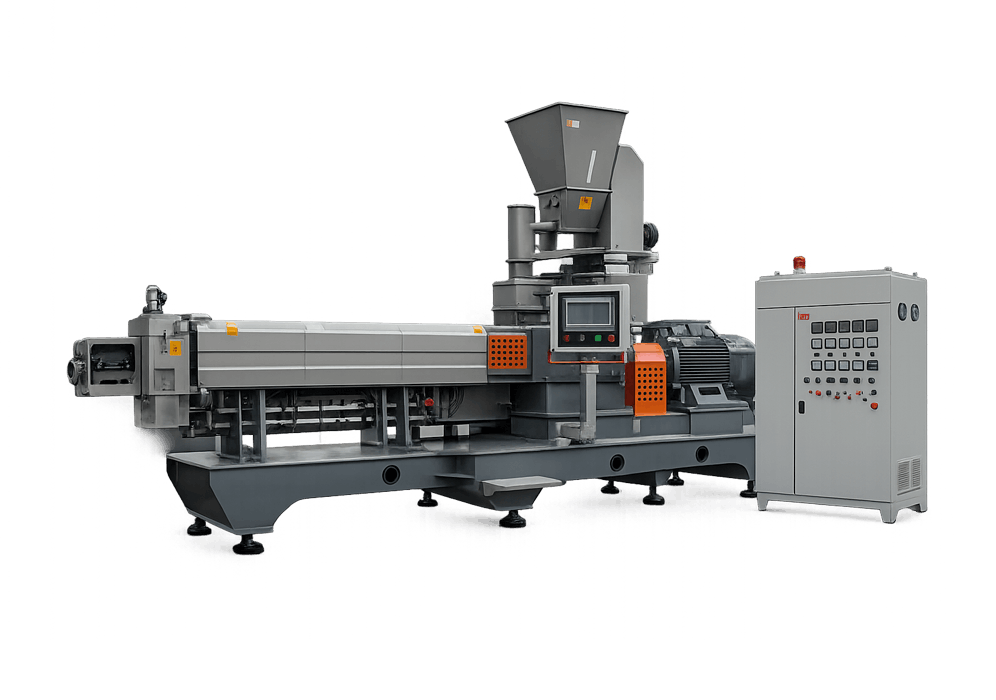
This is the core step of puffed food production. In extrusion puffing, the conditioned material enters the extruder barrel. The rotating screw conveys, compresses, mixes, shears, and heats the material. The barrel temperature is controlled by heaters and cooling systems. As the material moves forward, it changes from a powdery or granular state into a hot, viscous, cooked melt.
At the die, the material is forced through openings of specific shapes. When it exits, pressure drops rapidly and moisture flashes into steam, causing expansion. A rotating cutter cuts the expanded product into the desired length.
The extrusion process must be carefully controlled. Important parameters include feed rate, moisture content, screw speed, barrel temperature, die temperature, die pressure, screw configuration, die size, and cutter speed. Small changes in these parameters can significantly affect product quality.
5.7 Drying
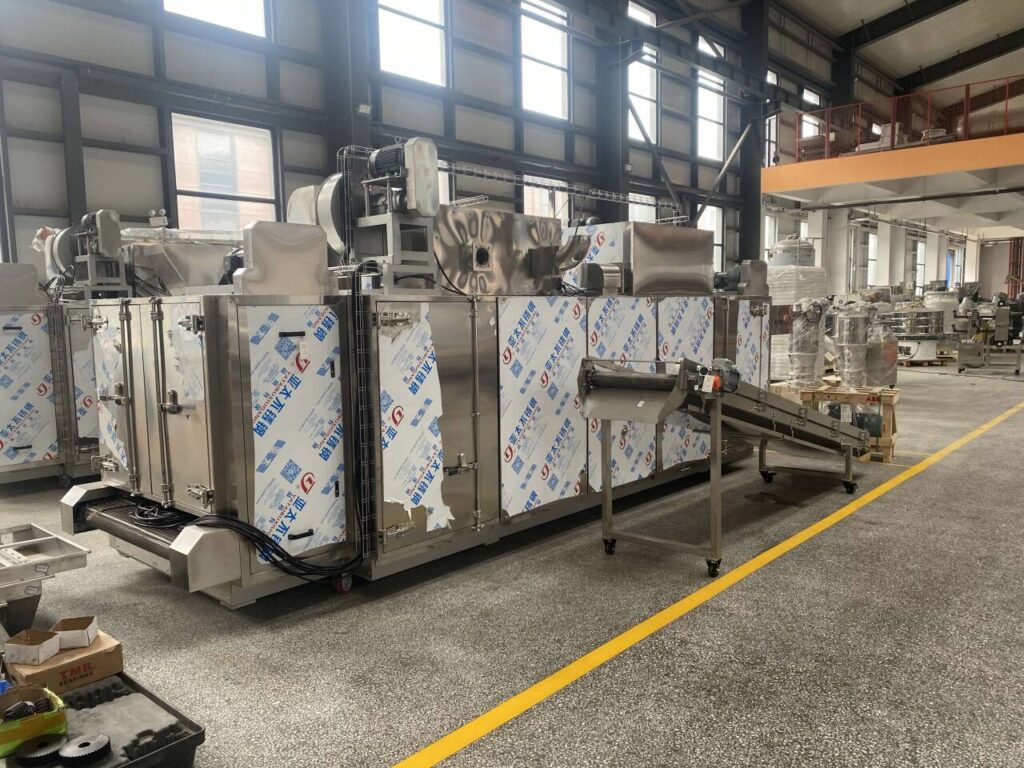
Freshly extruded puffed products usually contain more moisture than the final desired level. Drying removes excess moisture, improves crispness, and extends shelf life. Drying is often performed in belt dryers, fluidized bed dryers, or hot-air dryers.
The final moisture content of many puffed snacks is usually low, often around 2% to 5%, depending on product type. If moisture is too high, the product may become soft, lose crispness, and become susceptible to microbial spoilage. If moisture is too low, the product may become too brittle and break easily.
5.8 Cooling
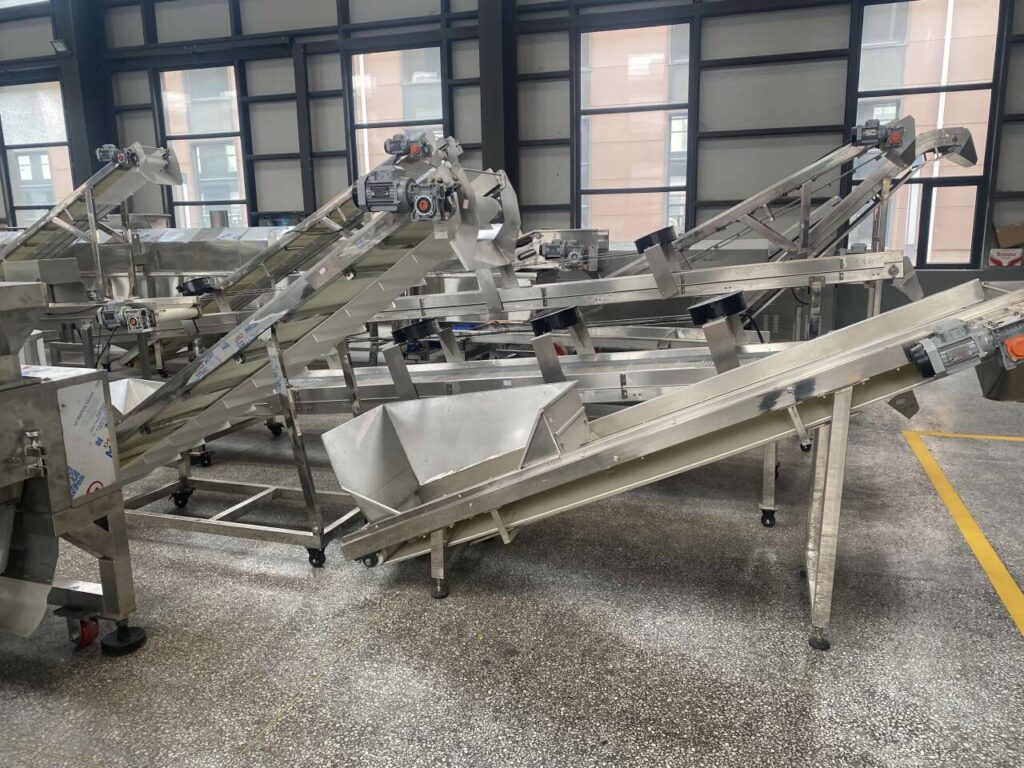
After drying, products must be cooled before packaging or seasoning. Cooling prevents condensation inside the package and helps maintain crispness. Cooling can be done by ambient air conveyors, cooling tunnels, or fluidized cooling systems.
If hot products are packaged immediately, water vapor may condense on the packaging film, increasing moisture and causing quality deterioration. Therefore, cooling is an important step for shelf stability.
5.9 Seasoning
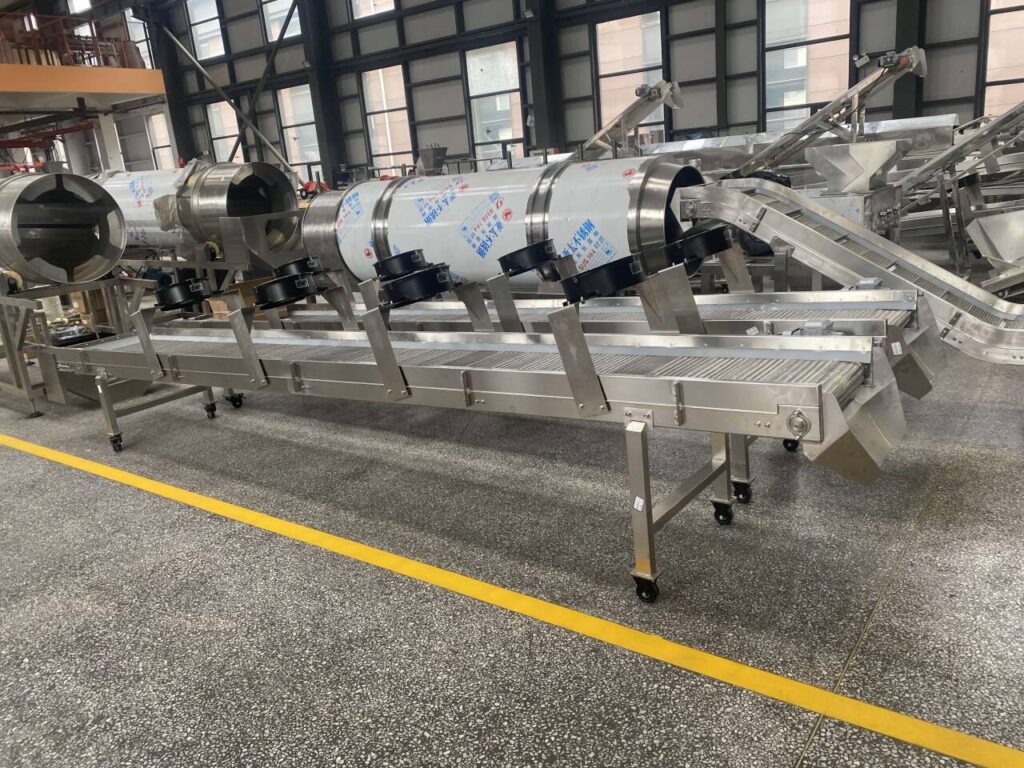
Seasoning is usually carried out after drying and cooling. The product is placed in a rotating drum or seasoning tumbler. Oil or flavoring liquid may be sprayed first, followed by seasoning powder. The tumbling action distributes seasoning evenly on the product surface.
Seasoning conditions must be optimized to avoid product breakage. Fragile puffed products require gentle handling. The amount of oil and powder must also be controlled to ensure taste consistency and cost control.
5.10 Packaging
Packaging protects puffed foods from moisture, oxygen, light, mechanical damage, and contamination. Because puffed foods are porous and low in moisture, they easily absorb moisture from the environment. Moisture absorption causes loss of crispness. Therefore, packaging materials should have good moisture barrier properties.
For oily puffed snacks, oxygen barrier properties are also important because oxygen promotes lipid oxidation. Nitrogen flushing is commonly used to reduce oxygen inside the package and protect fragile products from crushing. Common packaging materials include metallized films, laminated plastic films, and composite bags.
5.11 Storage and Distribution
Finished products should be stored in a cool, dry, and clean environment. High humidity and high temperature can accelerate quality deterioration. During transportation, packages should be protected from compression and puncture. Proper storage and distribution management help maintain product quality until consumption.