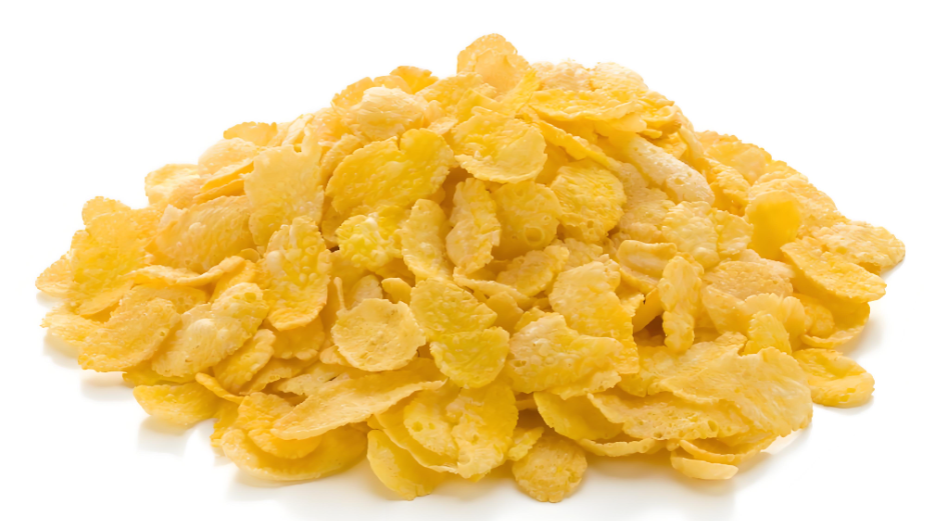
Breakfast cereal corn flakes remain one of the most popular ready-to-eat cereals worldwide. Their crisp texture, golden color, and delicate flavor depend on a tightly controlled manufacturing process. While the basic steps—cleaning, cooking, drying, flaking, and toasting—seem straightforward, several critical issues can make or break product quality. Below are the major factors that processors must monitor closely.
1. Raw Material Quality and Moisture Control
The foundation of good corn flakes is high-quality dent or flaking corn. Key parameters include:
- Starch content and kernel hardness – Soft or damaged kernels produce weak flakes that break during transport.
- Foreign matter removal – Stones, dust, and broken corn must be eliminated through screens, aspirators, and magnetic separators.
- Начальная влажность – Incoming corn should have a uniform moisture level (typically 12–14%). Wide variations cause uneven cooking and unpredictable flaking.
After cleaning, the corn is conditioned with water and steam to raise moisture to about 20–22% before cooking. Inconsistent moisture at this stage leads to under‑gelatinized starch (hard, chewy flakes) or over‑gelatinized starch (sticky, clumped masses).
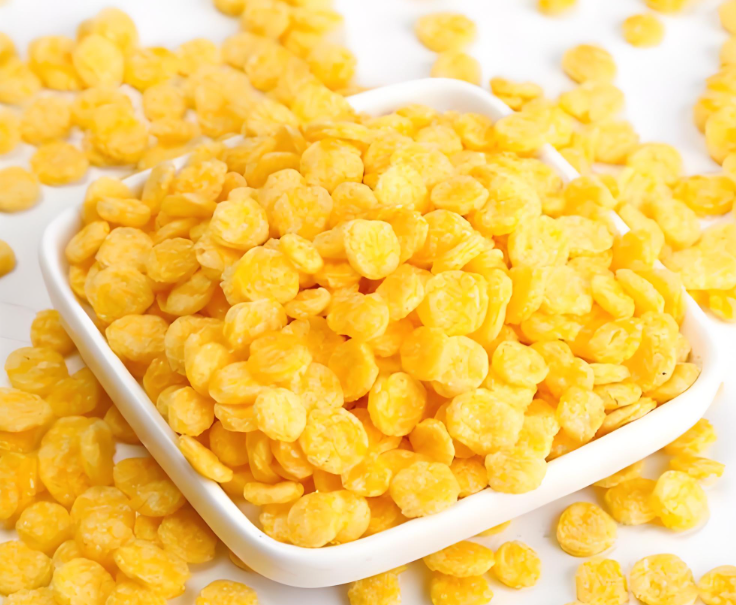
2. Cooking Time, Temperature, and Pressure
Cooking is the most decisive step. The corn is cooked in a rotary pressure cooker with flavoring syrup (malt, sugar, salt) for 1.5–3 hours at 15–20 psi (≈120–130°C). Critical issues include:
- Under‑cooking – Insufficient gelatinization leaves crystalline starch, resulting in brittle flakes with a raw, starchy taste.
- Over‑cooking – Excessive breakdown of starch releases too much soluble sugar, causing flakes to darken excessively during toasting and lose crispness.
- Uniform heat distribution – Hot spots in the cooker produce a mix of over‑ and under‑cooked kernels, leading to inconsistent flake color and texture.
Best practice: Monitor core temperature continuously and use automated pressure‑release valves to ensure even steam circulation.
3. Tempering and Drying Before Flaking
After cooking, the corn is dried to a “temper” moisture of about 18–20% and rested for 1–2 hours. This allows moisture to redistribute evenly throughout each kernel. Key pitfalls:
- Insufficient tempering – Moisture gradients cause some kernels to shatter while others squash irregularly under the flaking rolls.
- Over‑drying – Below 16% moisture, the endosperm becomes too brittle, producing small broken fragments instead of whole flakes.
The subsequent predrying (to ~15–16%) must be gentle, using forced hot air at 60–80°C. Rapid drying hardens the outer surface prematurely, trapping internal steam—this leads to blistering or “blow‑out” during final toasting.
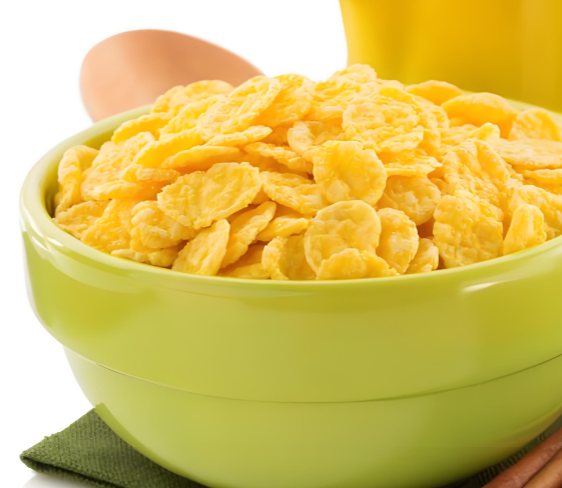
4. Flaking Roll Gap and Roll Speed
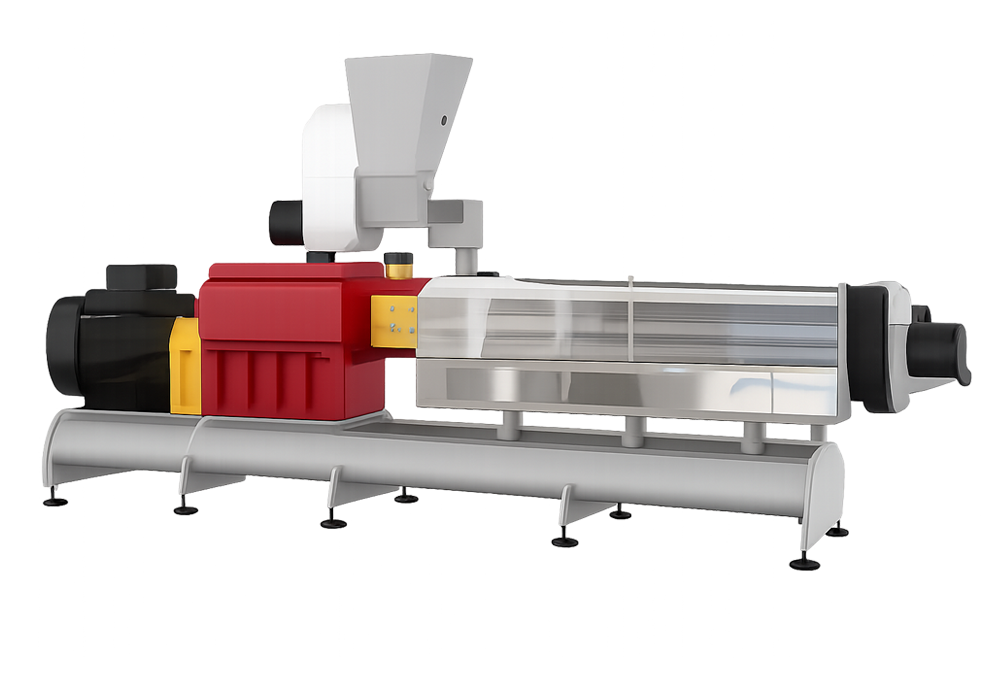
Flaking transforms cooked, tempered corn into thin, uniform sheets. Two large, counter‑rotating steel rolls (often chilled) compress the corn. corn flakes machine Critical controls:
- Зазор между валками – Typically 0.25–0.40 mm. A gap that is too wide produces thick, hard flakes that don’t crisp; too narrow a gap crushes the kernel, destroying the layered structure and producing fines.
- Roll speed and differential – A slight speed difference between the two rolls (1.1:1 ratio) shears the flake surface, improving crispness. Equal speeds yield dense, tough flakes.
- Температура валка – Overheated rolls (above 40°C) cause starch to stick, creating gumming and uneven thickness. Water‑cooled rolls are essential.
5. Toasting – Time, Temperature, and Airflow
Toasting dries the flakes from ~12% moisture down to 2–4%, while also developing color and flavor through Maillard reactions. This step is the most sensitive:
- Temperature profile – A typical toaster uses three zones: 150°C → 200°C → 180°C. Starting too hot scorches the outside before the inside dries, producing a bitter, burnt flavor. Gradual heating ensures even browning.
- Airflow velocity – High‑velocity air removes surface moisture quickly but can blow lightweight flakes out of the bed. Low airflow leads to soggy centers.
- Время пребывания – Usually 5–8 minutes. Over‑toasting caramelizes sugars too far, turning flakes dark brown and imparting a “cooked syrup” off‑taste. Under‑toasting leaves them pale and doughy.
Critical test: Measure flake color with a spectrophotometer (Lab* values) and texture with a crispness tester every 30 minutes during production.
6. Flavor Enrobing and Drying
After toasting, flakes are often sprayed with sugar, honey, malt, or vitamin solutions. Major concerns:
- Uniform coating – Uneven spray nozzles create sticky, clumped flakes or unsweetened spots. Use atomizing nozzles with precise flow control.
- Final drying – Coated flakes must be dried again (to 1.5–3% moisture) in a low‑temperature oven (60–80°C). Insufficient drying leads to rapid staling and loss of crunch in the package.
- Vitamin stability – Heat‑sensitive vitamins (e.g., B₁, B₉) are best applied after the final drying via a separate enrobing drum to avoid thermal degradation.
7. Breakage, Fines, and Size Screening
Corn flakes are fragile. During conveying, toasting, and enrobing, up to 10% of the product can break into fines. Issues include:
- Чрезмерные штрафы – They reduce consumer appeal and can burn during toasting, creating dark specks.
- Screening efficiency – Use vibrating multi‑deck screens to remove oversized chunks and undersized fines. Recycle oversized pieces back to the flaking rolls (after re‑tempering), but discard burnt fines to avoid off‑flavors.
- Gentle conveying – Pneumatic conveyors with low air speed or bucket elevators with soft discharge reduce breakage compared to screw conveyors or high‑drop chutes.
8. Packaging and Moisture Barrier
Even perfectly processed flakes can fail if packaging is inadequate. Corn flakes are hygroscopic—they absorb moisture from ambient air. Critical packaging factors:
- Film barrier properties – Use metallized PET or foil‑lined bags with water vapor transmission rates below 0.5 g/m²/day.
- Flushing with inert gas – Nitrogen flushing replaces oxygen, reducing oxidative rancidity of any added oils/fats and preserving crispness.
- Целостность уплотнения – Weak heat seals allow moisture ingress within days. Perform peel‑test and vacuum‑decay checks on‑line.
- Storage conditions – Even in good packaging, store finished cartons below 25°C and under 50% RH. High‑temperature warehouses accelerate staling and flavor loss.
9. Hygiene and Allergen Control
Corn flakes are low‑moisture foods, but they are not sterile. corn flakes machine Key hygiene issues:
- Aerobic plate count – Monitor raw corn for mold and mycotoxins (aflatoxin). Use optical sorters to remove discolored or infected kernels.
- Equipment cleaning – Cookers, flaking rolls, and toaster belts accumulate baked‑on starch and sugar. Schedule CIP (clean‑in‑place) cycles every 4–6 hours to prevent charred particle contamination.
- Allergen cross‑contact – If the same line produces wheat‑based or oat‑based cereals, strict changeover protocols (thorough dry‑cleaning and purge runs) are mandatory to avoid undeclared gluten.
10. Quality Assurance and Real‑Time Monitoring
Finally, a robust QA system must track:
- Влажность – Use near‑infrared (NIR) sensors at cooking, predrying, and final drying stages.
- Толщина чешуйки – Laser micrometers after flaking to adjust roll gap instantly.
- Цвет – In‑line spectrophotometers to catch browning trends before they exceed specs.
- Текстура – Perform compression tests on finished flakes; a target peak force (e.g., 8–12 N) ensures the desired “snap.”
Any drift in these parameters must trigger automatic adjustments or alarms. Delayed corrective action can result in hours of off‑spec product—costly rework or waste.
Заключение
Processing breakfast corn flakes is a delicate balance of chemistry, mechanics, and thermodynamics. From the farm‑gate moisture of raw corn to the final nitrogen‑flushed pouch, every stage presents distinct challenges. The most successful manufacturers combine precise process control, vigilant hygiene, and real‑time sensor feedback to consistently deliver that iconic golden, crispy flake. Ignoring any one of the ten issues above—whether it be tempering time, roll temperature, or packaging barrier—risks not only product quality but also brand reputation in a highly competitive breakfast market.