Introduction
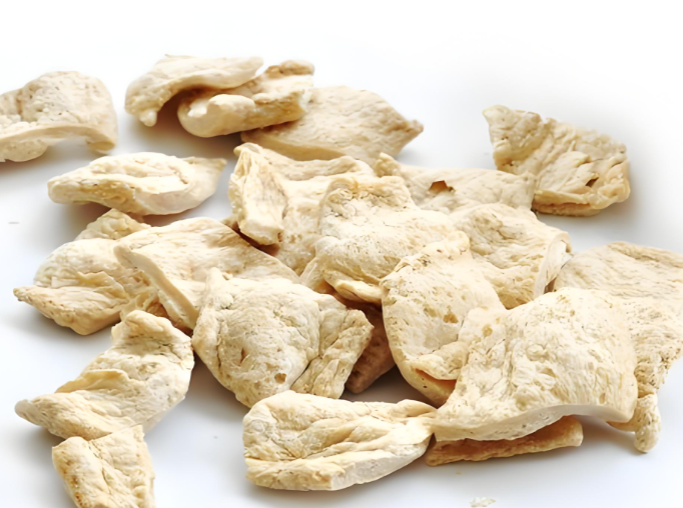
Textured Vegetable Protein (TVP) represents one of the most significant technological achievements in food science over the past six decades. As a registered trademark of Archer Daniels Midland Company, the term “TVP” has become synonymous with a class of plant-based protein products that have been transformed from simple flour into materials possessing meat-like texture, chewiness, and fibrous character. These products are defined as “food products made from edible protein sources and characterised by having structural integrity and identifiable texture such that each unit will withstand hydration in cooking and other procedures used in preparing the food for consumption”.
The emergence of textured vegetable proteins in the 1960s marked a breakthrough in the utilization of plant proteins. Prior to this development, soy protein products were primarily flours or powders that had to be “concealed” in existing foods such as bread, pasta, or beverages. The challenge was twofold: rendering these powders sufficiently flavorless and white, while counteracting any negative changes to the sensory characteristics of the “host” food at nutritionally and economically significant levels. Texturization changed this paradigm by creating products that could stand alone as meat analogues or serve as effective meat extenders with their own distinctive, appealing texture.
This comprehensive guide examines the complete technological process of textured vegetable protein production, from raw material selection through final packaging and application. The content is structured to provide both theoretical understanding of the underlying food science and practical operational guidance for food technologists, production managers, and quality control professionals involved in this rapidly growing sector.
Chapter 1: Raw Materials for Textured Vegetable Protein Production
1.1 Soy Protein as the Primary Base Material
Soy proteins are the most commonly used base materials for textured vegetable proteins. The dominance of soy in this sector stems from several advantageous properties: high protein content, favorable amino acid profile, functional characteristics that respond well to texturization processing, and economic viability. However, other plant proteins including cottonseed, corn, wheat, peanut, and similar proteins can also be texturized.
Soy Flour (50% Protein): This is the most widely used starting material for TVP production, particularly in low-moisture extrusion processes. Defatted soy flour with a high protein solubility index is essential for achieving proper texturization. The flour must be ground finely enough to pass through a 100-mesh or smaller screen to ensure uniform processing. Soy flour typically contains approximately 50% protein and is characterized by a protein dispersibility index (PDI) of 60-70. This PDI range is critical because it indicates the solubility of the soy proteins, which directly influences their ability to undergo the structural transformations necessary for texturization.
Soy Protein Concentrate (70% Protein): Produced from high-quality, sound, clean, dehulled soybeans by removing most of the oil and water-soluble non-protein constituents, soy protein concentrate contains not less than 65% protein on a moisture-free basis. Concentrates produce textured products with higher protein content and more neutral flavor profiles compared to those made from flour. They also exhibit superior water absorption characteristics, typically absorbing 4.5-5 times their weight in water compared to 2.5-3 times for flour-based products.
Isolated Soy Protein (90% Protein): The most refined soy protein starting material, isolates are used primarily in fibre spinning processes and high-moisture extrusion applications. While isolates produce the most refined textured products with the cleanest flavor and highest protein content, their use is limited by higher cost.
1.2 Alternative Protein Sources
Faba Bean Protein: Recent research has demonstrated that faba bean protein can successfully produce texturized vegetable proteins via low-moisture extrusion. Studies investigating extrusion variables including die temperature (110-140°C), feed moisture content (30-40%), and screw speed (200-400 rpm) have established optimal parameters for producing TVP from faba bean protein. Faba bean TVP has been successfully incorporated into hybrid burgers (replacing 25% beef) and vegan burger formulations, demonstrating increased cooking yield and moisture retention compared to beef-only controls.
Mung Bean Protein: Isolated mung bean protein has shown potential as a substitute for isolated soy protein in high-moisture meat analog production. Research indicates that increasing mung bean protein content from 0% to 50% improves gelling ability and increases fibrous structure development. At 40-50% mung bean protein content, the most meat-like fibrous structure was observed, producing soft, juicy samples with rich fibrous content.
Press Cake Proteins: The valorization of press cakes – by-products from almond, coconut, flaxseed, pumpkin seed, rapeseed, and sunflower oil production – represents an emerging sustainability-focused approach to TVP production. These press cake flours, when mixed with pea protein isolate at levels of 25-100%, can be processed via low-moisture extrusion to create TVPs that offer nutritional and sustainability benefits. Products made with sunflower seed, flaxseed, and pumpkin seed press cakes were found to be more chewy and less spongy than higher-protein TVPs, making the texture more meat-like.
Other Emerging Proteins: Wheat, lentil, and pea proteins are increasingly being explored as TVP raw materials. This diversification is driven by both sustainability concerns and consumer demand for products made from familiar, non-GMO, and minimally processed ingredients.
1.3 Functional Ingredients and Additives
Starches and Cereal Flours: Added to modify texture, water-holding capacity, and expansion characteristics. For some products, starch and cereal flour are incorporated at significant levels to achieve specific textural properties.
Salt and Sodium Chloride: Added to the flour-water mixture prior to extrusion to influence protein functionality and flavor development.
Colors and Flavors: Ingredients such as caramel color are used to mimic specific meat types. For example, caramel-colored pieces mimic cooked red meat, while red pieces may mimic lamb or cured meat products. Flavors, seasonings, and nutritional additives may also be incorporated, particularly for products destined for the canning industry.
Binders and Texturizing Aids: For fibre-spun products, binders such as egg albumin are added to hold bundles of fibres together. In high-moisture extrusion, pectin has been shown to promote more pronounced fibrous structures at concentrations of 2-4%. Avocado oil, when incorporated at appropriate levels, contributes tender, juicy characteristics without interfering with fibrous structure formation.
Chapter 2: Protein Texturization Methods – An Overview
2.1 Classification of Texturization Approaches
The successful approaches to soy product texturization can be classified into two main categories, each with distinct underlying principles and technological requirements:
Category 1: Fibre Assembly Approach
This approach attempts to assemble a heterogeneous structure comprising a certain amount of protein fibres within a matrix of binding material. The fibres are produced by a “spinning” process, similar to that used for the production of synthetic fibres for the textile industry. This method, historically known as the Boyer process (patented in 1954), produces the most meat-like products but at higher cost.
Category 2: Random Spongy Mass Approach
This second approach converts the soy material into a hydratable, laminar, chewy mass without true fibres. Two different processes can be used to produce such a mass: thermoplastic extrusion and steam texturization. These processes are more economical and produce the textured products that dominate the market today.
2.2 Historical Development of Protein Texturization
The desire to create plant-based meat alternatives has a longer history than many realize. A meat analogue based on wheat gluten was being used for institutional feeding before the start of the 20th century. In the late 1950s, several patents described a concept of a soy protein-based chewy gel and processes for its production. These inventions produced homogeneous, isotropic gels which had only one element of meat texture: chewiness. They had limited commercial success because they lacked the structural complexity and visual appearance of meat.
The breakthrough came in the 1960s, when textured soy protein products of acceptable quality became increasingly available. The key insight was that for a product to mimic meat effectively, it needed to replicate not just the chewiness but the structural anisotropy (directional organization) of muscle tissue. This understanding led to the development of both fibre spinning and extrusion texturization technologies.
Chapter 3: Fibre Spinning Technology
3.1 Principle and Process Overview
Fibre spinning, also known as spun fibre texturization, is based on the principle of dissolving isolated soy protein in an alkaline medium to form a viscous protein solution technically known as “dope”. This dope is then pumped through a spinneret (a plate with thousands of fine holes, approximately 75 microns in diameter) into an acid coagulating bath.
3.2 Detailed Process Steps
Preparation of Protein Solution: Isolated soybean protein (ISP) is mixed with alkali to create a concentrated protein solution containing approximately 20% protein at pH 12 to pH 13. This solution is “aged” to permit unfolding of the protein molecules until its viscosity rises to the consistency of honey (50,000 to 100,000 centipoise). During this aging step, the protein molecules unfold and align, preparing them for the subsequent fibre formation stage.
Spinning and Coagulation: The dope is pumped into the coagulating bath through the spinneret. The bath contains a solution of phosphoric acid and salt maintained at pH of about 2.5. As the jets of dope contact the acid medium, the oriented protein molecules are suddenly coagulated and form fibres. The acid conditions neutralize the alkaline protein solution, causing the proteins to precipitate in an oriented, fibrous structure.
Stretching and Orientation: The fibres are picked up as a “tow” and stretched to enhance molecular orientation and increase fibre strength. Stretching reduces the diameter of the fibre well below that of the holes on the spinneret, further aligning the protein molecules along the fibre axis. This stretching step is critical for achieving the tensile strength and textural properties that mimic meat fibres.
Washing and Neutralization: The tows of fibre pass through a washing step to remove excess acidity and salt. This step is essential for achieving a neutral, acceptable flavor in the final product.
Binding and Assembly: Soy protein fibres are only one ingredient of the meat-like structure. The other ingredients include fat, binders, colouring and flavouring additives, and other components. The nature of these ingredients, the proportion of fibres, and their orientation in the binder matrix depend on the type of flesh food to be imitated. The binder matrix contains heat-coagulable components, commonly egg albumen, and the final structure is usually stabilized by thermal setting.
3.3 Applications and Limitations
Spun fibre-based textured soy products have been used as “total” meat analogs (to completely replace meat) and as meat extenders (to replace part of the meat in ground meat, patties, etc.). Some products have found use in institutional feeding (hospitals) and school lunch programs.
The most successful spun fibre-based meat analog has been the imitation bacon chip. This shelf-stable low-moisture product with the bite, chewiness, and flavor of fried or roasted bacon bits is used extensively in salads, snacks, and garnishes. At present, however, this product faces competition from imitation bacon made by the less expensive extrusion texturization technique.
Main Shortcomings: The primary limitation of spun fibre type texturized products is their cost. First, the process requires an expensive starting material: isolated soybean protein. Furthermore, the process itself is costly, both in initial capital investment and in running expenses. Today, there are very few producers of spun soy protein fibres and textured products containing them.
Chapter 4: Low-Moisture Extrusion Texturization
4.1 Principles of Extrusion Texturization
Low-moisture extrusion is the dominant commercial method for producing textured vegetable proteins. The process involves subjecting defatted soy flour (or other protein sources) with a controlled moisture content to high temperature, high pressure, and mechanical shear within a screw extruder. The product that emerges from the extruder has a porous, laminar structure that, when hydrated, provides a chewy texture reminiscent of meat.
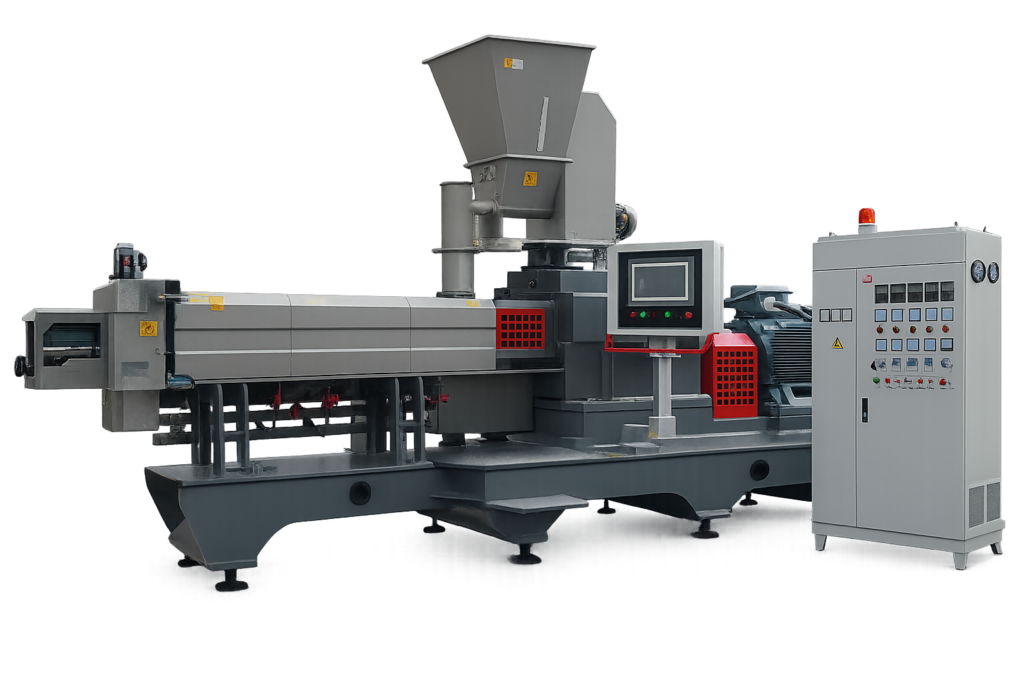
The extruder consists basically of a sturdy screw or worm rotating inside a cylindrical barrel. The barrel can be smooth or grooved. The screw configuration is such that the free volume delimited by one screw flight and the inside surface of the barrel decreases gradually as one goes from one end of the screw shaft to the other. As a result of this configuration, the material is compressed as it is conveyed forward by the rotating screw. Screws having different compression ratios are used for different applications.
4.2 The Extrusion Process Steps
Preconditioning: Defatted soy flour with a high protein solubility index is first conditioned with live steam before entering the extruder proper. Well-controlled conditioning is essential for good texturization and product uniformity. The moisture content of the feed is very important; a moisture level of about 20-25% is used for texturization. The conditioned flour usually assumes the form of small spheres, which improves flow characteristics and ensures uniform processing.
Extrusion Cooking: The flour-water mixture is fed into the extruder and picked up by the screw. As it advances along the barrel, it is rapidly heated by the action of friction as well as the energy supplied by the heating elements around the barrel. The high pressures attained through the compression mechanism permit heating to 150-180°C. This rapid “pressure cooking” process transforms the mass into a thermoplastic “melt,” hence the name “thermoplastic extrusion” by which the process is also known.
Protein Denaturation and Alignment: The directional shear forces cause some alignment of high molecular weight components while the proteins undergo extensive heat denaturation. Under the combined effects of temperature and shear force, the three-dimensional structure of proteins is partially destroyed as a result of hydrolysis of peptide bonds, causing amino acid chains to unfold. These are realigned due to the formation of cross-links between the denatured protein chains by means of amides, disulfide bridges, and hydrogen bonds, and finally transformed into a fibrous structure through new isopeptide bonds.
Expansion and Structure Formation: The sudden release of pressure at the die exit causes instant evaporation of some of the water and “puffing”. The result is a porous, laminar structure. Puffing and therefore porosity can be controlled by monitoring melt temperature at the die. If a dense product is desired, the melt is cooled at the final section of the barrel, just before entering the die.
Shaping and Cutting: The extrudate is cut continuously by a rotating knife as it emerges from the die. The size and shape of extruded material is controlled by the size and speed of the cutting knife. Products can be produced in various shapes: small flakes or granules of about 2 mm up to large “steaks” that are 12 mm thick by 80 mm wide by 120 mm long. Other available shapes include cubes (6-20 mm) and noodles.
Drying: The extruded product is dried to a shelf-stable moisture content (typically 6-10%) and packaged for shipment.
4.3 Product Characteristics and Performance
Extrusion texturized soy flour has been called “the first generation TVP”. Being made of flour, it has the composition and flavor of heat-treated soy flour. The flavor is intensified by retorting. It contains the sugars of soy flour and presents the problem of flatulence. Usage directions usually prescribe a reconstitution step of soaking in water and pressing to remove the soluble components.
Hydration Characteristics: The water absorption of TVP depends upon the raw material used. Flour-based products can absorb 2.5-3 times their weight in water, while concentrate-based products can absorb 4.5-5 times their weight. Rehydration rates depend upon the size and surface area of the products. Extender flakes rehydrate more quickly than minced products or chunk-style meat extenders.
Textural Characteristics: The products are characterized by a random spongy meat-like structure that imitates the chewy texture of meat when hydrated with water. They are rehydrated to 60-65% moisture and blended with meat or meat emulsions to extend levels of 20-30% or higher.
4.4 Second Generation: Textured Concentrates
More recently, processes have been developed for the texturization of soy protein concentrates. Textured concentrates (second generation TVPs) are now widely available. These products offer higher protein content, more neutral flavor, and improved texture compared to flour-based products.
Chapter 5: High-Moisture Extrusion Technology
5.1 Evolution from Low-Moisture to High-Moisture Extrusion
Despite nearly three decades of development, high-moisture extrusion (HME) technology, which emerged in the 1990s as an evolution of low-moisture extrusion technology, is still primarily in the research stage for many applications. However, it represents the most promising pathway to creating plant-based meat analogues that closely mimic the texture of whole-muscle meat.
The key distinction is moisture content: low-moisture extrusion operates at moisture levels ≤ 40%, producing products with porous, spongy structure, while high-moisture extrusion operates at moisture content above 40%, typically 50-80%, yielding fibrous, layered structures that more closely resemble meat.
5.2 Process Parameters and Equipment
Extrusion System Components: The high-moisture extruder (typically twin-screw) consists of five essential components: (i) pre-conditioning system, (ii) feeding system, (iii) screw or worm, (iv) barrel, and (v) die. The HME meat analogue typically employs a co-rotating intermeshing twin-screw extruder with a long cooling die. The screw configuration has a considerable impact on how materials are transformed, fill levels, and input energy.
Temperature Profile: During HME, raw materials are subjected to cooking temperatures typically between 140 and 180°C. Although high temperatures are not strictly required for protein denaturation to occur, temperatures between 155°C and 180°C are necessary for obtaining a pronounced fibrous structure. The barrel temperature in the feeding zone is typically maintained at around 80°C, gradually increasing to the maximum temperature in the cooking zone.
Cooling Die: The key innovation in HME is the inclusion of a cooling unit at the equipment outlet. Once the material has been cooked, cooling the hot material at the extruder outlet induces its solidification from the walls of the cooling die towards the center. This stage leads to the gradual development of flow conditions that promote the generation of fibers and overlapping layers in the final product, with an anisotropic fiber-like structure. As the temperature decreases in the cooling die, protein-protein interactions increase and specific cross-linking occurs leading to the formation of a dense fiber product. The rectangular cooling die may be 30 cm long, with the cooling chamber wrapped in dry ice to reach temperatures as low as -12°C.
Feed Moisture: HME uses feed moisture of 40-80%, in contrast to 20-25% for low-moisture extrusion. The residence time is approximately 3-4 minutes.
5.3 Protein Structural Transformation
During HME, various transformations occur: the breakdown and reformation of proteins, unfolding and crosslinking of proteins, fragmentation and complex formation of proteins, lipid oxidation, gelatinization and degradation of starch, as well as degradation of phytochemicals, antinutrients, and vitamins.
The mechanism of fibrous structure formation involves:
- Denaturation and Unfolding: Proteins undergo structural changes, exposing reactive groups
- Alignment: The viscoelastic protein mass aligns in the direction of flow
- Cross-linking: New bonds (disulfide bridges, hydrogen bonds, hydrophobic interactions) form between denatured protein chains
- Cooling-induced Solidification: As the material cools, the aligned structure is fixed
Studies have shown that pectin (2-4%) promotes more pronounced fibrous structures, likely due to thermodynamic incompatibility between proteins and polysaccharides, leading to phase separation that facilitates fibre formation.
Chapter 6: Process Control and Optimization
6.1 Critical Process Parameters
Raw Material Selection: For soy flour, a PDI (Protein Dispersibility Index) of 60-70 and protein level of 50% are optimal. For soy concentrates, a lower protein solubility material can be used to produce good product.
Feed Moisture: For low-moisture extrusion, 20-25% moisture is standard. In low-moisture extrusion of faba bean protein, feed moisture of 30-40% has been investigated, with higher moisture creating TVPs with lower bulk densities and rehydration ratios. For high-moisture extrusion, 40-80% moisture is used.
Temperature: Extrusion texturization typically occurs at 150-180°C, with high-moisture extrusion requiring 155-180°C for optimal fibre formation.
Screw Speed: In studies on faba bean TVP, screw speeds of 200-400 rpm were investigated. Springiness, cohesiveness, and resilience were more affected by screw speed, with higher values at 200 rpm. Higher screw speed also increased the bulk density of the TVPs.
Cooling Conditions: The cooling rate in high-moisture extrusion is critical. Extended cooling (e.g., 24 hours at 90°C in sous-vide processing) has been shown to reduce textural properties while increasing hydrogen bonds, hydrophobic interactions, and disulfide bonds, resulting in textures similar to chicken breast.
6.2 Relationship Between Process Parameters and Product Properties
| Parameter | Effect on Product |
|---|---|
| ↑ Feed Moisture | ↓ Bulk density, ↓ Rehydration ratio, ↑ Hardness, ↑ Gumminess |
| ↑ Extruder Temperature | ↓ Specific mechanical energy, ↑ Bulk density |
| ↑ Screw Speed | ↑ Bulk density, ↓ Water holding capacity |
| ↑ Raw Material Protein Content | → More pronounced fibrous structure |
6.3 Quality Control and Monitoring
In-line monitoring of moisture, temperature, and pressure is essential for consistent production. Key quality parameters to monitor include:
- Moisture content (6-10% for dry TVP products)
- Bulk density (for low-moisture extrusion products, typically low, while compressed products may have 30-40 lbs/ft³)
- Water holding capacity
- Rehydration rate
- Textural properties (hardness, springiness, cohesiveness, chewiness)
- Colour
Chapter 7: Post-Extrusion Processing
7.1 Drying
Drying is a critical step for low-moisture extrusion products. The extruded material must be dried to a safe moisture content (typically 8-13%) for shelf stability. This drying can be accomplished using conventional hot air dryers, fluidized bed dryers, or other drying equipment. The drying conditions must be controlled to prevent excessive shrinkage or case-hardening that would impair rehydration characteristics.
7.2 Compression and Densification
Principle and Purpose: Compressed texturized soy protein products represent an innovation in packaging and handling. These products have a protein content greater than 45%, a moisture content of about 5-15%, a bulk density of about 30-40 lbs per cubic foot, and an expansion capacity upon rehydration of about 50-150%. The compression process transforms low-density, bulky extruded particles into dense cakes that resist fragmentation during shipping and commercial handling, yet rehydrate rapidly.
Process: The texturized soy protein product must first be texturized by extrusion. After texturization, the moisture content is adjusted to about 10-20%. The structured particles are then compressed with conventional equipment at 1,500 to 3,000 lbs per square inch. The resulting cake retains its pressed form and does not become crumbly or break apart.
Advantages: Compressed TVP products are easy to handle, store, and ship. They are resistant to fragmentation or flaking and rehydrate rapidly. When hydrated, the cake expands quickly until its volume is about equal to the volume of an equal weight of uncompressed, hydrated material.
7.3 Colouring and Flavour Application
Products may be colored to mimic a particular type of meat. For example, caramel-colored pieces might be used to mimic a cooked red meat, and red pieces might be used to mimic lamb or a cured meat product. Flavors, seasonings, and nutritional additives may be added to textured proteins used in the canning industry.
Chapter 8: Nutritional Considerations
8.1 Protein Quality
Textured vegetable proteins have a Protein Efficiency Ratio (PER) of at least 80% of casein. Soy protein contains all the essential amino acids. Lysine is present in substantial levels, while methionine is the first limiting amino acid. Methionine may be added to soy protein products to give a PER value equal to casein.
8.2 Anti-Nutritional Factors
One of the significant advantages of extrusion texturization is the heat treatment it provides. The process reduces the microbial load and inactivates trypsin inhibitor. However, despite the high temperatures in the extruder, trypsin inhibitor inactivation may be incomplete due to the relatively short processing time.
Other anti-nutritional factors present in soy flour (such as flatulence-causing oligosaccharides, hemagglutinins, and saponins) may be reduced during processing but not completely eliminated.
8.3 Fortification
The processes involved in fabricating textured vegetable proteins provide an opportunity to incorporate essential nutrients into food products. Nutritional additives may be added to textured proteins to enhance their nutritional profile.
Chapter 9: Applications and Market Segments
9.1 Meat Extenders
The largest application for extruded TVP products is as meat extenders in canned meat products, ground meat, patties, and similar applications. The products are rehydrated to 60-65% moisture and blended with meat or meat emulsions to extend to levels of 20-30% or higher. Meat extenders are available in chunk form (15-20 mm), minced form (>2 mm), and flaked form (>2 mm).
9.2 Meat Analogues
TVP products are increasingly used to completely replace meat in meatless entrees and plant-based products. High-moisture extrusion products, in particular, are positioned as whole-muscle meat analogues.
Hybrid Meat Products: Recent research demonstrates that replacing 25% beef with faba bean TVP in a hybrid burger increased cooking yield and moisture retention and decreased thickness and diameter change compared to the beef burger without TVPs.
Vegan Meat Products: TVP-based vegan burger formulations have been developed, though some formulations may have lower cooking yield and moisture retention than commercial products.
9.3 Other Applications
TVP is used in breakfast cereals, frozen desserts, and other processed foods. Its bland taste and ability to absorb flavors make it a versatile ingredient.
Chapter 10: Emerging Technologies and Future Trends
10.1 Diversification of Raw Materials
There is growing interest in producing TVP from a wider range of plant proteins including faba bean, mung bean, lentil, sunflower, and press cake by-products. This diversification is driven by:
- Sustainability concerns
- Consumer interest in familiar, non-GMO proteins
- Price volatility in soy markets
- Allergen concerns
10.2 3D and 4D Printing
Advanced 3D printing technology, which involves the gradual layer-wise deposition of materials to construct intricate and complex three-dimensional structures, holds potential in food production as it allows for the modification of product structure and texture. 4D printing technology allows for the creation of products that have the ability to transform their features or functionalities on exposure to external triggers such as time, electricity, temperature, humidity, and other stimuli.
10.3 Sous-Vide Processing
Sous-vide processing represents a novel technique for transforming low-moisture textured soy protein into a product with high moisture content and texture comparable to meat. The sous-vide treatment enables precise control of the TSP microstructure, maintaining moisture at approximately 70% and producing textural characteristics similar to chicken breast. This technique represents a revolutionary approach to producing high-moisture meat analogues without specialized high-moisture extrusion equipment.
10.4 Sustainability Enhancement
The food industry is increasingly focused on sustainability in TVP production. The use of press cakes (by-products from oil production) as ingredients improves the sustainability profile of meat alternatives. Plant-based meat analogues are recognized as a more sustainable alternative to traditional meat that can mitigate damage caused by the meat industry.
Chapter 11: Plant Design and Operational Considerations
11.1 Production Line Layout
A typical TVP production line (low-moisture extrusion) includes:
- Raw Material Handling: Storage silos, pneumatic conveying, weighing systems
- Grinding and Classification: Hammer mills, air classifiers
- Pangondisian: Mixers, steam injection systems
- Extrusion: Twin-screw extruder with preconditioner and die system
- Cutting: Rotary knife
- Drying: Fluidized bed or conveyor dryer
- Cooling: Ambient cooling or forced air cooling
- Packaging: Form-fill-seal or bagging equipment
For high-moisture extrusion, the line typically includes:
- Raw Material Handling and Mixing
- Extruder: Twin-screw extruder with long cooling die
- Product Handling: Mincing, marinating, mixing
- Packaging: Modified atmosphere packaging, freezing
11.2 Equipment Selection
Single-Screw vs. Twin-Screw Extruders: For TVP production, single-screw extruders were historically common. However, double-screw food extruders have been increasingly replacing older single-screw models in food processing applications. In double-screw extruders, a considerable part of the mixing and friction-heating effect takes place between the screws. The shafts can be fitted with interchangeable screw elements, providing different processing profiles along the extruder.
Low-Cost Extruders: The so-called low-cost extruders used for the continuous heat treatment of full-fat soy flour or corn-soy-milk food supplements are not suitable for texturization. These extruders work with low-moisture feeds and provide heat mainly by friction. The extrusion-cooking machines used for texturization are more sophisticated and expensive.
11.3 Quality Assurance
A robust quality assurance program should include:
- Raw material testing (moisture, protein content, PDI, microbiological)
- In-process monitoring (temperature, pressure, moisture)
- Finished product testing (water holding capacity, rehydration rate, texture analysis, sensory evaluation)
- Shelf-life testing
- HACCP compliance
Chapter 12: Troubleshooting Common Process Issues
12.1 Extrusion Problems
| Problem | Possible Causes | Solusi |
|---|---|---|
| Poor Texturization | Incorrect moisture; wrong PDI; improper temperature profile | Adjust feed moisture; change raw material; optimize barrel temperatures |
| Incomplete Protein Denaturation | Short residence time; insufficient temperature | Increase residence time through screw design; raise temperature |
| Uneven Expansion | Variable moisture; pressure fluctuations | Stabilize feed rate; check die conditions |
| Incomplete Trypsin Inhibitor Inactivation | Short processing time | Adjust temperature or residence time |
12.2 Drying Problems
| Problem | Possible Causes | Solusi |
|---|---|---|
| Case-hardening | Too rapid drying | Lower drying temperature; increase air flow |
| Inconsistent Moisture | Variable product feed; uneven airflow | Calibrate feeder; check dryer distribution |
| Susut | Excessive heat; prolonged drying | Optimize drying profile |
Chapter 13: Commercial Landscape
13.1 Nomenclature Considerations
It is important to note that “Texturized Vegetable Protein” or “TVP” is a registered trademark for texturized soy proteins produced by Archer Daniels Midland Company. In generic terms, “texturized soy protein” or “TSP” (a copyrighted trademark of PMS Foods, now Legacy Foods) is often used. The USDA has defined textured vegetable protein products for use in the school lunch program as “food products made from edible protein sources and characterized by having a structural integrity and identifiable structure such that each unit will withstand hydration and cooking, and other procedures used in preparing the food for consumption”.
13.2 Market Drivers
The global market for textured vegetable proteins is driven by:
- Growing consumer interest in plant-based diets
- Environmental concerns about livestock production (livestock accounts for 12-18% of greenhouse gas emissions)
- Health considerations (obesity, high blood pressure, cardiovascular disease)
- Cost advantages over meat (for certain applications)
- Meat supply variability and price fluctuations
13.3 Future Outlook
The development of plant-based meat alternatives holds significant promise for transforming the food industry and promoting a more sustainable future. Advances in extrusion technology, including high-moisture extrusion and the integration of 3D/4D printing, are expected to overcome existing limitations concerning nutritional value and product texture. The industry is likely to see continued diversification of raw materials, with proteins from different plant sources (faba bean, pea, sunflower, press cake by-products) gaining market share.
Kesimpulan
The production of textured vegetable proteins represents a sophisticated application of food processing technology that has evolved over more than six decades. From the early experiments with fibre spinning and simple gel formation, the industry has developed into a technologically advanced sector capable of producing a wide range of products with textures ranging from spongy meat extenders to fibrous meat analogues.
Two main processing approaches dominate: low-moisture extrusion texturization, which produces the majority of commercial TVP products, and high-moisture extrusion, which represents the cutting edge in creating whole-muscle meat analogues. Both processes rely on the fundamental principle of subjecting plant proteins to controlled conditions of temperature, pressure, moisture, and mechanical shear to induce protein denaturation, alignment, and cross-linking, resulting in products with meat-like chewiness and structure.
The field continues to evolve rapidly, driven by consumer demand for sustainable, healthy, and appealing plant-based alternatives to meat. Diversification of raw materials, innovations in processing technology, and integration with advanced manufacturing techniques such as 3D and 4D printing promise to further expand the capabilities and applications of textured vegetable protein products.
For food technologists, production managers, and quality professionals working in this sector, mastery of the principles and techniques outlined in this guide is essential for producing consistent, high-quality products that meet consumer expectations and regulatory requirements in this growing market.