The global extruded snacks market continues to expand, driven by changing consumer habits and the universal appeal of crispy, flavorful convenience foods. With the market valued at over USD 54 billion in 2025 and projected to grow significantly, now presents a compelling opportunity for entrepreneurs . This comprehensive guide will walk you through every critical stage of establishing a successful puffed snack manufacturing operation.
1. Market Research and Product Concept Development
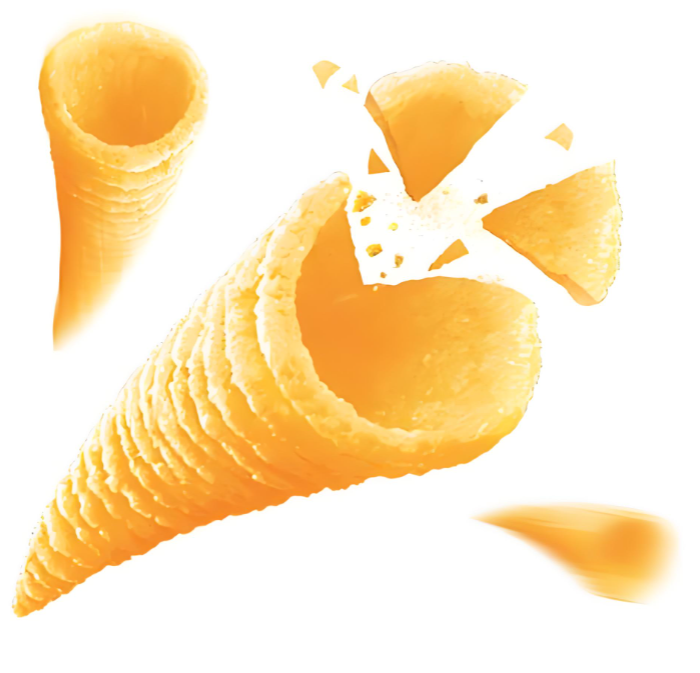
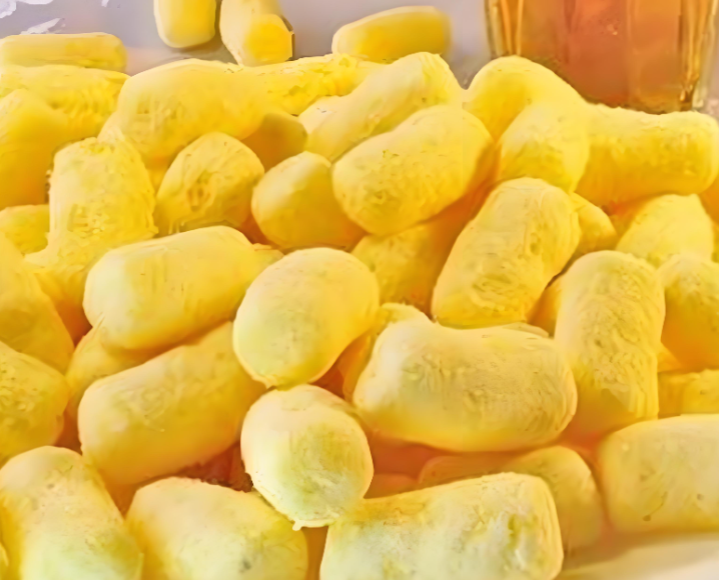
Before investing in equipment or leasing a facility, you must define your niche. The puffed snack category is diverse, encompassing cheese balls, corn curls, rice cakes, cereal puffs, and shaped extruded snacks in forms like rings, stars, and sticks .
Key Questions to Answer:
- Product Type: Will you produce traditional extruded snacks, popped chips, or multigrain health-oriented puffs?
- Flavor Profile: Will you offer classic savory flavors (cheese, barbecue) or capitalize on emerging trends (spicy, international, or natural ingredients)?
- Target Market: Are you supplying local retail, quick-service restaurants, or institutional catering?
Understanding your market position will inform your recipe development, equipment selection, and branding strategy.
2. The Business Plan and Financial Feasibility
A detailed financial plan is essential for securing funding and guiding your growth. snack food extruder The project economics for a puffed snack plant are influenced by capacity, automation level, and location .
A. Project Cost Estimation
For a small to medium-scale operation (e.g., 70 kg/hour capacity), the total project cost involves both capital and working capital . Based on a typical project profile:
| Komponèn | Estimated Cost (INR) | Notes |
|---|---|---|
| Capital Expenditure (Equipment, Land, Shed) | ~₹2.45 million | Includes extruder, mixer, seasoning system, and packaging machine . |
| Working Capital (Raw Materials, Salaries) | ~₹1.10 million per cycle | Covers flour, oils, seasonings, packaging, and labor for an initial operating cycle . |
| Total Project Cost | ~₹3.55 million |
Note: Figures are indicative and will vary by region, capacity, and automation level .
B. Operating Cost Breakdown
Raw materials are the largest operating expense, typically accounting for 65-75% of total OpEx. Utilities (electricity, water, steam) represent another 10-15% . Key ongoing costs include:
- Raw Materials: Corn grits, rice flour, wheat flour, vegetable oils, starches, and seasonings .
- Packaging Materials: High-barrier films (often aluminum foil composite) and printed labels .
- Labor: Skilled machine operators, unskilled labor for packaging, and managerial staff .
C. Profitability Outlook
The extruded snacks market offers healthy margins. Industry estimates project a gross margin of 30-40% and a net profit margin of 15-22%, depending on scale and efficiency . Profitability improves with capacity utilization; a detailed break-even analysis is critical .
3. Legal, Regulatory, and Food Safety Compliance
Navigating food regulations is non-negotiable. Compliance protects your business from legal issues and builds consumer trust .
Key Regulatory Steps:
- Business Registration and Licensing: Register your business and obtain the necessary licenses from local and federal authorities (e.g., FDA in the U.S.) .
- Food Safety Plan: Develop a HACCP (Hazard Analysis and Critical Control Points) plan to manage food safety risks at every production stage .
- Facility Inspection: Ensure your production facility is licensed and inspected by the relevant state or local department of agriculture .
- Product Liability Insurance: Protect your business in case of product-related issues .
Product Testing and Labeling
Before launching, you must have your products rigorously tested :
- Nutritional Analysis: For an FDA-compliant Nutrition Facts Panel.
- Shelf-Life Testing: To determine product stability and expiration dates (microbial and sensory).
- Food Safety Testing: To ensure the product is free from harmful pathogens (e.g., Salmonella, E. coli) .
- Allergen Testing: Required if you claim a product is allergen-free .
Your final packaging must include the product name, net weight, ingredient list (in descending order), allergen declaration, Nutrition Facts panel, and your business name/address .
4. Facility and Infrastructure Setup
Choosing the right location and infrastructure is crucial for efficiency and compliance.
Facility Options:
- Commercial Kitchen: Suitable for small-scale startups.
- Lease/Purchase a Manufacturing Facility: The standard option for dedicated production. Ensure the space meets zoning requirements and food safety standards .
Infrastructure Checklist:
- Utilities: Reliable three-phase power (e.g., 380V, 50HZ) is required for extruder motors. snack food extruder Access to clean water and adequate steam generation is essential .
- Waste Management: Implement proper systems for fats, oils, grease, and general waste .
- Space Layout: Design a logical workflow that minimizes contamination risk and optimizes movement from raw material intake to finished goods storage .
5. The Production Line: Equipment and Process
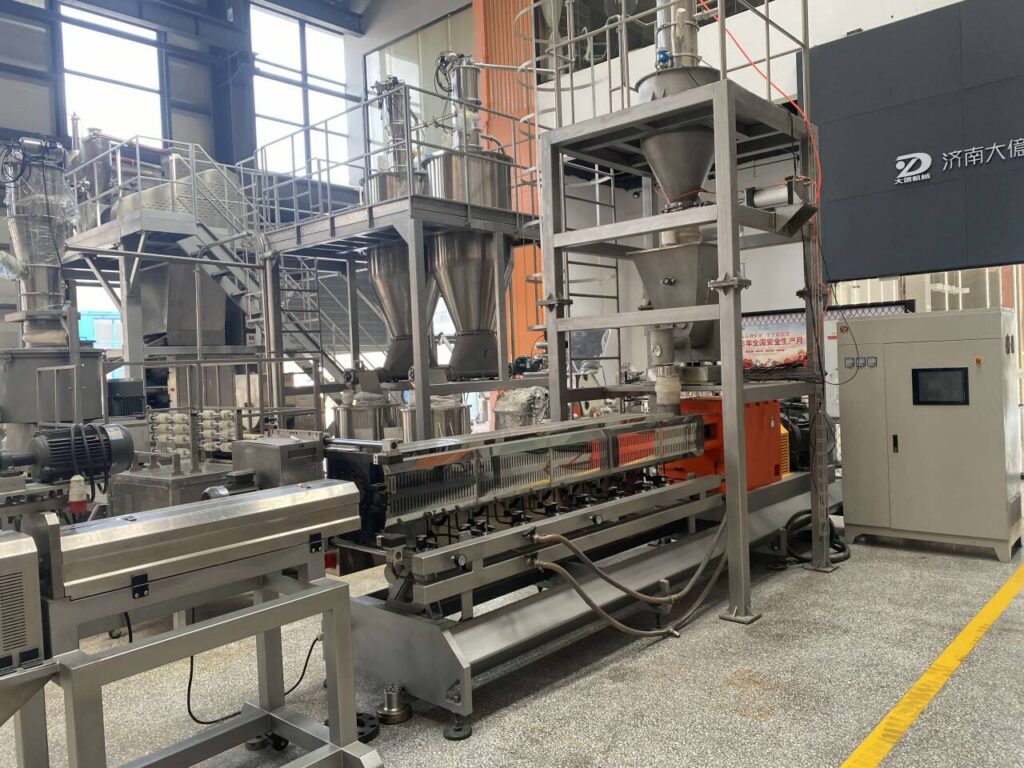
The puffed snack production line is a coordinated system. The core principle involves transforming raw starch-based materials into expanded, crispy snacks through high-temperature, high-pressure extrusion .
The 7-Step Production Process
1. Raw Material Preparation:
The journey begins with milling base ingredients like corn, rice, or wheat into a fine powder. The fineness of this powder is critical; aiming for a 60–80 mesh particle size ensures consistent texture . The flour is then mixed with water and other ingredients to form a uniform dough or slurry .
2. Extrusion – The Heart of the Line:
The mixture is fed into the food extruder, the most critical machine. Under high pressure and temperature (typically 120°C – 160°C), the starch gelatinizes and the dough cooks . The extruder forces the cooked material through a shaped die. As the material exits, the sudden pressure drop causes moisture to flash into steam, puffing the snack into its characteristic light, airy shape. Products can be cut to length as they exit .
3. Drying and Cooling:
The extruded snacks still contain moisture that can lead to staleness if not removed. They are passed through dryers (hot air ovens or fluidized bed dryers) to reduce moisture to below 2-3%, ensuring crispness and shelf stability . Cooling conveyors then bring the product to room temperature .
4. Flavoring and Seasoning:
To create your signature taste, the puffs enter a seasoning drum. snack food extruder A fine mist of edible oil is first sprayed onto the snacks to act as an adhesive. Seasoning powder (spices, cheese, salt) is then applied evenly. For delicate shapes, an octagonal seasoning machine with a gentler tumbling action is recommended .
5. Packaging – Locking in the Crunch:
Packaging is the final critical step. An automatic vertical form-fill-seal (VFFS) machine is typically used . To preserve freshness, many operations employ nitrogen flushing, replacing the oxygen in the bag with nitrogen to prevent oxidation . High-barrier films (like aluminum foil composite) are used to block moisture and light .
Recommended Equipment List
| Piranti | Fungsi |
|---|---|
| Grinder/Pulverizer | Milling raw grains into fine flour . |
| Mixer | Blending flour, water, and other ingredients into a homogeneous dough . |
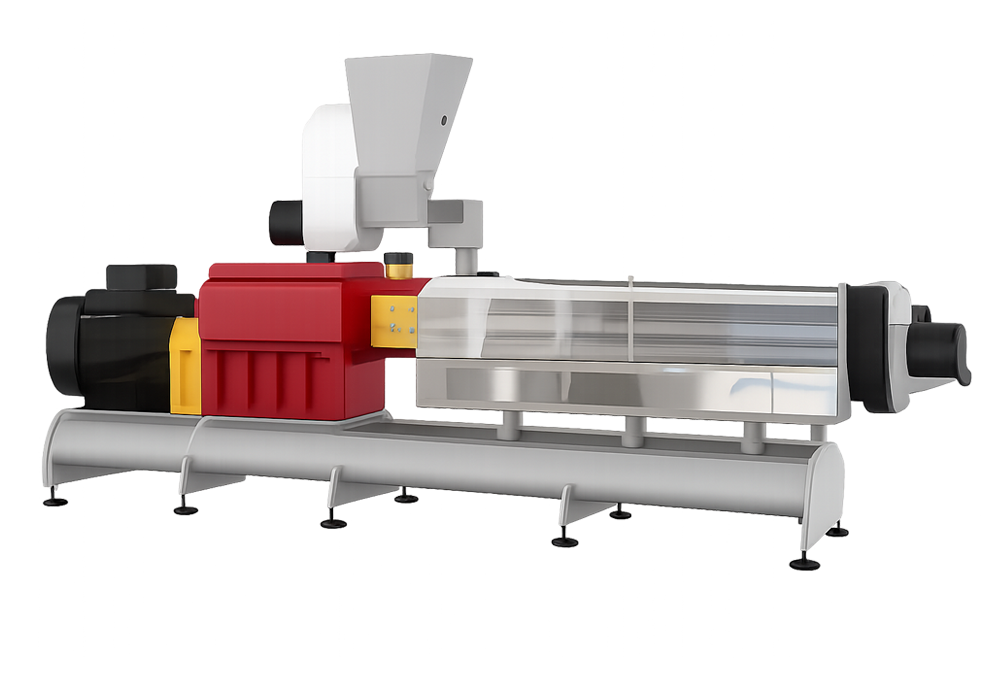
| Extruder (Twin-Screw recommended) | Cooking, shaping, and puffing the snack. Capacity varies from 50 kg/h to 500+ kg/h . |
| Dryer (Oven/Fluid Bed) | Reducing moisture to ensure crispness . |
| Konveyor Pendingin | Bringing product down to a safe temperature . |
| Flavoring Drum | Applying oil and seasoning powders . |
| Packaging Machine | Weighing, filling, sealing, and nitrogen-flushing product into bags . |
6. Quality Control and Maintenance
Quality Control:
Implement rigorous checks at every stage, from raw material inspection to final product testing. Monitor critical parameters like moisture content, expansion ratio, flavor consistency, and product dimensions .
Maintenance:
Preventive maintenance is key to minimizing downtime. Establish a schedule for inspections, lubricating moving parts, and replacing worn components . Investing in high-quality equipment and staff training pays dividends in long-term efficiency .
Kesimpulan
Starting a puffed snack factory requires careful planning across financial, regulatory, operational, and technical domains. By following this guide—from market research and financial feasibility to selecting the right equipment and ensuring compliance—you can build a robust foundation for a successful venture in the profitable and growing puffed snack industry. With attention to quality and a focus on your unique flavor profile, you can turn this opportunity into a thriving business .